
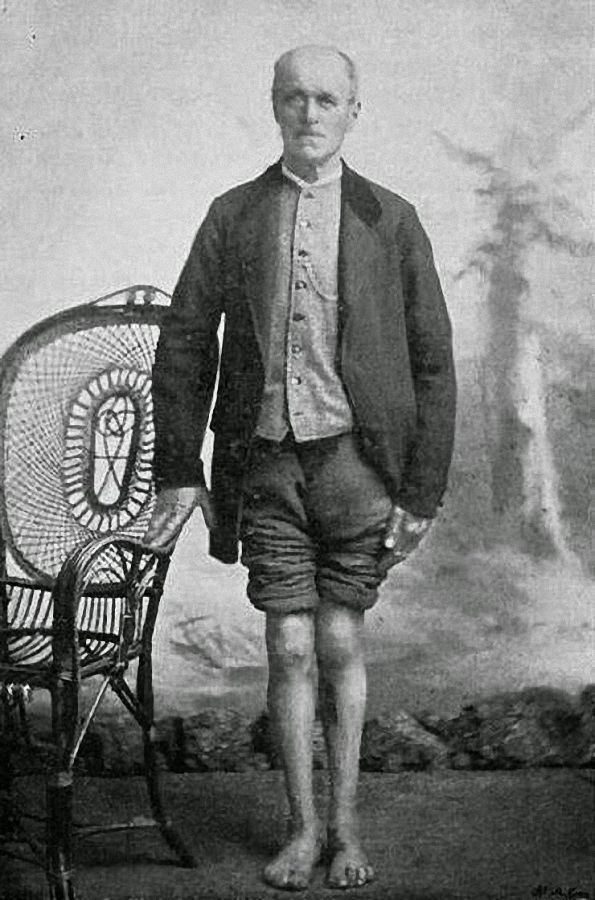
Pierre De Rudder of Jabbeke, in West Flanders, was injured on February 16, 1867, when a falling tree shattered his left tibia and fibula. The bones never knitted. For eight years the leg dangled — the foot turned sideways, the broken bones separated by some 3 cm with the gap visible to anyone who lifted the trouser. Multiple surgeons recommended amputation; De Rudder refused, despite chronic pain and an inability to work the fields.
On April 7, 1875, he travelled at his own urging to the new shrine of Oostakker, a Belgian copy of the Lourdes grotto built by Count Robert de Hemptinne. After about five minutes of prayer at the grotto he rose, walked unaided three times around the shrine, threw away his crutches, and walked the train back to Jabbeke. The bones had knitted instantaneously — the union confirmed by a long succession of physicians including Drs. Verriest, Royer, and Van Hoestenberghe. After his death in 1898 the bones of both legs were preserved, dissected, and re-examined; the cured bones still showed the lines of the breaks but were fully solid and weight-bearing. The case became a textbook study in unexplained healings.