
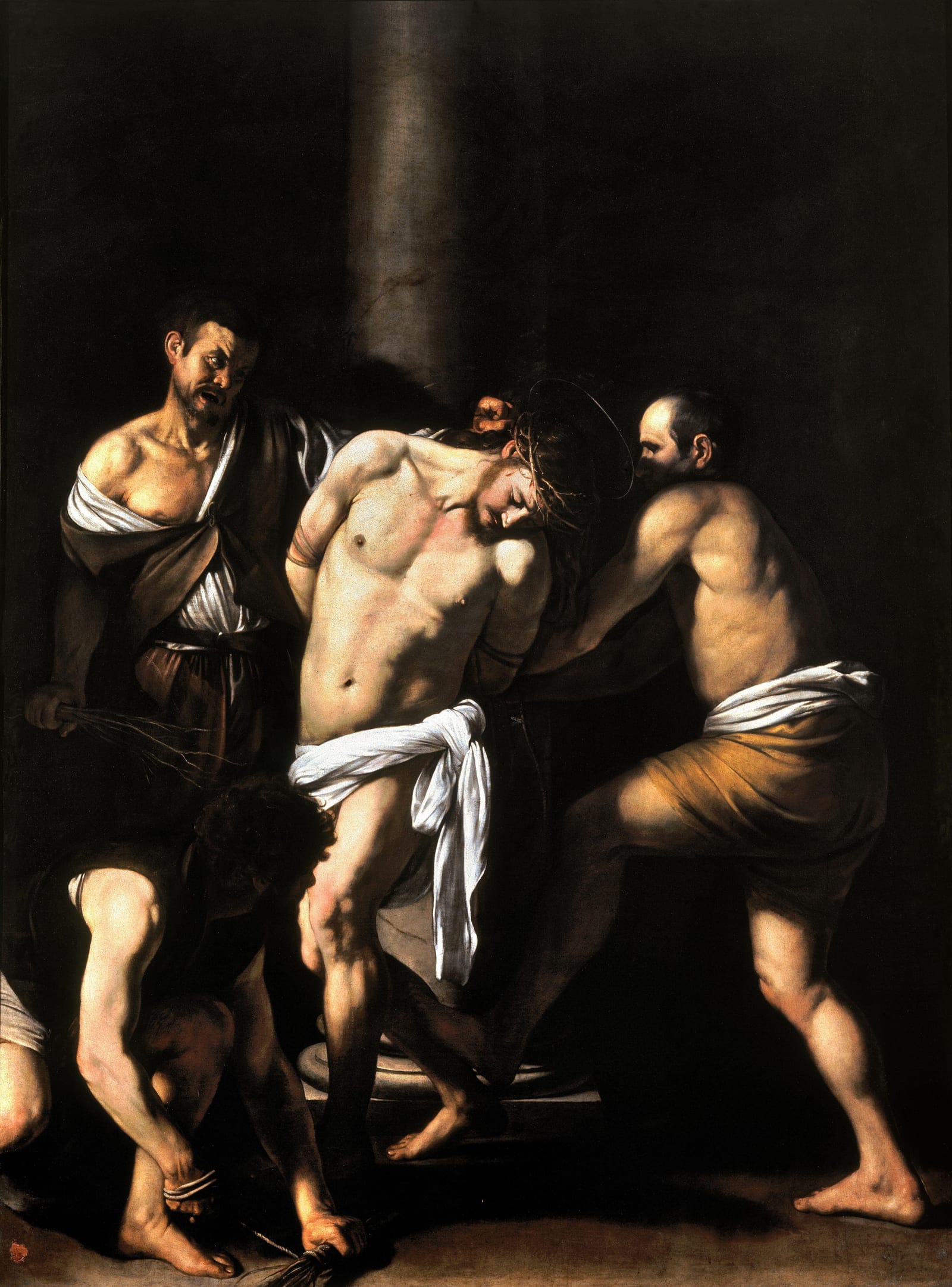
In Isaiah's third Servant Song the Servant himself speaks: 'I have GIVEN MY BODY TO THE STRIKERS, and my cheeks to them that plucked them: I have not turned away my face from them that rebuked me, and SPIT UPON ME. The Lord God is my helper, therefore am I not confounded: therefore have I set my face as a most hard rock' (Isaiah 50:6–7). The suffering is not merely endured but given — 'I have given' — and walked into with a face set like flint (compare Luke 9:51, 'he steadfastly set his face to go to Jerusalem').
The fulfillment came in the night and morning of the Passion, in the high priest's court and Pilate's praetorium: 'Then did they SPIT IN HIS FACE, and buffeted him: and others STRUCK HIS FACE with the palms of their hands' (Matthew 26:67); 'then he delivered him unto them, having SCOURGED him, to be crucified' (Matthew 27:26); the crown of thorns, the reed, the mock homage (27:29–30). Every element of Isaiah's verse — the striking, the plucking, the spitting, the shame not turned away from — is in the record.
The traditional site of Pilate's judgment seat and the scourging lies at the fortress Antonia, where the Via Dolorosa begins; the Chapels of the Flagellation and the Condemnation stand there today, and pilgrims have started the Way of the Cross from this spot for centuries.