
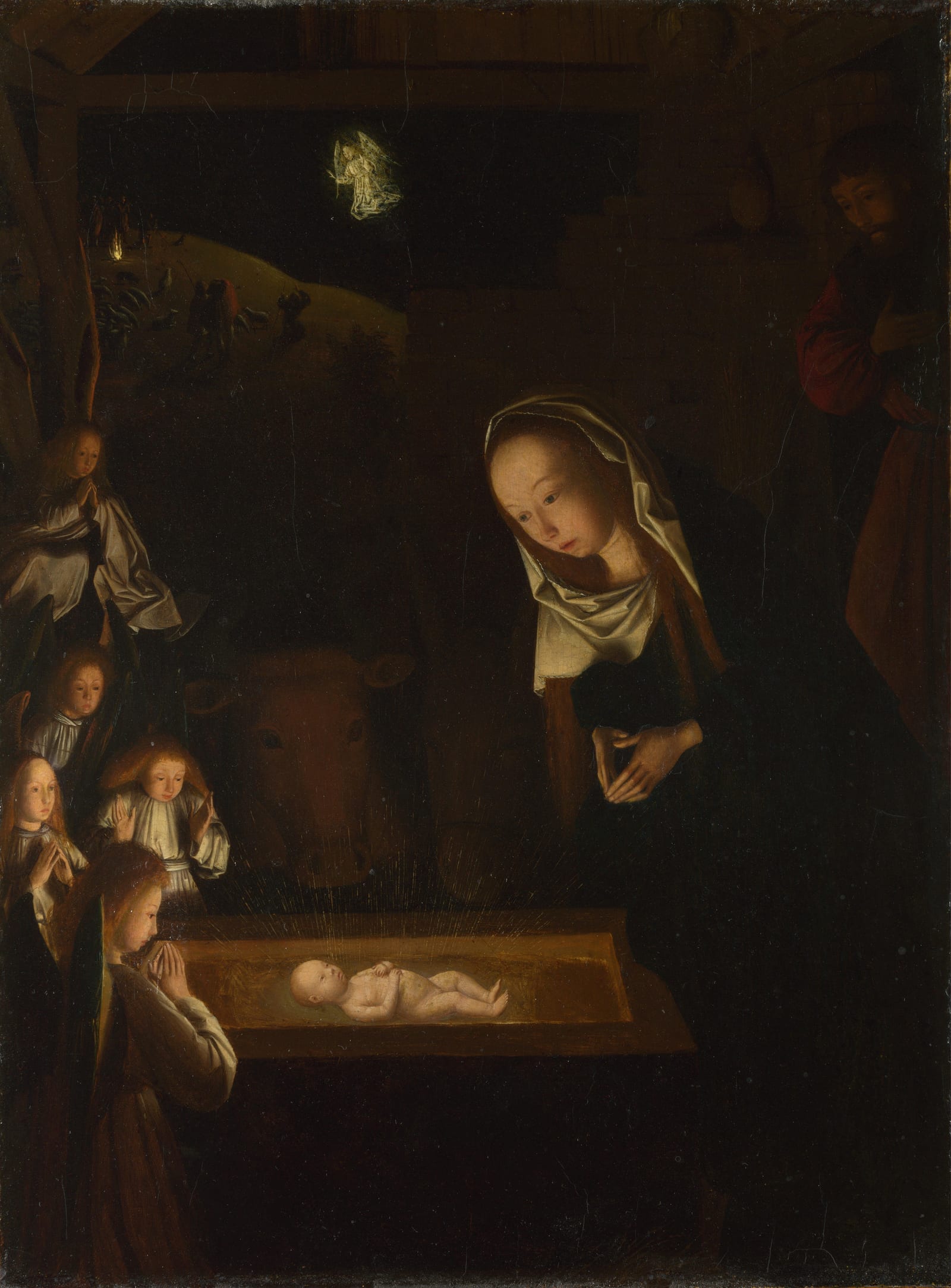
Seven centuries before the Nativity, the prophet Micah singled out one small town of Judah: 'And THOU, BETHLEHEM Ephrata, art a little one among the thousands of Juda: out of thee shall he come forth unto me that is to be the ruler in Israel: and his going forth is from the beginning, from the days of eternity' (Micah 5:2). The oracle joins two things no village could promise — a definite birthplace, and origins 'from the days of eternity.'
The fulfillment is confirmed, remarkably, by hostile witnesses. When the Magi asked Herod where the Christ should be born, 'the chief priests and the scribes of the people' answered without hesitation: 'In Bethlehem of Juda. For so it is written by the prophet' (Matthew 2:4–6). The crowds in John's Gospel cite the same expectation: 'Doth not the scripture say: that Christ cometh of the seed of David, and from Bethlehem?' (John 7:42).
Jesus was born there under the census of Caesar Augustus (Luke 2:1–7) — the Creator arranging an empire's bookkeeping to move one family five days' journey south. The cave of the Nativity has been venerated continuously since at least the second century (St. Justin Martyr, c. 150, already knows it), and Constantine's basilica over it, rebuilt by Justinian, is among the oldest churches in continuous use on earth.