
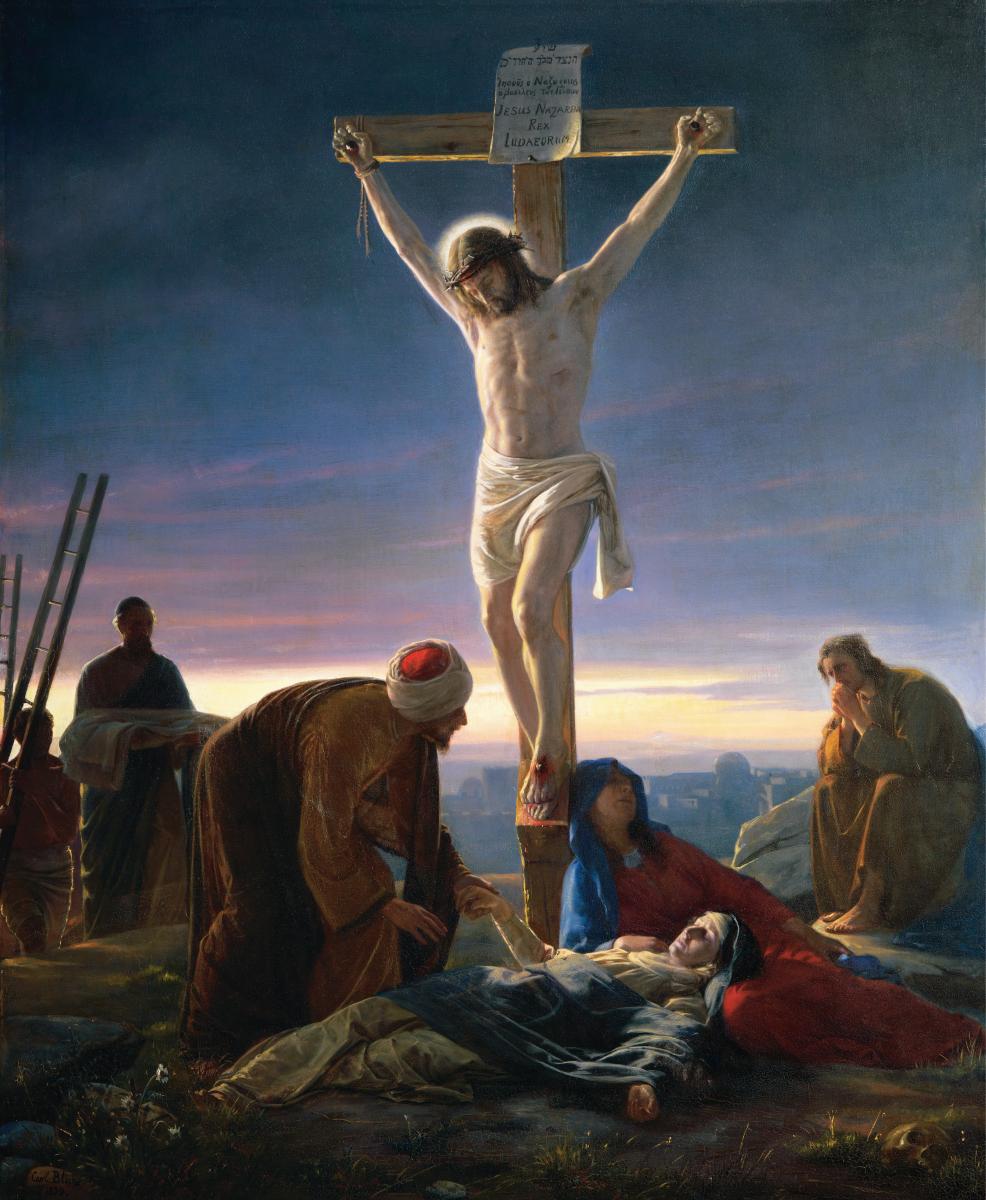
Amos, the herdsman-prophet, spoke of a day God would darken: 'And it shall come to pass in that day, saith the Lord God, that the SUN SHALL GO DOWN AT MIDDAY, and I will make the earth dark in the day of light: and I will turn your feasts into mourning... and I will make it AS THE MOURNING OF AN ONLY SON, and the end thereof as a bitter day' (Amos 8:9–10). Darkness at noon; a feast turned to grief; mourning as for an only son — three specifics in two verses.
All three synoptic Gospels record the fulfillment with a timestamp: 'And from the SIXTH HOUR there was darkness over the whole earth, until the NINTH HOUR' (Matthew 27:45; Mark 15:33; Luke 23:44–45) — noon to three in the afternoon, at the feast of Passover, as the only-begotten Son died. Luke adds 'and the sun was darkened.' A natural eclipse is impossible at Passover full moon, a point the second-century Fathers already argued.
The darkness is the creation answering its Maker's death — the Fathers heard in it Amos exactly: the feast turned into mourning, the mourning of an only Son. The synagogue's own Passover fell dark; the veil of the Temple tore at the same hour.