
The lands of Zebulun and Naphtali, around the Sea of Galilee, were the first of Israel to fall — stripped and deported by Assyria in 732 BC. To exactly that humiliated region Isaiah made an inverted promise: as it was first into darkness, it would be first into light. 'At the first time the land of Zabulon, and the land of Nephthali was lightly touched: and at the last... Galilee of the Gentiles. The people that walked in darkness, have seen a GREAT LIGHT' (Isaiah 9:1–2) — the passage that continues, 'For a CHILD IS BORN to us, and a son is given to us... his name shall be called Wonderful, Counsellor, God the Mighty, the Father of the world to come, the Prince of Peace' (Isaiah 9:6).
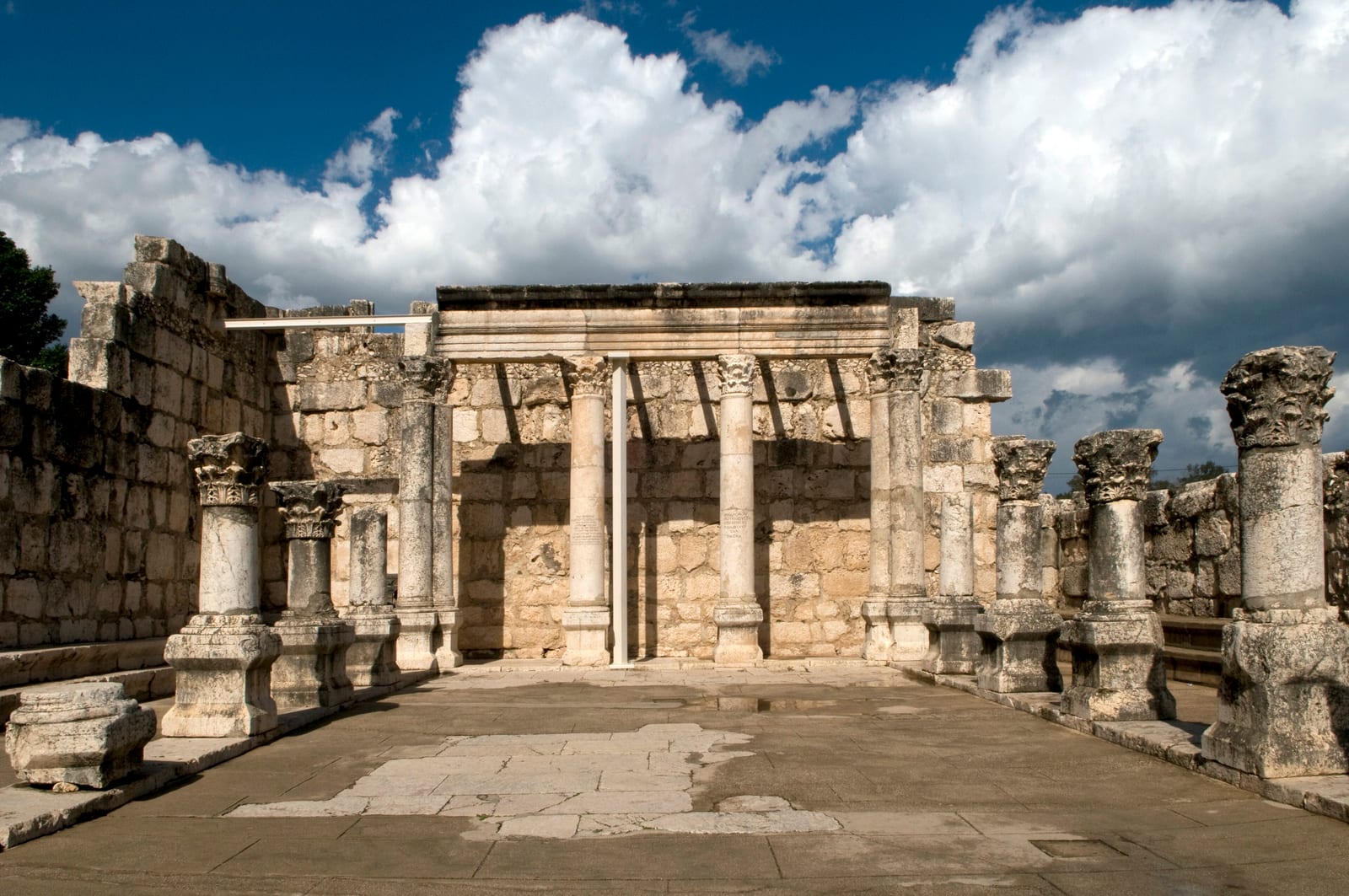
Matthew narrates the fulfillment geographically: 'And leaving the city Nazareth, he came and dwelt in CAPHARNAUM on the sea coast, in the borders of Zabulon and Nephthalim; that it might be fulfilled which was said by Isaias the prophet' (Matthew 4:13–14). Capernaum became 'his own city' (Matthew 9:1) — the synagogue where He taught and the house of Peter stand excavated there today.
The choice itself was a scandal answered by the prophecy: the religious establishment objected that 'out of Galilee a prophet riseth not' (John 7:52) — but Isaiah had said the opposite seven centuries earlier. The despised, half-Gentile north was precisely where the light was promised first, and the detail 'Galilee of the GENTILES' quietly announced how far the light intended to travel.