
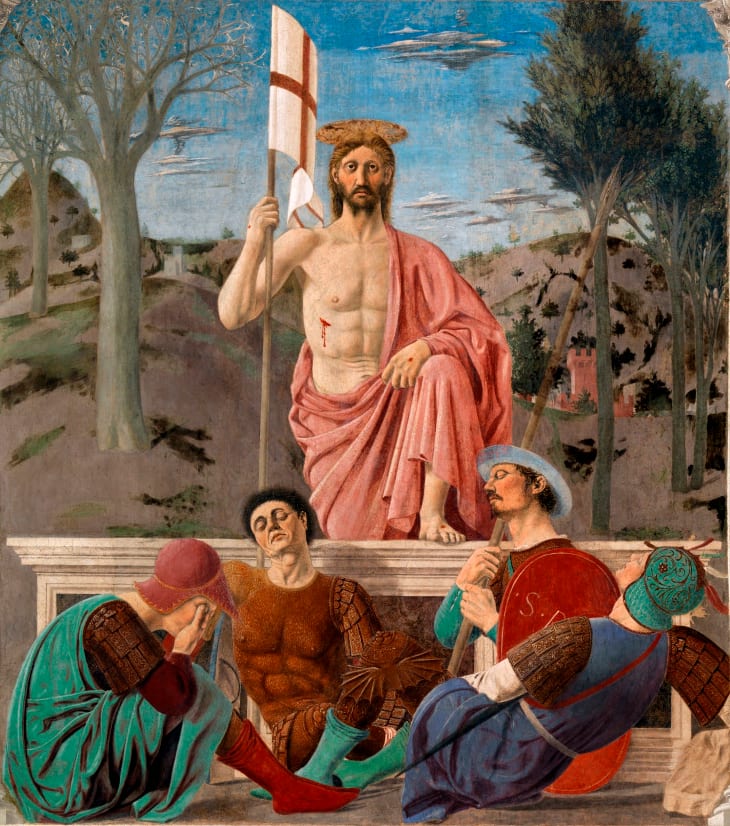
Psalm 16 (Douay-Rheims Psalm 15) ends in unbroken confidence on the far side of death: 'my flesh also shall rest in hope. Because thou wilt not leave my soul in hell [sheol]; NOR WILT THOU GIVE THY HOLY ONE TO SEE CORRUPTION. Thou hast made known to me the ways of life' (16:9–11).
This psalm is the exegetical engine of the Church's first sermon. At Pentecost Peter quotes it at length and then argues from a tomb everyone in his audience could walk to: 'Ye men, brethren, let me freely speak to you of the patriarch David; that he died, and was buried; and his sepulchre is with us to this present day.' David saw corruption; therefore David spoke as a prophet 'concerning the resurrection of Christ. For neither was he left in hell, neither did his flesh see corruption. This Jesus hath God raised again, whereof all we are witnesses' (Acts 2:29–32). Paul preaches the identical argument at Antioch in Pisidia (Acts 13:35–37).
The claim was falsifiable in the simplest way: produce the body. The apostles staked everything on an occupied city's empty tomb, 'on the third day' — as He had said, and as Hosea had hinted long before: 'He will revive us after two days: on the third day he will raise us up' (Hosea 6:2), the verse tradition hears behind 'rose again the third day ACCORDING TO THE SCRIPTURES' (1 Corinthians 15:4).