
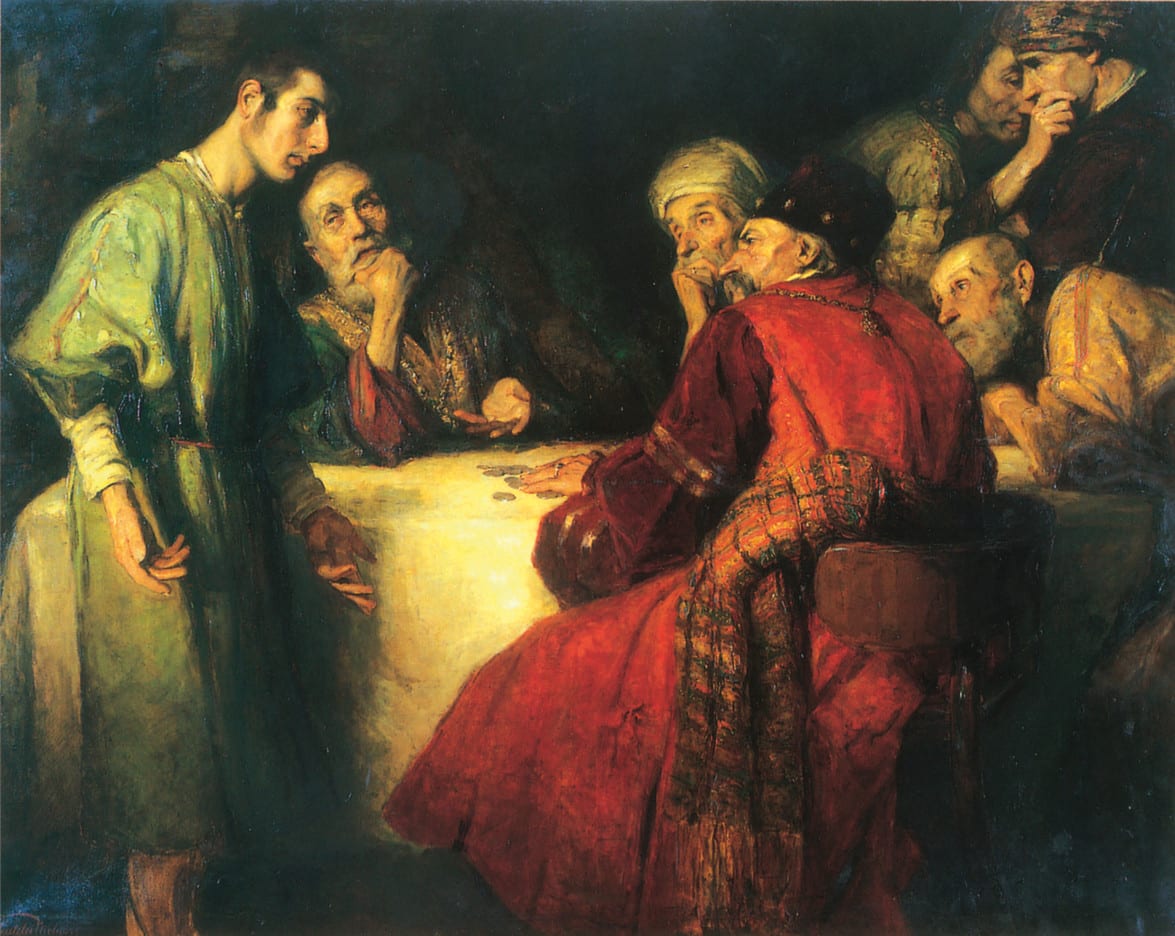
In Zechariah's strange shepherd-allegory, the rejected shepherd asks for his wage: 'And they weighed for my wages THIRTY PIECES OF SILVER. And the Lord said to me: Cast it to the statuary [the potter], a handsome price, that I was prized at by them. And I took the thirty pieces of silver, and I CAST THEM INTO THE HOUSE OF THE LORD, to the statuary' (Zechariah 11:12–13). Thirty shekels was, pointedly, the compensation price of a slave (Exodus 21:32).
The Gospel fulfillment unfolds in the same three beats: the chief priests 'appointed him thirty pieces of silver' for the betrayal (Matthew 26:15); Judas, in despair, 'casting down the pieces of silver IN THE TEMPLE, he departed' (27:5); and the priests — scrupulous about blood money they had themselves paid out — 'bought with them the POTTER'S field, to be a burying place for strangers. For this cause that field was called Haceldama, that is, The field of blood' (27:6–8; Acts 1:18–19). The field in the Hinnom valley has borne the name ever since; the Church of St. Onuphrius stands over its ancient burial caves.
A citation note shown plainly: Matthew attributes the composite quotation to 'Jeremias the prophet' (27:9) though its core is Zechariah 11 — most likely because he is braiding it with Jeremiah's potter and field imagery (Jeremiah 18–19; 32:6–15), naming the more prominent prophet as ancient citation practice allowed. The fulfillment pattern — price, temple, potter, field — is Zechariah's, completed in details no conspirator would invent.