
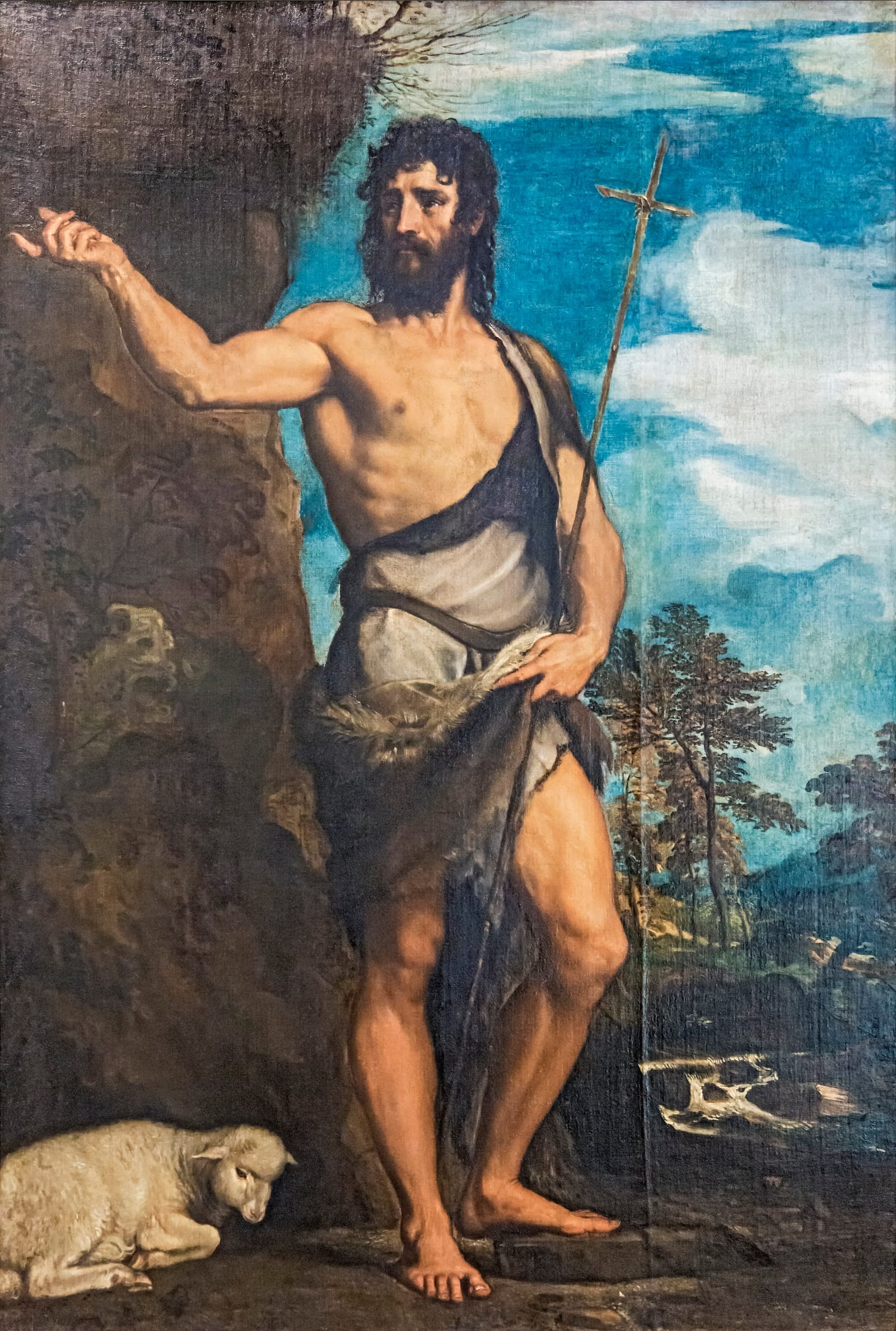
Two prophets promised that the Lord's coming would be announced by a herald. Isaiah: 'The VOICE of one crying in the desert: Prepare ye the way of the Lord, make straight in the wilderness the paths of our God' (Isaiah 40:3). Malachi, in the last book of the Old Testament: 'Behold I send my angel [messenger], and he shall prepare the way before my face' (Malachi 3:1) — and its final page names him again as 'Elias the prophet, before the coming of the great and dreadful day of the Lord' (Malachi 4:5).
All four Gospels open the public ministry by citing Isaiah 40:3 of John the Baptist (Matthew 3:3; Mark 1:2–3; Luke 3:4; John 1:23) — Mark stitches Malachi and Isaiah together in his very first sentences. John himself, asked who he is, answers with the verse: 'I am the voice of one crying out in the wilderness.' And Jesus closes the identification: 'this is he of whom it is written... if you will receive it, he is Elias that is to come' (Matthew 11:10–14).
The site of the Baptist's ministry and of the Baptism of the Lord — Bethany beyond the Jordan (John 1:28) — has been venerated on the east bank of the river since the earliest pilgrim itineraries, and the prophecy defines the man: not the light, but the witness to the light; the friend of the Bridegroom; the last prophet of the Old Covenant pointing at the New with one sentence, 'Behold the Lamb of God.'