
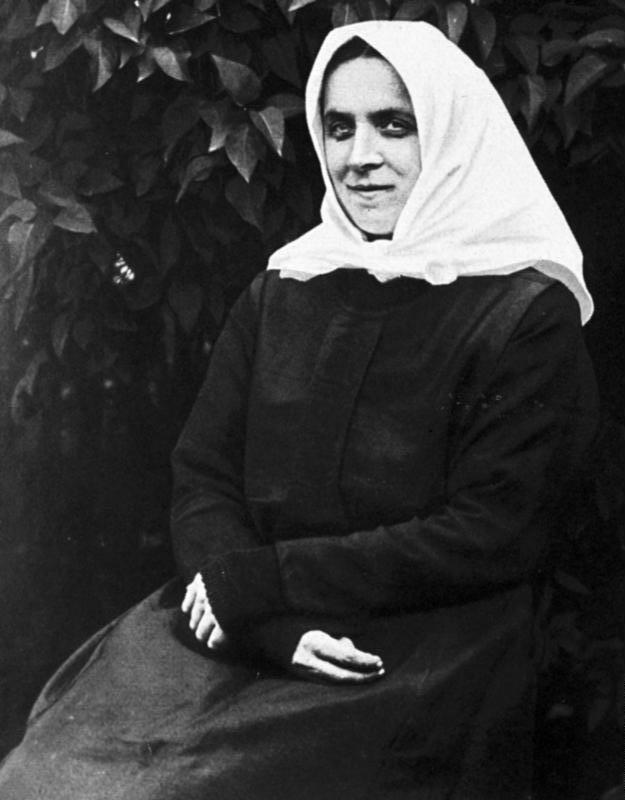
Therese Neumann (1898–1962) was a Bavarian peasant woman of the small village of Konnersreuth in eastern Bavaria. After a series of accidents in her early twenties left her variously blind, paralysed, and bedridden, she was inexplicably cured in stages between 1923 and 1925, each stage on the day of her devotion to St. Thérèse of Lisieux (whose canonisation she lived through). From Holy Week 1926 she bore the stigmata, with bleeding renewed weekly from Friday morning to Saturday morning, witnessed by hundreds of doctors, theologians, journalists, and Allied military officers across thirty-six years.
From 1926 to her death in 1962 — thirty-six years — she took no food, no drink, and no medication beyond receiving the Eucharist daily. The phenomenon was investigated by multiple medical commissions, including a fourteen-day continuous observation in 1927 by hospital nurses appointed by the Bishop of Regensburg, with no nourishment of any kind observed. She also reportedly bore the Passion-week vigils in real time — vivid Aramaic-language ecstasies, the wound of the lance, the shedding of approximately a pint of blood from her stigmata and eyes each Friday, and unconscious utterances in Aramaic, ancient Greek, and Latin (languages she had no education in).
Therese met the future Pope Benedict XVI (then a young seminarian) in 1947. The cause for her beatification was formally opened on February 13, 2005 by the Diocese of Regensburg; she is now styled 'Servant of God Therese Neumann.' The investigation continues.