
MIRACULOUS MIRACLES™

Saint — Adalhard of Corbie

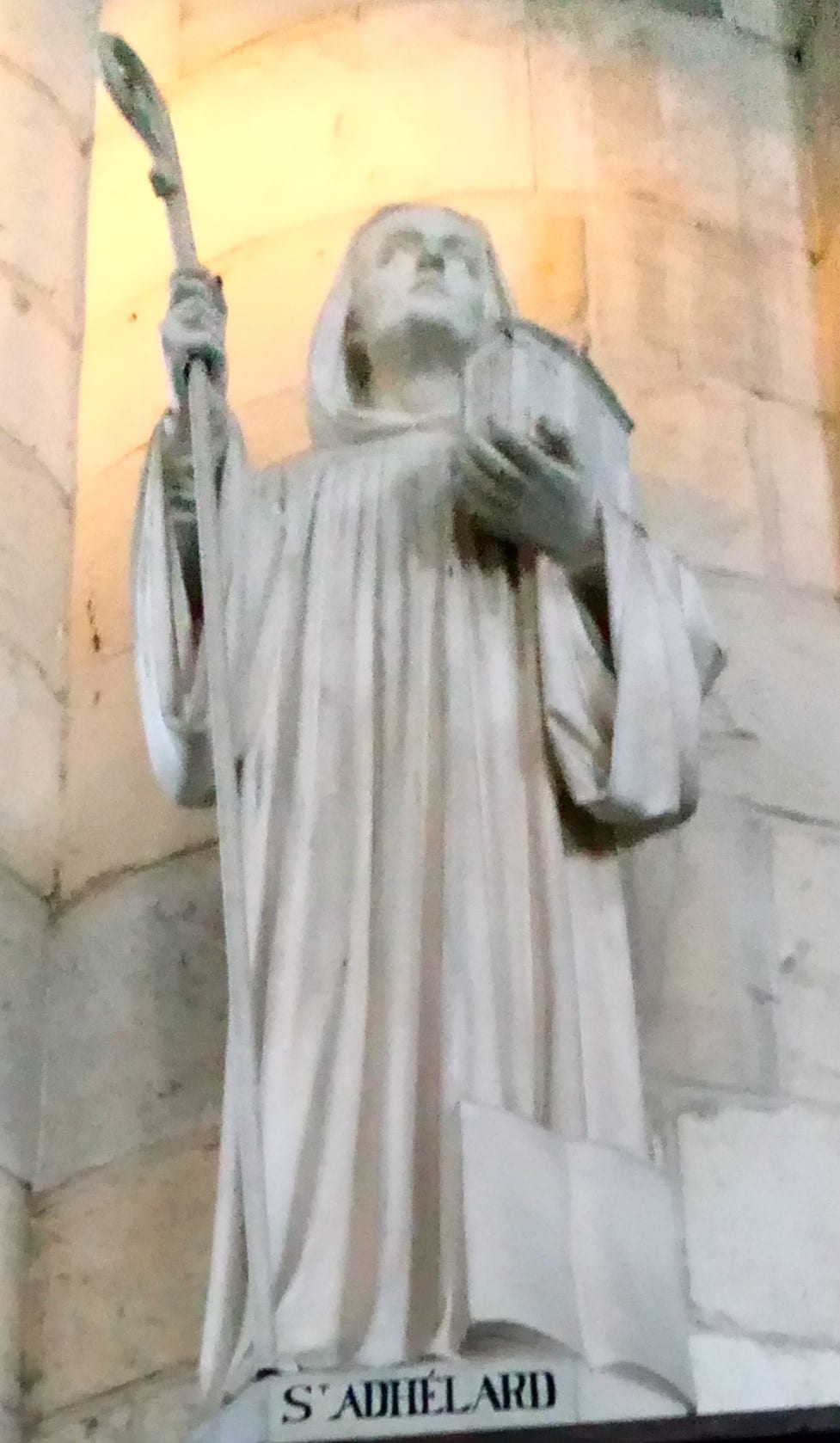
St. Adalhard of Corbie
c. 753 AD, Aachen, Frankish royal palace (grandson of Charles Martel) — January 2, 827 AD, Corbie Abbey, Picardy
Abbot of Corbie and Corvey; cousin of Charlemagne; Carolingian statesman-monk
Corbie Abbey, Picardy, France — his abbacy; the daughter foundation Corvey on the Weser (Saxony) is on UNESCO World Heritage list, France
Feast
January 2
Canonized
Canonized 1026 by Pope John XIX
Life

Adalhard (Adalhardus, Old French Adalard) was the grandson of Charles Martel through Martel's illegitimate son Bernard — placing him in the most intimate inner circle of the Carolingian dynasty. He was the first cousin of Charlemagne, the first cousin once removed of Louis the Pious, and the maternal uncle of Wala (his brother and successor at Corbie).

Educated at the Carolingian court school under Alcuin, he refused to participate in Charlemagne's repudiation of his Lombard wife Desiderata in 770 — withdrew in protest to the monastery of Corbie, becoming a monk. He became Abbot of Corbie around 780 and was for forty years the most learned of Carolingian abbots — Alcuin called him the 'Antony of the West'.

Charlemagne entrusted him with the governance of the Lombard kingdom — Adalhard served as the principal tutor and regent of Charlemagne's son Pippin of Italy (king of the Lombards 781–810). Under Louis the Pious, he was exiled to the monastery of Noirmoutier on the Atlantic coast (814–821) for political opposition; recalled by Louis in 821, he returned to Corbie and immediately undertook the mission to Saxony.

In 822 he founded — together with his brother Wala — the great daughter foundation of Corvey on the Weser (in conquered Saxony, in Westphalia), the Carolingian monastic centre of Saxon Christianity. The Carolingian westwork of Corvey, completed in 885, survives today as a UNESCO World Heritage site (inscribed 2014) — the oldest preserved Carolingian church architecture in Germany. Adalhard died at Corbie on January 2, 827, leaving Wala as his successor.

Miracles & Phenomena
  • The Corvey foundation and the Saxon mission

    Adalhard and Wala's foundation of Corvey in 822 — transplanting the Corbie monastic discipline, library, and liturgy into the heart of conquered Saxony — is the institutional pivot of Carolingian-Saxon Christianization. Corvey's scriptorium became the centre of Saxon Catholic culture, and the Corvey westwork architectural innovation shaped Romanesque church design for two centuries throughout central Europe.

  • The conversion of Pippin of Italy

    Adalhard's tutorship of the boy-king Pippin of Italy (781–810) shaped the Carolingian-Lombard Catholic consolidation of northern Italy. Adalhard composed the De Ordine Palatii (On the Order of the Palace), the Carolingian text on the administration of the Christian Empire — preserved through Hincmar of Reims and shaping medieval European political theology.

Relics
  • Body
    Tomb of St. Adalhard
    Corbie Abbey, Picardy, France — the medieval shrine destroyed in the French Revolution (1790s); the abbey church survives as the parish church and pilgrim destination

    His medieval shrine at Corbie was the principal pilgrim destination of Picardy throughout the medieval centuries. The shrine was destroyed in the French Revolutionary dissolution of 1790–1791; the abbey church (rebuilt in the 12th–18th centuries) survives in active Catholic parish use.

Iconography
  • Adalhard founding Corvey

    The early-9th-century Carolingian abbot in Benedictine habit at the Weser river in conquered Saxony directing the construction of the Corvey westwork, his brother Wala beside him with the charter of Louis the Pious — the iconography of Carolingian-Saxon Catholic monastic transplantation.

Patronages
Corbie Abbey and Corvey AbbeyCatholic Carolingian monastic-statesman traditionCatholic Charlemagne kindred saints