
Adelaide (Adelheid) was born around 970 to Count Megingoz of Geldern and his wife Gerberga — kinswoman of Emperor Otto I, placing Adelaide in the extended Ottonian royal kindred.
Her parents founded around 978 the Abbey of Vilich on their Rhineland estates, in memory of their son Gottfried who had died in battle against the Slavs. Adelaide was placed at the new abbey as a young Benedictine nun, and around 998 (when she was aged about 28) she succeeded her mother Gerberga as abbess of Vilich.
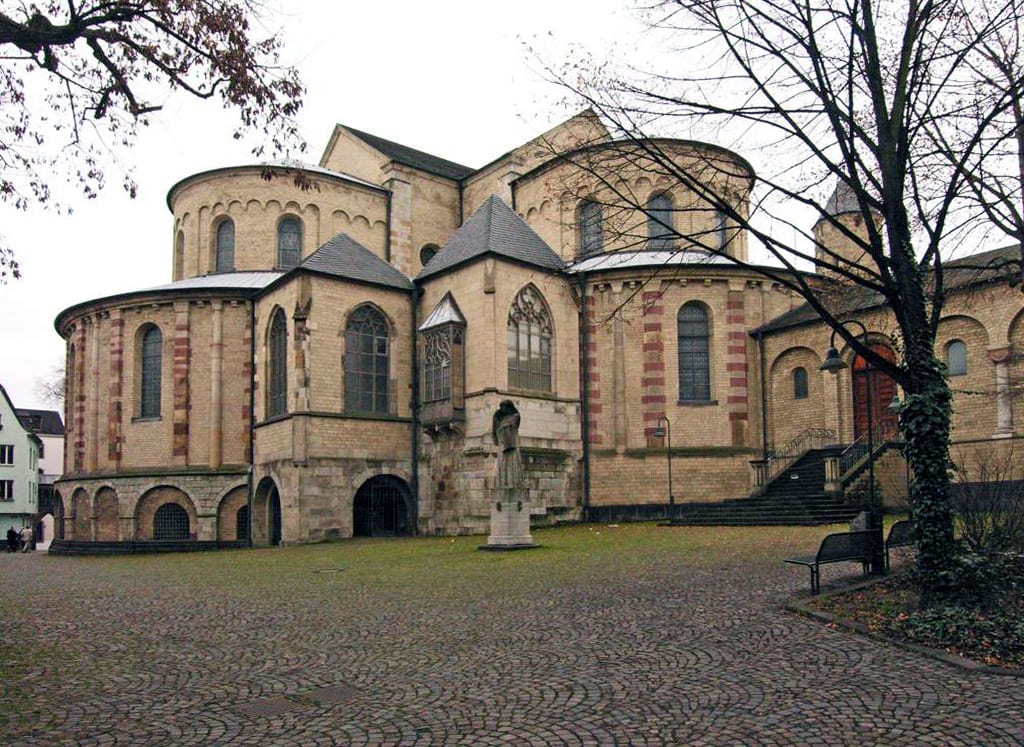
Around 1002 — at the request of her kinsman Archbishop Heribert of Cologne (a close confidant of Emperor Otto III and the chancellor of the Holy Roman Empire) — she was appointed concurrent abbess of the Abbey of St. Mary of the Capitol (Maria im Kapitol) in Cologne, one of the principal Cologne women's-monastic communities of the period.
Adelaide reformed the Vilich and St. Mary of the Capitol communities — introducing the strict Benedictine Rule in place of the laxer canoness-rule that had previously been observed, producing the characteristic Ottonian Catholic women's-monastic discipline of the period.
In her last years she was afflicted with blindness — suffered as a saintly endurance of the divinely-imposed cross. She died at Vilich on February 5, 1015, and was buried in the abbey church she had reformed.
Her cult was immediately recognized at Vilich and at the St. Mary of the Capitol; her formal Roman canonization was only completed in 1966 — making her one of the latest formally Roman-canonized of the 11th-century Catholic saints, the confirmation of a thousand-year continuous Cologne-Archdiocesan local cult.