
MIRACULOUS MIRACLES™

Saint — Æthelflæd, Lady of the Mercians

St. Æthelflæd, Lady of the Mercians
c. 870 AD, Wessex (royal palace of King Alfred the Great) — June 12, 918 AD, Tamworth, Mercia
Lady of the Mercians 911–918; daughter of Alfred the Great; Anglo-Saxon Catholic queen-warrior
St. Oswald's Priory, Gloucester, England — her burial site, founded by Æthelflæd and her husband Æthelred c. 900 for the relics of St. Oswald of Northumbria translated from Bardney, United Kingdom
Feast
June 12 (local Mercian veneration); not in the universal Catholic calendar but venerated as 'Saint' in the Mercian medieval tradition
Canonized
Pre-congregation local veneration (the medieval Mercian Catholic 'Sancta Ethelfleda' tradition; not formally canonized but venerated as 'Lady' / 'Saint' in regional usage)
Life

Æthelflæd was the eldest daughter of King Alfred the Great — born in Wessex around 870 to Alfred and his queen Ealhswith. She was educated alongside her brother Edward (the future King Edward the Elder) in the scholarly atmosphere of Alfred's court.

Around 886 she was married to Æthelred, Lord of the Mercians (the sub-king of the Mercian kingdom under Wessex overlordship) — a dynastic marriage uniting the two great Anglo-Saxon kingdoms in their shared resistance to the Viking Danes.

Their only child was a daughter, Ælfwynn (born c. 888), born after a difficult childbirth — after which (per William of Malmesbury's tradition) Æthelflæd chose celibate continence for the rest of her marriage, the characteristically Anglo-Saxon Catholic royal women's-spiritual decision.

When her husband Æthelred fell ill around 902 and died in 911, Æthelflæd assumed sole rule of Mercia as the unique title 'Lady of the Mercians' (Myrcna hlædige) — the only woman in Anglo-Saxon history to rule an Anglo-Saxon kingdom in her own name (her brother Edward the Elder ruled Wessex; together they conducted the coordinated Anglo-Saxon Catholic reconquest of the Danelaw from the Viking Danes).

Between 910 and her death in 918, Æthelflæd built ten major fortified burhs across Mercia (Bridgnorth, Tamworth, Stafford, Warwick, Chirbury, Eddisbury, Weardbyrig, Runcorn, Bremesburh, Sceargate) and led Mercian armies in the reconquest of Derby (917) and Leicester (918) from the Danes. By the summer of 918, the Vikings of York had submitted to her lordship — but she died at Tamworth on June 12, 918 before the submission could be formalized.

She and her husband Æthelred had founded around 900 the St. Oswald's Priory in Gloucester (the New Minster) — translating the relics of St. Oswald of Northumbria there from Bardney — and Æthelflæd was buried there alongside her husband. The medieval Catholic Mercian tradition venerated her as 'Sancta Ethelfleda' — the queen-warrior saint of the Mercian Catholic kingdom.

Miracles & Phenomena
  • The Mercian Catholic reconquest of the Danelaw

    Æthelflæd's coordinated military campaign with her brother Edward the Elder (911–918) — building the ten Mercian burhs and leading Mercian armies in the reconquest of Danelaw cities — produced the reincorporation of pagan-Viking-occupied Catholic England back into the Catholic Anglo-Saxon kingdom. The survival and reconquest of Catholic England in the early 10th century is Æthelflæd's institutional legacy.

  • The translation of St. Oswald's relics to Gloucester

    Æthelflæd's translation of the relics of St. Oswald of Northumbria from Bardney (in the Danish-occupied Danelaw) to the New Minster (St. Oswald's Priory) in Gloucester around 909 — the rescue of the principal Anglo-Saxon martyr-king relics from Danish-pagan despoliation — is the Anglo-Saxon Catholic relic-translation of the early 10th century. The priory survives in ruined form in Gloucester, with the St. Oswald's relics-cult surviving in the medieval Anglican calendar.

Relics
  • Body
    Tomb of Æthelflæd, Lady of the Mercians
    St. Oswald's Priory, Gloucester, England — ruined; her tomb destroyed in the Reformation; the priory survives as picturesque medieval ruin

    Her tomb at the St. Oswald's Priory in Gloucester was destroyed in the 16th-century Reformation dissolution; the priory survives in ruined form (English Heritage). The statue of Æthelflæd at the castle of Tamworth (her royal Mercian residence) commemorates her thousand-year legacy as the Lady of the Mercians.

Iconography
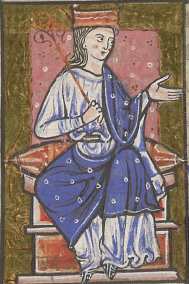
  • Æthelflæd at the walls of Derby

    The early-10th-century Lady of the Mercians in Anglo-Saxon royal-warrior dress at the walls of Derby during the 917 reconquest from the Danes, her Mercian army behind her, the sword of Anglo-Saxon Christian-Catholic resistance in her hand — the iconography of Catholic Anglo-Saxon queen-warrior tradition.

Patronages
Mercia and the West Midlands of England (Tamworth, Gloucester, Stafford, Warwick)Catholic Anglo-Saxon Christian queens and warrior-defendersCatholic mothers of single daughters in royal succession