
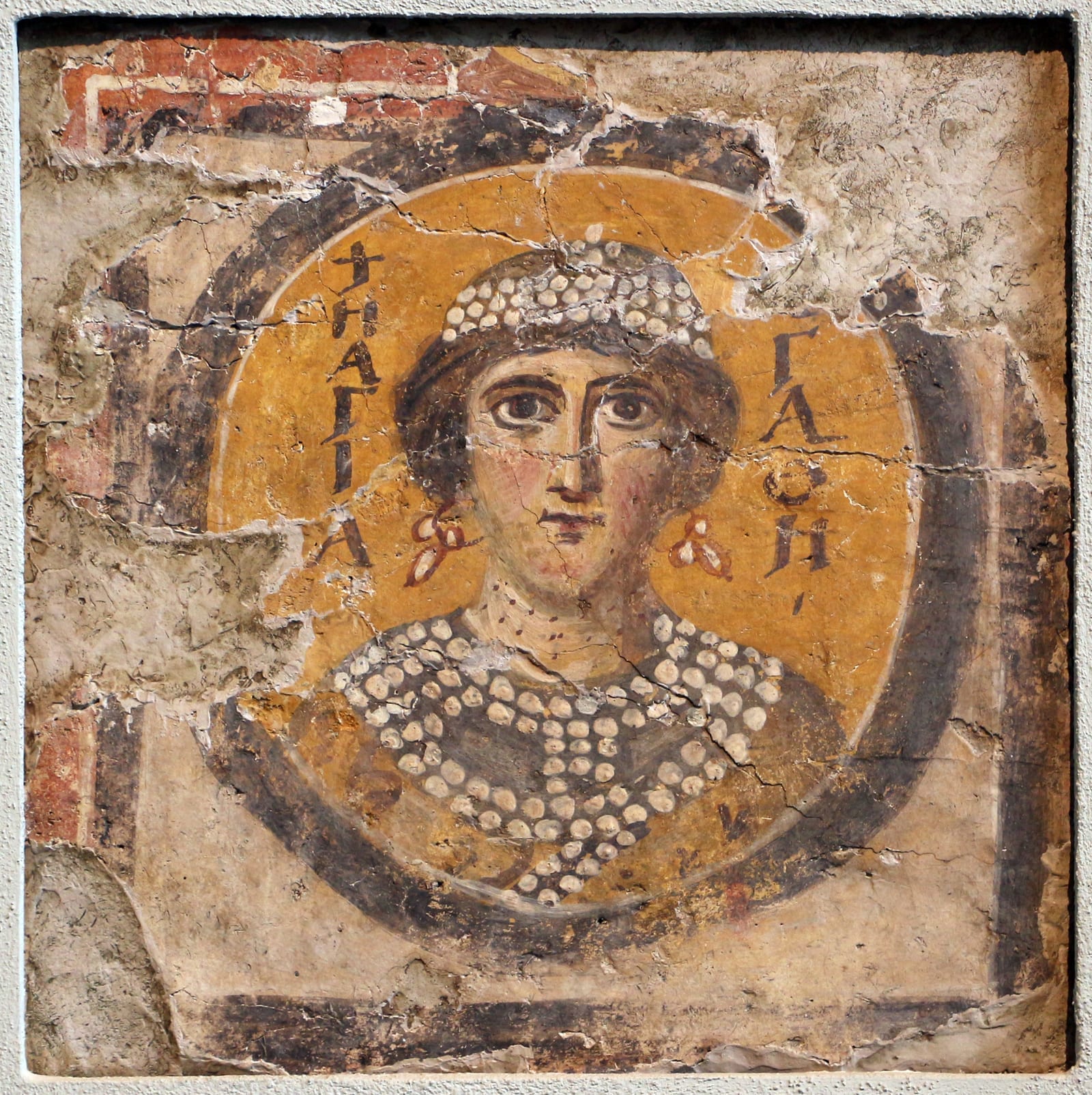
Agatha, of a noble Catanian family, was twenty when she dedicated her virginity to Christ. The Roman consul Quintianus, taken with her beauty, sought to marry her; she refused. He had her arrested under the Decian persecution, handed her to a brothel-keeper named Aphrodisia for a month, then — when she remained steadfast — had her breasts cut off with shears.
In her cell that night, St. Peter appeared to her and healed her wounds. The next day Quintianus had her rolled over burning coals. As her torment continued, an earthquake shook Catania; the citizens demanded her release. She died in her cell on February 5, 251.
A year later, on her feast day, Mount Etna erupted. The people of Catania carried her veil from her tomb in procession against the lava; the flow stopped. From that day she has been invoked against volcanic eruptions and fires, and her veil — preserved in the Cathedral of Catania — is processed in great solemnity each February 5 in one of the most ancient continuous Marian festivals in the Mediterranean.