
MIRACULOUS MIRACLES™

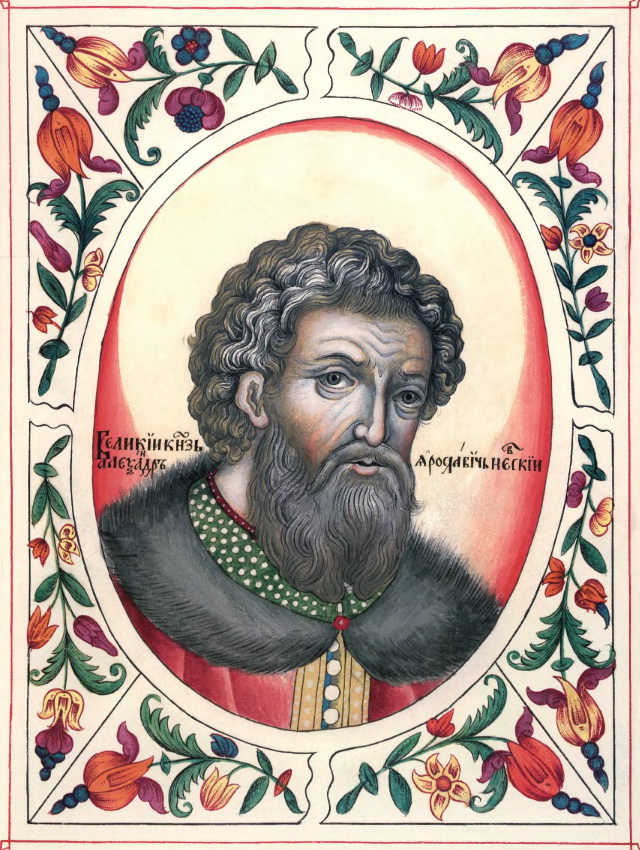
Saint — Alexander Nevsky

St. Alexander Nevsky
May 13, 1221 AD, Pereslavl-Zalessky, Vladimir-Suzdal, Kievan Rus' (royal Rurikid family — son of Grand Prince Yaroslav II of Vladimir) — November 14, 1263 AD, Gorodets, Vladimir-Suzdal — died on the return journey from a diplomatic mission to the Mongol court of Sarai
Grand Prince of Vladimir 1252–1263; Russian Catholic-Orthodox national hero; Battle of the Ice victor (1242)
Alexander Nevsky Lavra, Saint Petersburg, Russia — his relics translated 1724 by Emperor Peter the Great from Vladimir to the new Russian imperial capital; UNESCO area, Russia
Feast
November 23 (principal feast — anniversary of the 1263 monastic tonsure); May 30 (birthday); August 30 (translation of relics 1724 by Peter the Great)
Canonized
Canonized 1547 by the Council of Moscow under Metropolitan Macarius; venerated jointly in the eastern-Catholic Russian Greek Catholic Church and the Russian Orthodox Church
Life

Alexander (Russian Александр) was born on May 13, 1221 at Pereslavl-Zalessky to Grand Prince Yaroslav II of Vladimir — the grandson of Grand Prince Vsevolod III the Big Nest and the great-great-grandson of Vladimir Monomakh.

At the age of 15 in 1236, Alexander was appointed Prince of Novgorod — the principal northwestern Russian city-state and the frontier of the Russian Catholic-Orthodox territory against the Catholic Latin Crusader and pagan Baltic states.

On July 15, 1240 — at the age of 19 — Alexander won the famous Battle of the Neva against the Swedish Catholic Crusader army led by Birger Magnusson at the confluence of the Izhora and Neva rivers. The victory earned Alexander the famous surname Nevsky ('of the Neva') and saved the Russian northwestern territory from the Swedish Catholic Crusader advance.

On April 5, 1242, Alexander won the even more famous Battle of the Ice (Ledovoye Poboishche) on the frozen Lake Peipus (Chudskoye Lake, on the border of Russia and Estonia) against the Teutonic Knights (the German Catholic Crusader military-religious order that had been advancing into the Baltic and northwestern Russian territories). The Russian victory decisively ended the Teutonic Knights' advance into the northwestern Russian territory — institutionally securing the eastern-Catholic-Orthodox Russian national identity against the Latin-Catholic Crusader advance.

The Battle of the Ice is the most famous single military engagement of the medieval Russian Catholic-Orthodox tradition — the subject of Sergei Eisenstein's famous 1938 Soviet film 'Alexander Nevsky' (with the famous Prokofiev-composed cantata 'Alexander Nevsky', one of the principal 20th-century orchestral works).

In the aftermath of the Mongol invasions of 1237–1240 (which had destroyed most of the southern Russian territory), Alexander adopted the diplomatic-political strategy of submission to the Golden Horde (the Mongol Khanate of Sarai) and simultaneously military resistance to the Latin-Catholic Crusader west — the 'submit to the East, resist the West' policy that would shape the Russian political-cultural orientation for the seven centuries.

In 1252 Alexander was elevated by the Golden Horde Khan Batu to be Grand Prince of Vladimir — the principal Russian royal title of the period. His eleven-year Grand-Princely reign (1252–1263) was devoted to the rebuilding of the Russian ecclesiastical and civil institutions under Mongol overlordship and to the continuing military resistance to the western Catholic advance.

Returning from a diplomatic mission to the Mongol court of Sarai in autumn 1263, Alexander fell ill at Gorodets on the Volga; on the eve of his death, he took the monastic habit under the monastic name Aleksy — the classic Russian royal-monastic transition. He died on November 14, 1263.

His canonization by the Council of Moscow in 1547 under Metropolitan Macarius institutionally established Alexander as one of the principal Russian Catholic-Orthodox national saints. His relics were translated on August 30, 1724 by Emperor Peter the Great from the Nativity Cathedral in Vladimir to the new Alexander Nevsky Lavra in Saint Petersburg — the new Russian imperial capital, institutionally re-orienting the Russian national identity to the new Petrine imperial-modern political-cultural project.

Miracles & Phenomena
  • The Battle of the Ice (April 5, 1242)

    Alexander Nevsky's victory over the Teutonic Knights at the Battle of the Ice on Lake Peipus on April 5, 1242 — the most famous single military engagement of the medieval Russian Catholic-Orthodox tradition — institutionally decisively ended the Teutonic Knights' advance into the northwestern Russian territory and secured the eastern-Catholic-Orthodox Russian national identity against the Latin-Catholic Crusader advance. The battle institutionally underpins the Russian Catholic-Orthodox national self-understanding as the eastern-Christian defender against the Latin-Catholic Crusader advance.

  • The Alexander Nevsky Lavra at Saint Petersburg (1724)

    The August 30, 1724 translation of Alexander Nevsky's relics from Vladimir to the new Alexander Nevsky Lavra at Saint Petersburg by Emperor Peter the Great — institutionally re-orienting the Russian national identity to the new Petrine imperial-modern political-cultural project — instituted the principal Russian national-religious monument of the imperial period. The Alexander Nevsky Lavra is the principal Russian Catholic-Orthodox monastery of Saint Petersburg, one of the principal Russian national-religious pilgrim destinations, and the burial-place of many of the principal Russian cultural figures (Dostoevsky, Tchaikovsky, and dozens of others).

Relics
  • Body
    Relics of St. Alexander Nevsky
    Alexander Nevsky Lavra, Saint Petersburg, Russia — translated from Vladimir on August 30, 1724 by Emperor Peter the Great; in the Cathedral of the Holy Trinity of the Lavra

    His principal relics rest at the Alexander Nevsky Lavra in Saint Petersburg — one of the principal Russian Catholic-Orthodox monasteries and pilgrim destinations. The Lavra survives in continuous eastern-Catholic Russian Greek Catholic and Russian Orthodox liturgical use.

Iconography
  • Alexander Nevsky at the Battle of the Ice (April 5, 1242)

    The young Russian warrior-prince in medieval Russian princely armour on horseback at the Battle of the Ice on Lake Peipus on April 5, 1242, leading the Russian cavalry against the Teutonic Knights (in their distinctive Latin Catholic Crusader white mantles with the black cross of the Teutonic Order), the frozen lake cracking under the weight of the retreating Teutonic Knights — the classic Russian iconography of the Nevsky legend, reproduced in Sergei Eisenstein's 1938 film 'Alexander Nevsky' and the Prokofiev cantata.

Patronages
Russia (principal national patron saint alongside Sts. Vladimir and Sergius of Radonezh)Catholic eastern-Slavic Russian Byzantine-rite traditionSaint Petersburg (city patron)Catholic Russian-military tradition (the principal warrior-saint of the Russian Catholic-Orthodox national tradition)