
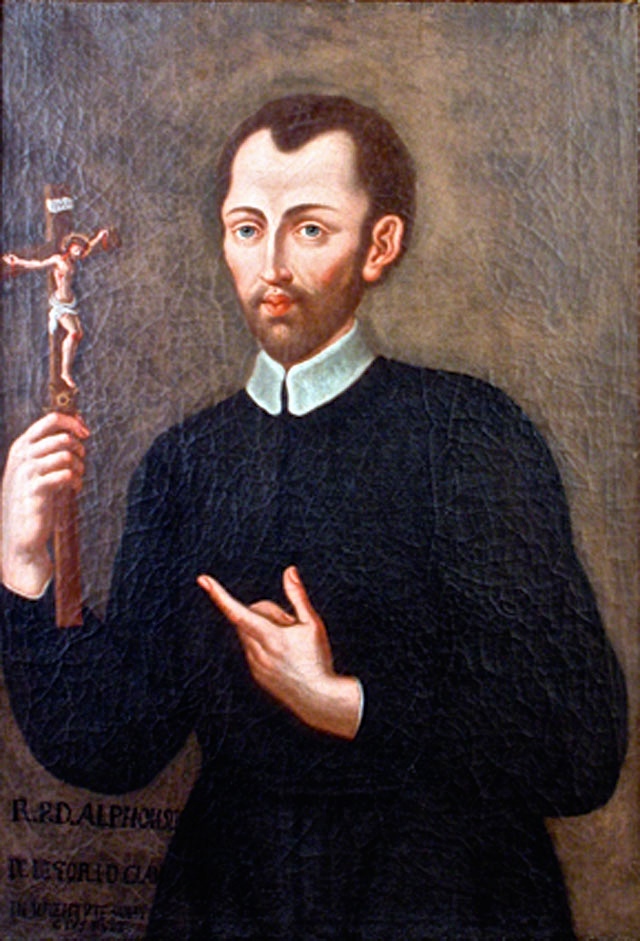
Alfonso Maria de' Liguori was born to a noble Neapolitan family — his father a captain of the royal galleys. Brilliant from boyhood, he earned a double doctorate (in civil and canon law) at sixteen and practised as a lawyer in Naples for eight years without losing a case. In 1723, after losing a single case through a clerical error he had overlooked, he abandoned the law in disgust, heard a voice in the Hospital for Incurables saying 'Leave the world and give yourself to me,' and announced his decision to become a priest.
Ordained in 1726, he served as a missionary preacher among the dispossessed mountain peasantry of the Kingdom of Naples and was appalled by the state of their religious instruction. In 1732 he founded the Congregation of the Most Holy Redeemer — the Redemptorists — explicitly to preach to the abandoned rural poor.
His Theologia Moralis (nine editions in his lifetime; revised continuously) revolutionised Catholic moral theology by introducing the principle of equiprobabilism — when two opinions about the lawfulness of an act are about equally probable, the safer course is not always required. The system replaced the harsher rigorism that had dominated 17th-century moral theology and shaped Catholic confessional practice ever since. His Glories of Mary (1750) is the most-read Marian work in modern Catholic devotion.
Made Bishop of Sant'Agata dei Goti in 1762 at his fierce protest, he resigned at 79 after years of crippling arthritis. He died in 1787, two days after celebrating his last Mass. Canonized 1839; declared Doctor of the Church 1871; declared patron of moral theologians and confessors in 1950.