
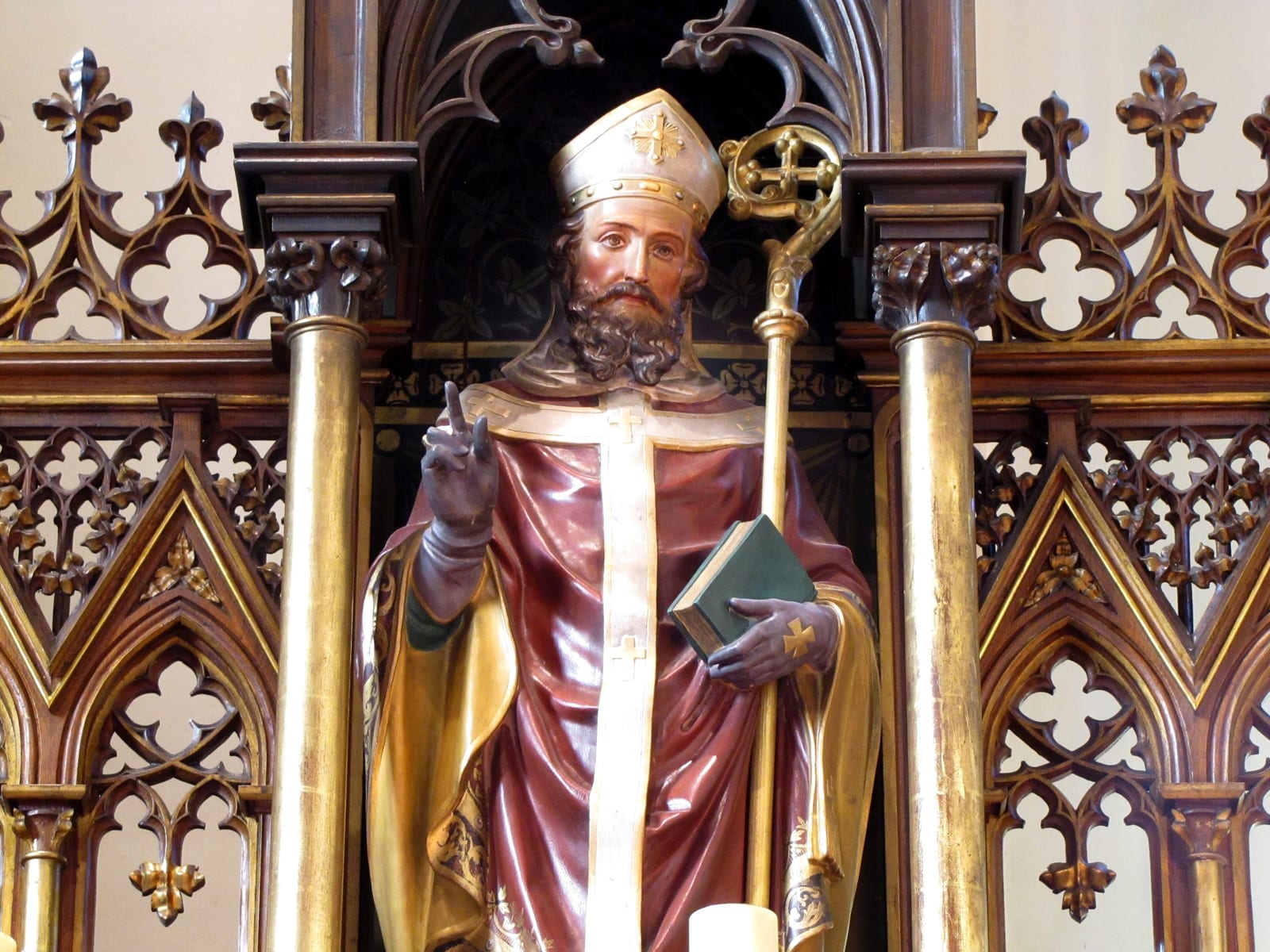
Amand was the son of a noble Aquitaine family who entered monastic life as a young man on the island of Yeu off the Vendée coast. After pilgrimages to Rome and Bourges, he was consecrated bishop without a see in 628 — a 'missionary bishop' for the pagan Frankish frontier — and began nearly fifty years of itinerant evangelization across Flanders, Hainaut, Brabant, and the Frisian coast.
He founded the great abbey of Elnone (Saint-Amand-les-Eaux) and the abbey of Marchiennes in present-day French Flanders; the abbey of Saint-Pieters at Ghent; the convent of Renaix; the monastery of Nivelles together with the family of Pepin of Landen (and thus with Gertrude); the monastery of Marchiennes for women. He suffered repeatedly under hostile pagan reception — once thrown into a river.
Briefly bishop of Maastricht (646–650), he resigned to return to mission work. He died at his beloved Elnone at over ninety, the longest-lived of the great Merovingian missionary bishops. His Vita Amandi is one of the principal sources for early Frankish Christianization.