
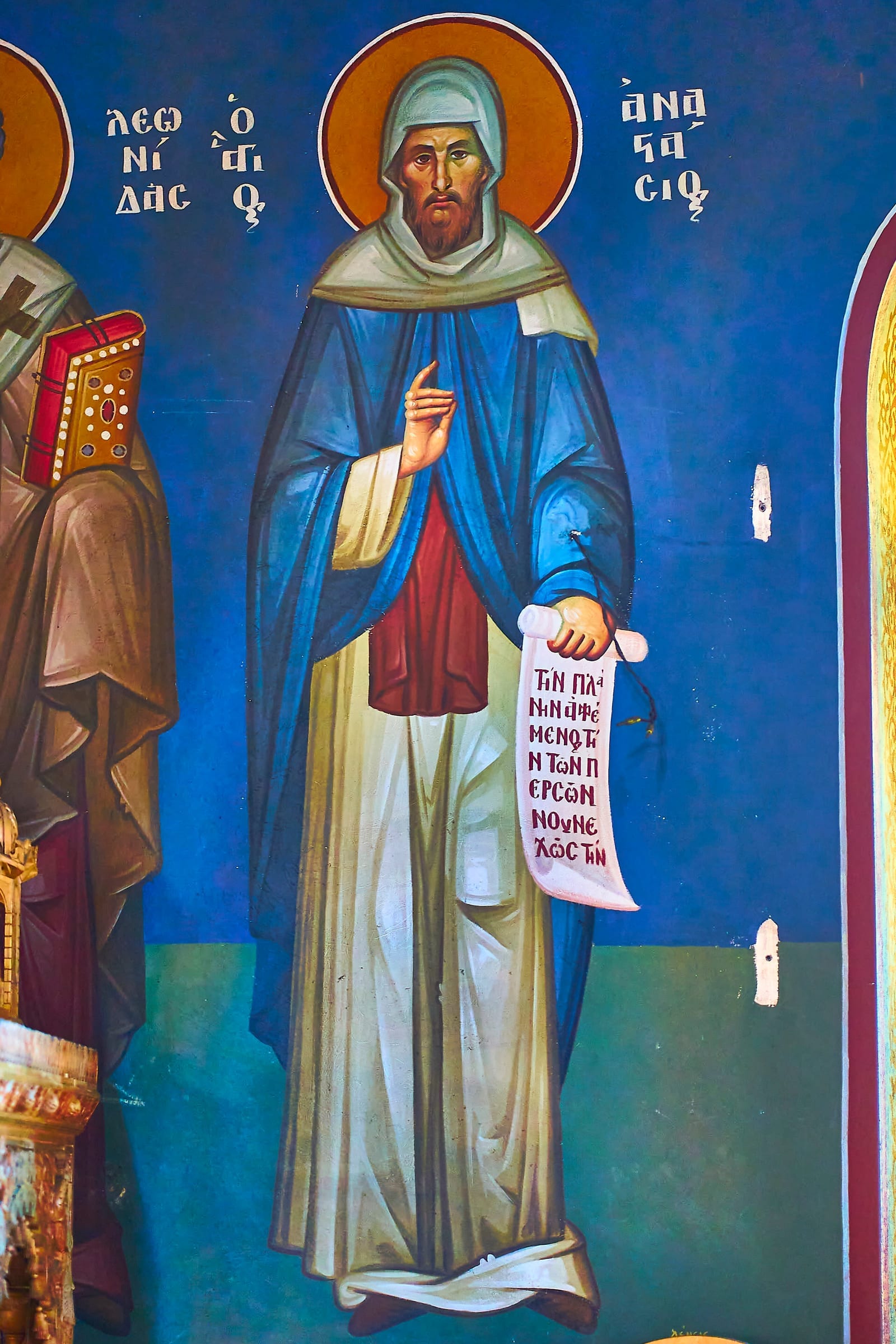
Anastasius lived through one of the most consequential half-centuries of Christian history. Born around 630, he saw the Persian and then Arab conquests sweep the Eastern Roman empire; he traveled widely as a monk through Syria, Palestine, and Egypt before settling at the Monastery of St. Catherine on Mount Sinai.
There he became hegumen (abbot) and wrote his Hodegos ('Guide') — a polemical handbook against the Monophysites and the rising Islamic and Judaic objections to the Christian faith. His Quaestiones et Responsiones ('Questions and Answers') is the first major Christian theological work to engage directly with Islamic critique — the Christian apologetic tradition that John of Damascus would soon take up.
His Sermons on the Hexaemeron (the six days of creation), his sermons on the Transfiguration, and his ecclesiological writings round out one of the most important Greek theological corpora between Maximus and John Damascene. He is honored throughout the Byzantine East as 'Anastasius the Sinaite.'