
Anastasius (Greek Anastasios, 'resurrected'; Persian Magundat) was — per the contemporary Acts of his martyrdom (preserved in Greek and substantially confirmed by independent Persian sources) — born to a Zoroastrian Persian family at Rasnan in the late 6th century. He served in the Persian Sasanian army of King Khosrow II during the catastrophic Persian-Byzantine war of 602–628 (the war of late antiquity that exhausted both empires and prepared the ground for the rise of Islam).
Anastasius participated in the Persian sack of Jerusalem in May 614 — the catastrophic event in which the Persian forces captured the relic of the True Cross from the Constantinian Church of the Holy Sepulchre and transported it back to Persia. The Persian sack of Jerusalem and the capture of the True Cross was the late-antique Catholic-Christian shock event.
Substantially through observing the substantial Christian veneration of the True Cross and through inquiring about the Christian doctrines, Anastasius (then still a Zoroastrian Persian soldier) gradually became convinced of Christianity. He deserted the Persian army around 619, travelled to Byzantine Hierapolis in Syria, was baptized into Christianity (taking the new name Anastasius — 'resurrected'), and entered a small Greek monastic community at Jerusalem.
He spent the next nine years as a monk at the small monastic community of Mar Saba in the Judean Desert (under the monastic tradition of Sabbas the Sanctified — see Sabbas's entry already in the catalogue). In 628 AD, with the substantial impending end of the Persian-Byzantine war (the Emperor Heraclius's substantial military victory was in progress), Anastasius felt called to return to Persia as a Christian missionary and was arrested almost immediately on arrival. King Khosrow II — desperate at the imminent collapse of the Persian-Byzantine war — ordered his execution. Anastasius was tortured for several months and finally executed by strangulation and beheading on January 22, 628 AD at Bithragar in Persia.
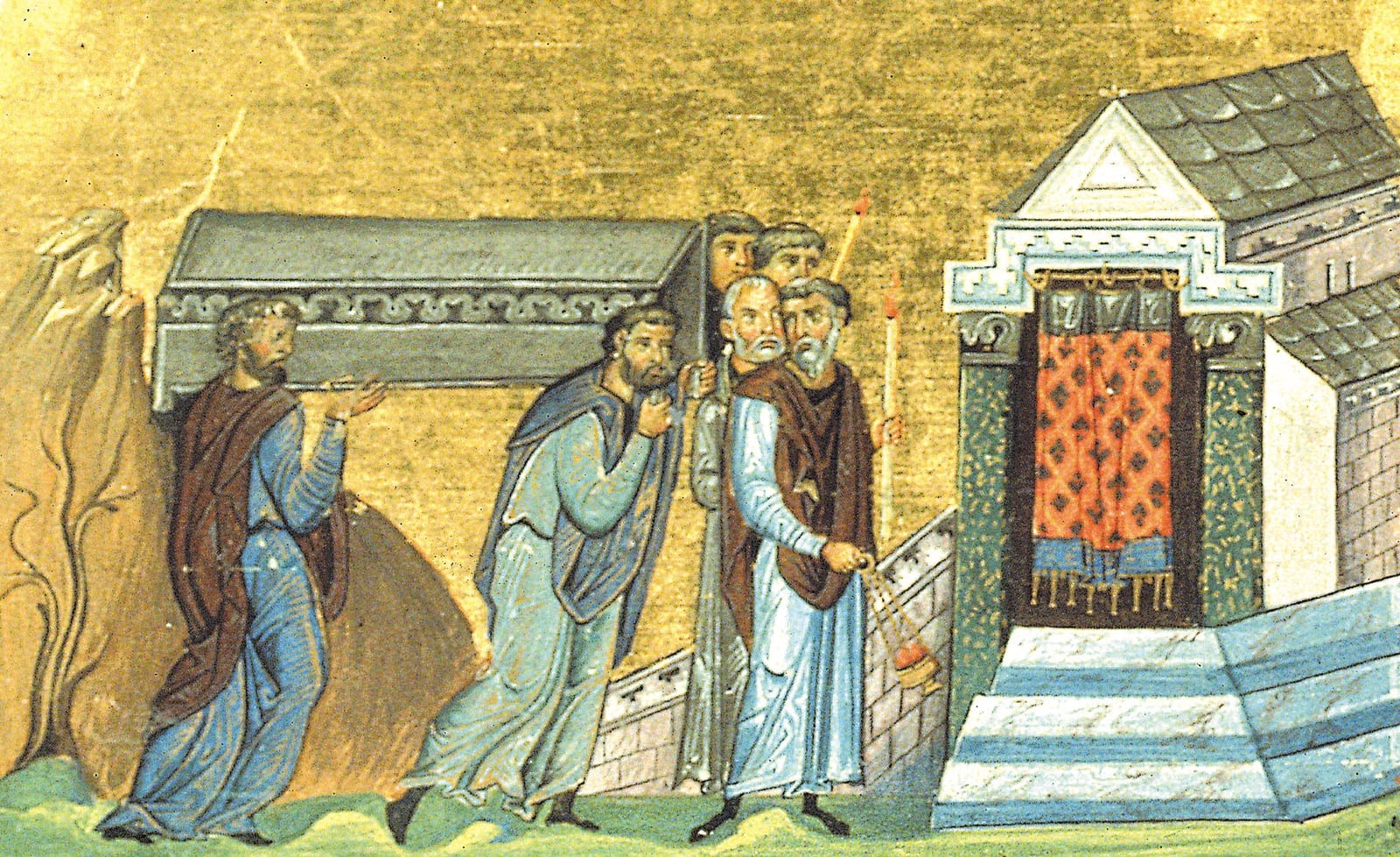
His head-relic was eventually translated from Persia to Rome and is preserved at the Abbey of the Three Fountains (Tre Fontane) at Rome — the shrine of his cult — since 645 AD. He is one of the small group of late-antique Catholic Persian saints and the martyr-figure of Christian conversion from Zoroastrianism.