
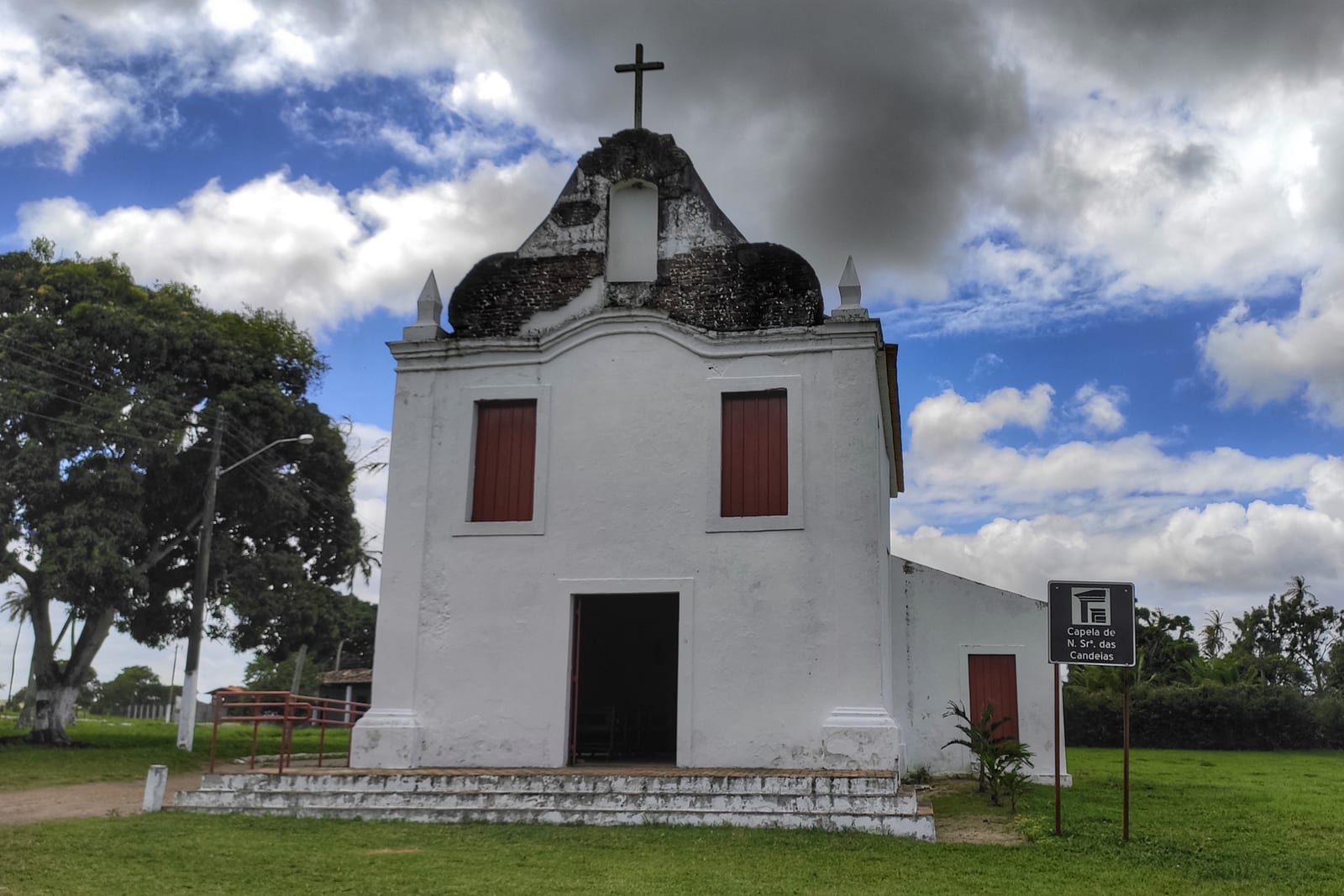
André de Soveral was born about 1572 at São Vicente on the Brazilian coast, studied with the Jesuits and worked as a young man in their mission among the Potiguara people, learning the Tupi tongue, before serving as a secular priest in the sugar country of Rio Grande do Norte. By 1645 he was the pastor of Cunhaú, a settlement of planters, workers, and converted Indians around the sugar mills south of Natal.
Brazil's northeast was then under Dutch occupation, and the Reformed regime bore hard on Catholic worship. On Sunday, July 16, 1645, at the chapel of Our Lady of the Candles, a Dutch officer named Jacob Rabe attended Mass with an armed company of soldiers and Indian allies, announcing he had an edict to read after the liturgy. At the moment of the elevation — the doors barred — the killing began. Father Soveral was cut down at the altar with some sixty-nine of his congregation; the record preserves him absolving his people as they died, and with him the layman Domingos de Carvalho.
Ten weeks later, on October 3, the same terror fell on the settlement of Uruaçu, where Father Ambrósio Francisco Ferro and his parishioners were slaughtered with deliberate cruelty — among them the layman Mateus Moreira, whose heart was torn out through his back and who died crying 'Louvado seja o Santíssimo Sacramento' — 'Praised be the Blessed Sacrament.'
The thirty martyrs of Cunhaú and Uruaçu — two priests and twenty-eight laypeople, planters and fishermen, women and children of Portuguese and indigenous blood — were beatified by John Paul II in the Jubilee year 2000 and canonized by Francis on October 15, 2017, the first canonized saints of Brazilian soil. Their shrine at Cunhaú and the martyrs' memorial at São Gonçalo do Amarante keep their feast on October 3.