
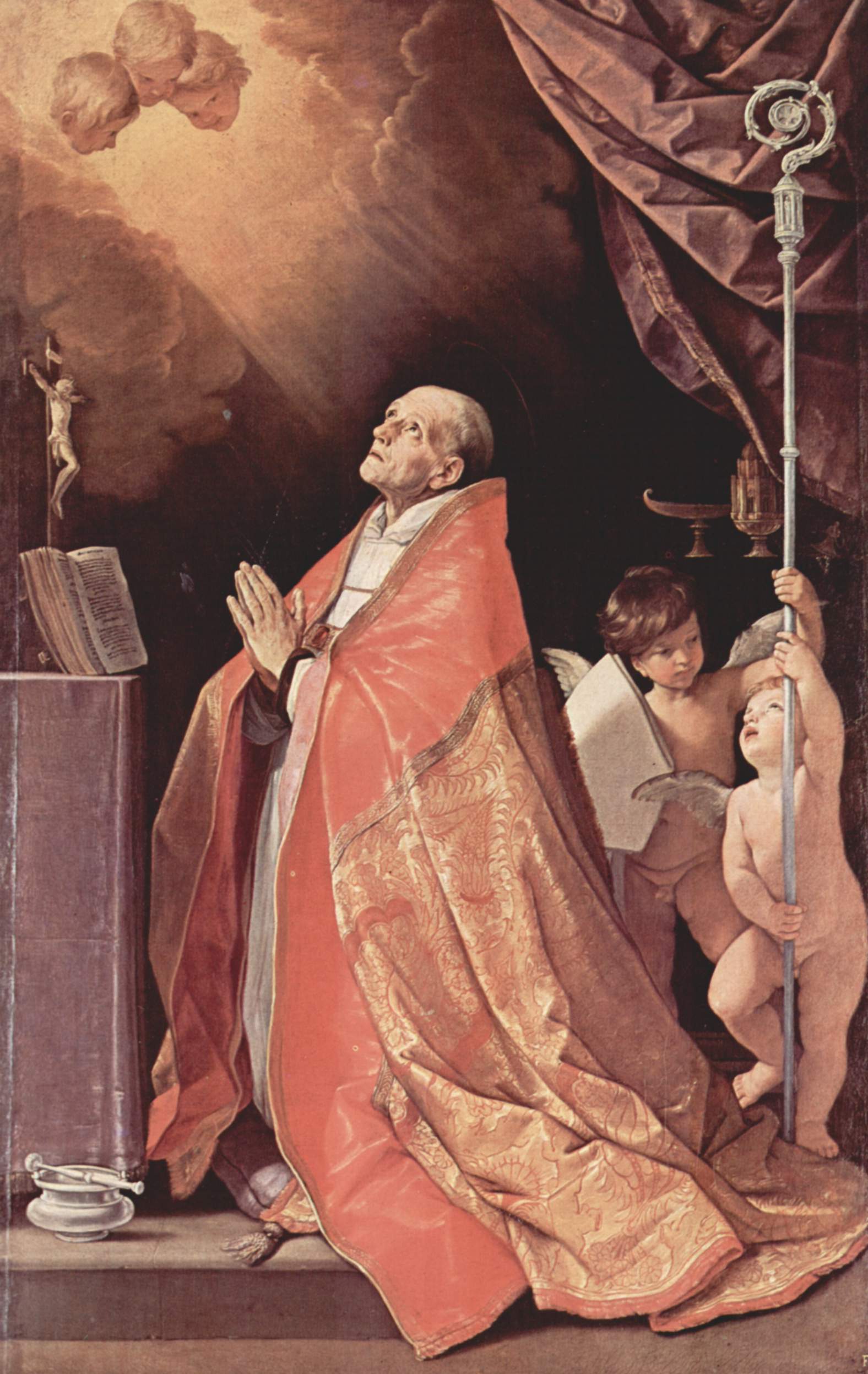
Andrew Corsini was born to the great Corsini banking family of Florence and (according to a celebrated family tradition) was given to the Carmelites by his mother in fulfillment of a vow after a dream in which he appeared to her as a wolf becoming a lamb. He led an early life of brawling and gambling; converted at twenty by a chance encounter with his mother who told him the wolf-and-lamb story, he entered the Carmelites at Santa Maria del Carmine in Florence and was ordained priest in 1328.
He studied at Paris and Avignon and returned to Florence as the leading Carmelite theologian of his generation. Elected Bishop of Fiesole in 1349 — a Florentine diocesan suffragan — he fled the city to escape consecration and hid at the Carthusian charterhouse of Florence; he was found and consecrated only after long persuasion. As bishop he washed the feet of the poor every Maundy Thursday, fed twelve indigents daily at the episcopal table, and was the principal mediator in the bitter family vendettas that scarred Trecento Florentine politics.
Sent to Bologna in 1373 as papal legate to mediate the Otho/Visconti civil war that had thrown northern Italy into chaos, he succeeded — winning back Bologna for the papal party. He returned to Fiesole exhausted and died on the Epiphany 1374 (the date that became his feast). Canonized in 1629 by Urban VIII, his shrine is in the Corsini family chapel at Santa Maria del Carmine in Florence, where the family commissioned Luca Giordano to fresco the cycle of his life in the 1680s.