
MIRACULOUS MIRACLES™

Saint — Anstrude (Austreberta) of Laon

St. Anstrude (Austreberta) of Laon
c. 645 AD, Laon, Frankish Neustria (royal Merovingian noble family) — October 17, c. 709 AD, Laon, France
Abbess of Notre-Dame de Laon; Frankish women's monastic figure
Notre-Dame de Laon (Notre-Dame Abbey, modern Laon Cathedral), France — her abbey, France
Feast
October 17
Canonized
Pre-congregation
Life

Anstrude was the daughter of Blandinus and St. Salaberga of Laon — the Merovingian-period abbess who had established the great women's abbey of Notre-Dame de Laon around 650 on the rock of Laon (the episcopal city of northern France).

Educated at her mother's abbey from childhood, Anstrude succeeded Salaberga as abbess of Notre-Dame de Laon around 670, governing the women's monastic community of the rocky episcopal city for nearly four decades.

Her brother Baldwin, a young Merovingian noble, was murdered around 680 by political enemies — likely associates of Mayor of the Palace Ebroin, the brutal ruler of Neustrian Francia. Anstrude herself was repeatedly targeted by the same enemies, who attempted to depose her from the abbacy and seize her abbey's lands.

She preserved Notre-Dame de Laon through the late-Merovingian political chaos until her death around 709, leaving the continuous women's monastic community of Laon — which survived through the Carolingian and Capetian centuries and contributed to the medieval cathedral school of Laon (one of the most important pre-university theological centres in 11th–12th-century Europe).

Miracles & Phenomena
  • The preservation of Notre-Dame de Laon through Merovingian chaos

    Anstrude's nearly forty-year governance of Notre-Dame de Laon through the violence and instability of the late Merovingian political order — preserving the Salaberga community through the Pippinid-Carolingian transition — is the institutional miracle that established the continuous Laon Catholic monastic tradition. Notre-Dame de Laon would in the 9th century produce the Caroligian theologian Hincmar of Laon, and the 11th–12th-century Laon Cathedral school would shape the Catholic scholastic theology of Anselm of Laon and Peter Abelard.

Relics
  • Body
    Tomb of St. Anstrude
    Notre-Dame de Laon (modern Laon Cathedral), France — the medieval shrine destroyed in the French Revolution (1793)

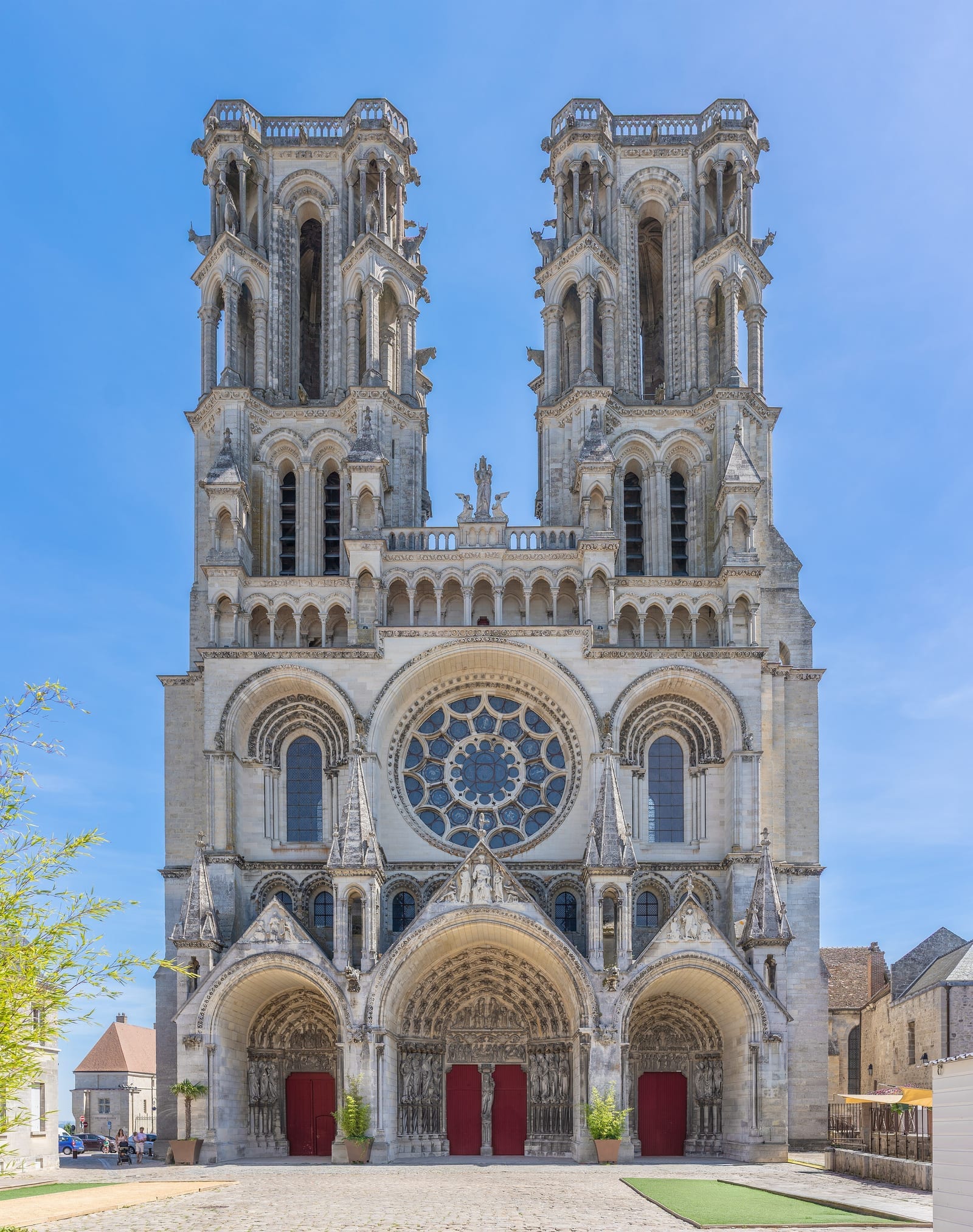
    Her medieval shrine at Notre-Dame de Laon survived until the French Revolution, when it was destroyed in the 1793 dechristianization. The early-Gothic Laon Cathedral (begun c. 1160) survives as one of the masterpieces of early French Gothic architecture, retaining the Anstrude-and-Salaberga dedication.

Iconography
  • Anstrude governing Notre-Dame de Laon

    The late-7th-century Frankish abbess in Benedictine habit at the rocky Laon abbey holding the abbatial crook and the Salaberga rule, the Merovingian women's community visible behind — the iconography of Catholic Merovingian-Carolingian women's monastic continuity.

Patronages
Diocese of LaonCity of LaonCatholic Merovingian-Carolingian transition women's monasticismCatholic abbesses suffering political martyrdom