
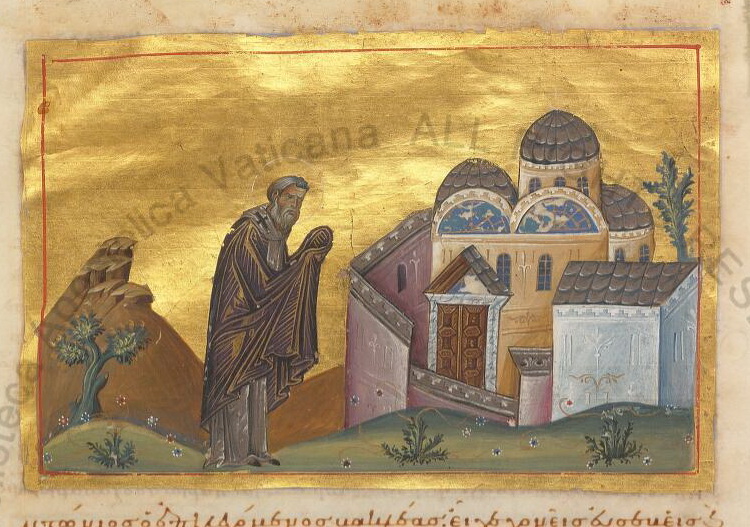
MIRACULOUS MIRACLES™

Saint — Anthony II Kauleas of Constantinople

St. Anthony II Kauleas of Constantinople
c. 829 AD, Phrygia, Byzantine Asia Minor (Greek-Phrygian Byzantine family) — February 12, 901 AD, Constantinople
Patriarch of Constantinople 893–901; post-Photian peace-maker
Hagia Sophia, Constantinople — his cathedral see; the eastern-Catholic and Orthodox cathedral of the Ecumenical Patriarchate, Turkey
Feast
February 12
Canonized
Pre-congregation; venerated jointly in the eastern-Catholic Byzantine-rite and Orthodox calendars
Life

Anthony Kauleas was born around 829 to a Greek-Phrygian Byzantine family that moved to Constantinople during his childhood. He entered monastic life at age 12 at the monastery of Kauleas in Constantinople (from which he took his surname Kauleas), becoming abbot of the monastery in his adult years.

On August 12, 893, after the death of Patriarch Stephen I (the son of Emperor Basil I the Macedonian), Anthony was elected Patriarch of Constantinople by Emperor Leo VI the Wise — selected for his reputation of holy ascetic life and pastoral moderation, after the decades of Ignatian-Photian controversy that had divided the Constantinopolitan Catholic-Christian community.

His eight-year patriarchate (893–901) was devoted to the reconciliation of the Ignatian (anti-Photian) and Photian (moderate-conciliarist) parties — producing the peace synod of 899 that formally ratified the mutual reconciliation of the two parties under the shared patriarchal authority.

He maintained cordial relations with Pope Stephen V and Pope Formosus in Rome — preserving the continuing Catholic-Orthodox communion that the John VIII / Photios reconciliation of 879 had restored.

Anthony died at Constantinople on February 12, 901 — having restored the internal peace of the Constantinopolitan Catholic Church after the decades of Ignatian-Photian division. His successor Nicholas I Mystikos would face the new crisis of Emperor Leo VI's fourth-marriage controversy.

Miracles & Phenomena
  • The peace synod of 899

    Anthony Kauleas's peace synod of 899 — reconciling the Ignatian and Photian parties of the Constantinopolitan Catholic-Christian community after decades of division — restored the internal unity of the Eastern Catholic-Orthodox tradition. The reconciliation preserved the continuing mutual communion of the Latin and Greek Catholic Churches through the late-9th and 10th centuries — postponing the definitive East-West Schism by the one and a half centuries (until 1054).

Relics
  • Body
    Relics of St. Anthony II Kauleas
    Hagia Sophia, Constantinople (537–1453) / Ecumenical Patriarchate cathedral of St. George at the Phanar, Istanbul (1453 to present) — fragmentary relics

    His relics were preserved at the Hagia Sophia through the Byzantine period; after the 1453 Ottoman conquest, fragmentary relics were translated to the Ecumenical Patriarchate cathedral of St. George at the Phanar in Istanbul, where they are venerated to the present day.

Iconography
  • Anthony Kauleas presiding at the peace synod of 899

    The late-9th-century Patriarch of Constantinople in patriarchal vestments presiding at the reconciling peace synod of 899 in the Hagia Sophia, the reconciled Ignatian and Photian episcopate seated before him, the synodal reconciliation-document visible — the iconography of eastern-Catholic Constantinopolitan ecumenical-reconciliation tradition.

Patronages
Catholic post-Photian ecumenical peace traditionCatholic and Orthodox Constantinople patriarchal traditionCatholic ecclesiastical reconciliation