
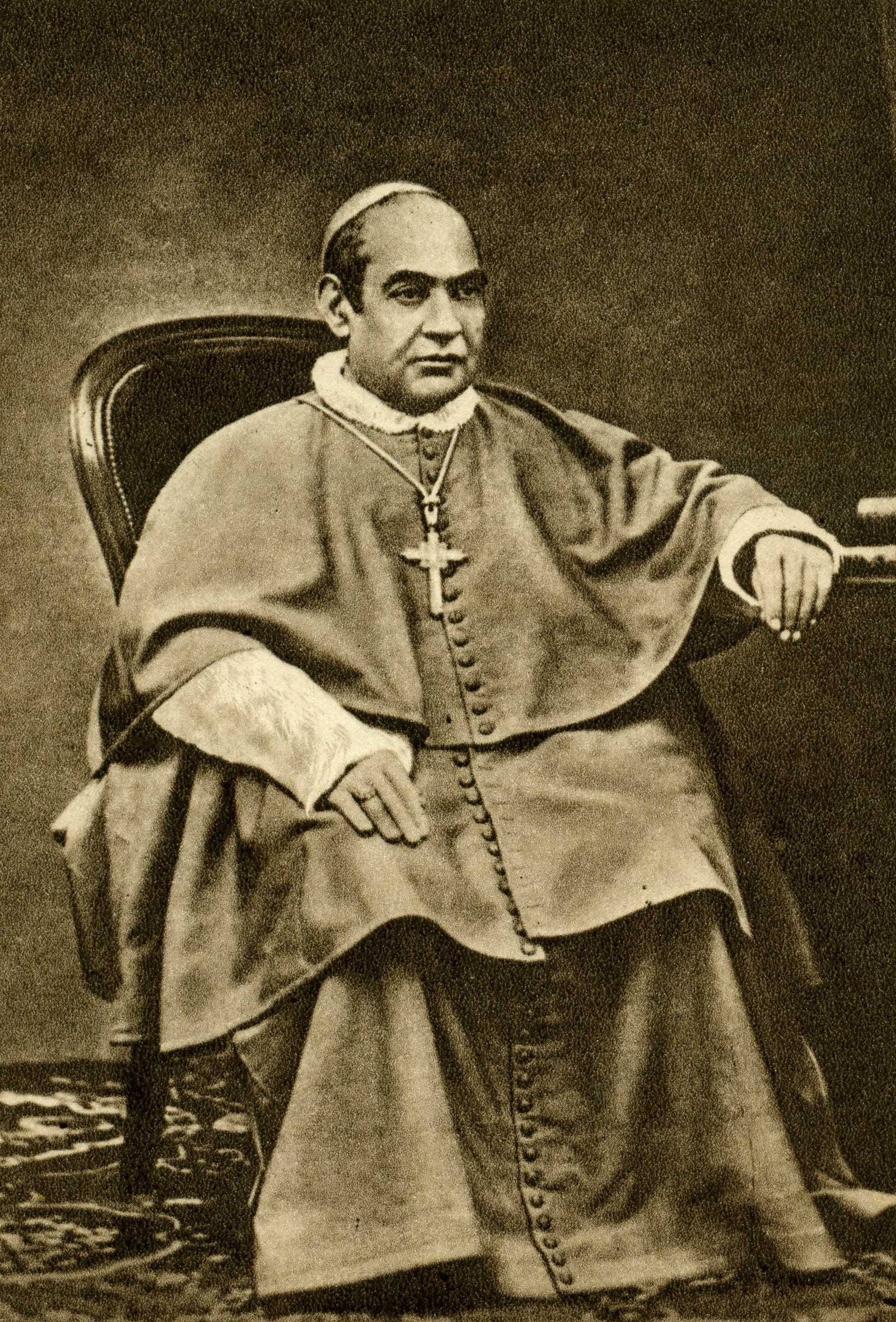
Antoni Maria Claret i Clarà was born to a Catalan weaver's family at Sallent in the foothills of the Pyrenees and was ordained priest at Vic in 1835 at twenty-seven. He served briefly as parish curate in the Catalonia of the First Carlist War (1833–40), then was sent to Rome in 1839 to discern entry to the Jesuits. He instead returned to Catalonia in 1840 and worked for the next nine years as the principal wandering preacher of post-war Catalonia — preaching missions in over twenty Catalan dioceses, founding small religious lay-confraternities, and (from 1848) running the Religious Library (Llibreria Religiosa) of Barcelona — a major Catholic publishing house that produced over 200 titles and over 5 million volumes for the rapidly-literate Catalan Catholic working classes.
In 1849, at Vic, he founded the Missionary Sons of the Immaculate Heart of Mary (the Claretians) — a new Spanish congregation specifically dedicated to popular preaching, the Catholic press, and parish missions. Pope Pius IX in 1850 named him Archbishop of Santiago de Cuba — then the principal Spanish colonial see in the Caribbean. He served at Santiago for six years (1851–57), reforming the diocese, confronting the slaveholding planter class (he founded a free agricultural training programme for emancipated slaves), and surviving an assassination attempt in 1856 by a slaveholder's hired killer (the bullet struck him in the cheek and he was permanently scarred).
From 1857 he served as confessor to Queen Isabel II of Spain in Madrid — a politically explosive appointment given the queen's increasingly precarious position and the rising Spanish anti-clerical movement. When Isabel was forced into French exile by the Glorious Revolution of September 1868, Claret followed her into exile in Paris. The Vatican Council of 1869–70 found him as one of the principal defenders of the dogmatic constitution Pastor Aeternus on papal infallibility — particularly through his vigorous interventions in the conciliar debates of the spring of 1870. He died at the Cistercian abbey of Fontfroide in Languedoc, where the exiled Spanish religious had taken refuge, on October 24, 1870 at sixty-two. Canonized 1950.