
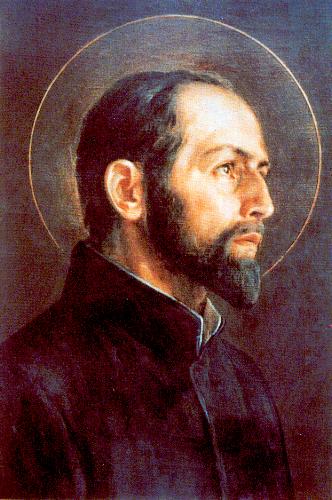
Antonio Maria Zaccaria was orphaned of his father at two and raised by his deeply pious mother. He studied medicine at the University of Padua, graduated in 1524, and practiced for three years as a physician at Cremona — devoting his hospital work especially to the city's poor. In 1527, convinced he should serve souls more than bodies, he abandoned medicine, studied theology, and was ordained priest in 1528. His first Mass was at the family chapel where his mother had taught him.
He moved to Milan in 1530 and there founded three new religious institutes together: the Clerics Regular of St. Paul (the Barnabites, named after their second church of San Barnaba in Milan and confirmed by Pope Clement VII in 1533), the Angelics of St. Paul (women religious), and a lay confraternity of the Married. The three groups shared a single spiritual program — the renewal of the Church through return to the Pauline letters, frequent reception of the Eucharist (rare in late-medieval Italy), and dramatic public preaching with the ringing of church bells at 3pm every Friday to commemorate the moment of Christ's death.
He is the originator (with the Capuchin friar Joseph of Ferno) of the Forty Hours' Devotion (Quarant'Ore) — the public exposition of the Blessed Sacrament for forty hours, originally commemorating the time Christ's body lay in the tomb. The Forty Hours became one of the principal devotional engines of the Catholic Reformation. He died at Cremona on July 5, 1539, aged thirty-six. Canonized 1897.