
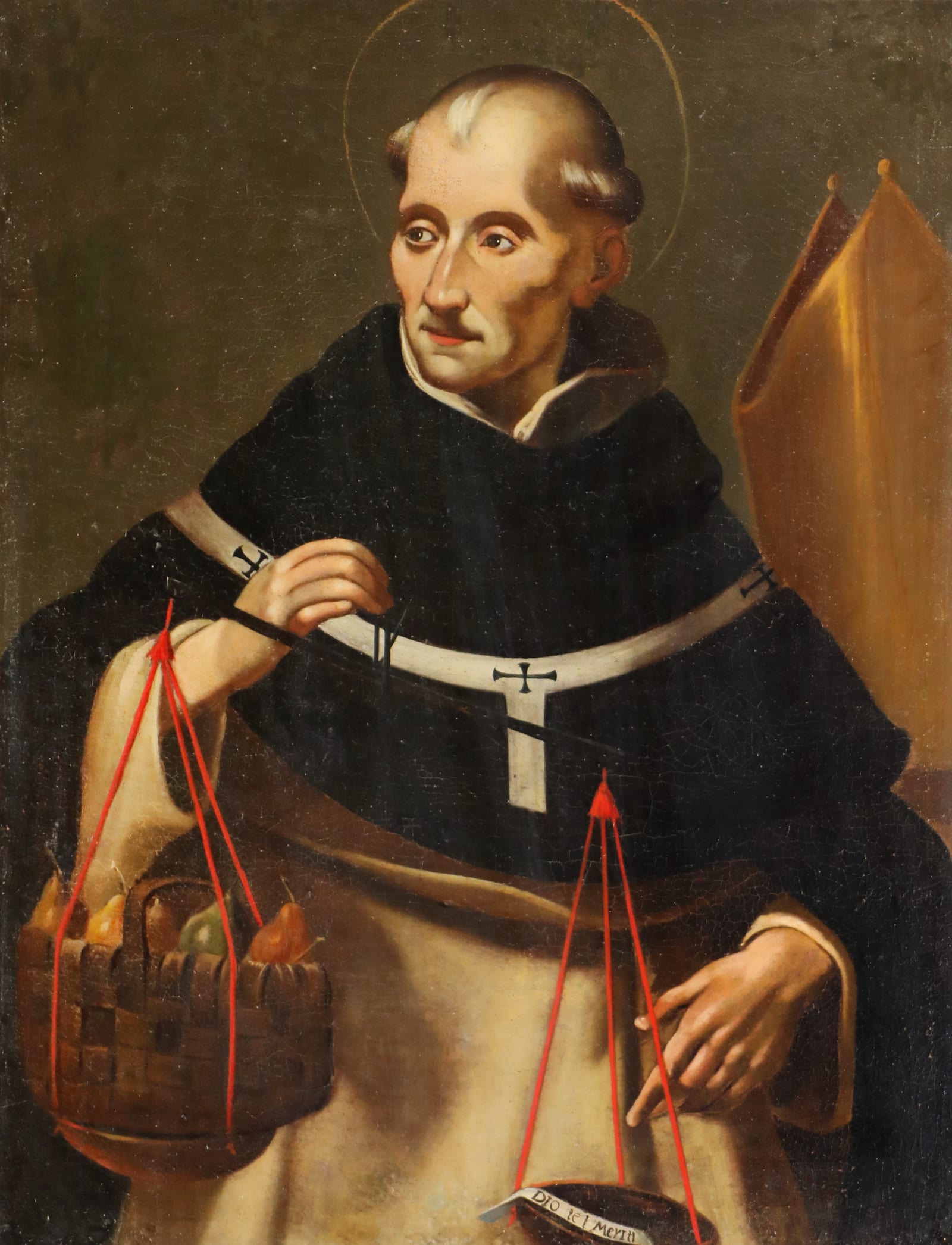
Antonino Pierozzi entered the Dominican Observant convent of Fiesole in 1405 at the age of sixteen under the celebrated reformer Bl. John Dominici. He served as prior at convents in Cortona, Naples, and Rome before being elected prior of the new convent of San Marco in Florence in 1436 — the convent rebuilt by Cosimo de' Medici and famously frescoed by Antoninus's friend Fra Angelico, the Dominican painter of the same community.
In 1446 Pope Eugene IV named him Archbishop of Florence against his strenuous protest. He served for thirteen years (1446–59), reforming the diocese, refusing all luxury (he travelled on a mule, slept on a straw mat in his palace, gave his episcopal income to the poor), and famously transforming Florentine attitudes toward poverty: he founded the Buonomini di San Martino — a confraternity for the 'shamefaced poor,' Florentine families fallen into hidden poverty, whose dignity was preserved by anonymous nightly deliveries of alms. The Buonomini still functions in Florence.
His four-book Summa Theologica Moralis — completed shortly before his death — is the first major work of systematic Catholic moral theology specifically addressed to the new commercial-capitalist economy of the Italian Renaissance, with detailed treatment of banking, foreign exchange, partnership contracts, and the moral conditions of just commerce. The work was the foundation of Catholic economic ethics through the Counter-Reformation and is one of the foundational texts of the late medieval moral-theological tradition. He died at San Marco in 1459 and was canonized in 1523.