
Anuarite ('I am laughing because of war') was the daughter of a Bantu farming family from the Mangbetu people of the northeastern Belgian Congo. Her name was given because she was born in the year of the German invasion of Poland. She was baptized at twelve with the additional name Marie-Clémentine. She entered the Holy Family Congregation (Jamaa Takatifu) — a Bantu women's diocesan congregation founded for the catechetical education of Congolese children — at sixteen in 1959, making her religious vows in 1962.
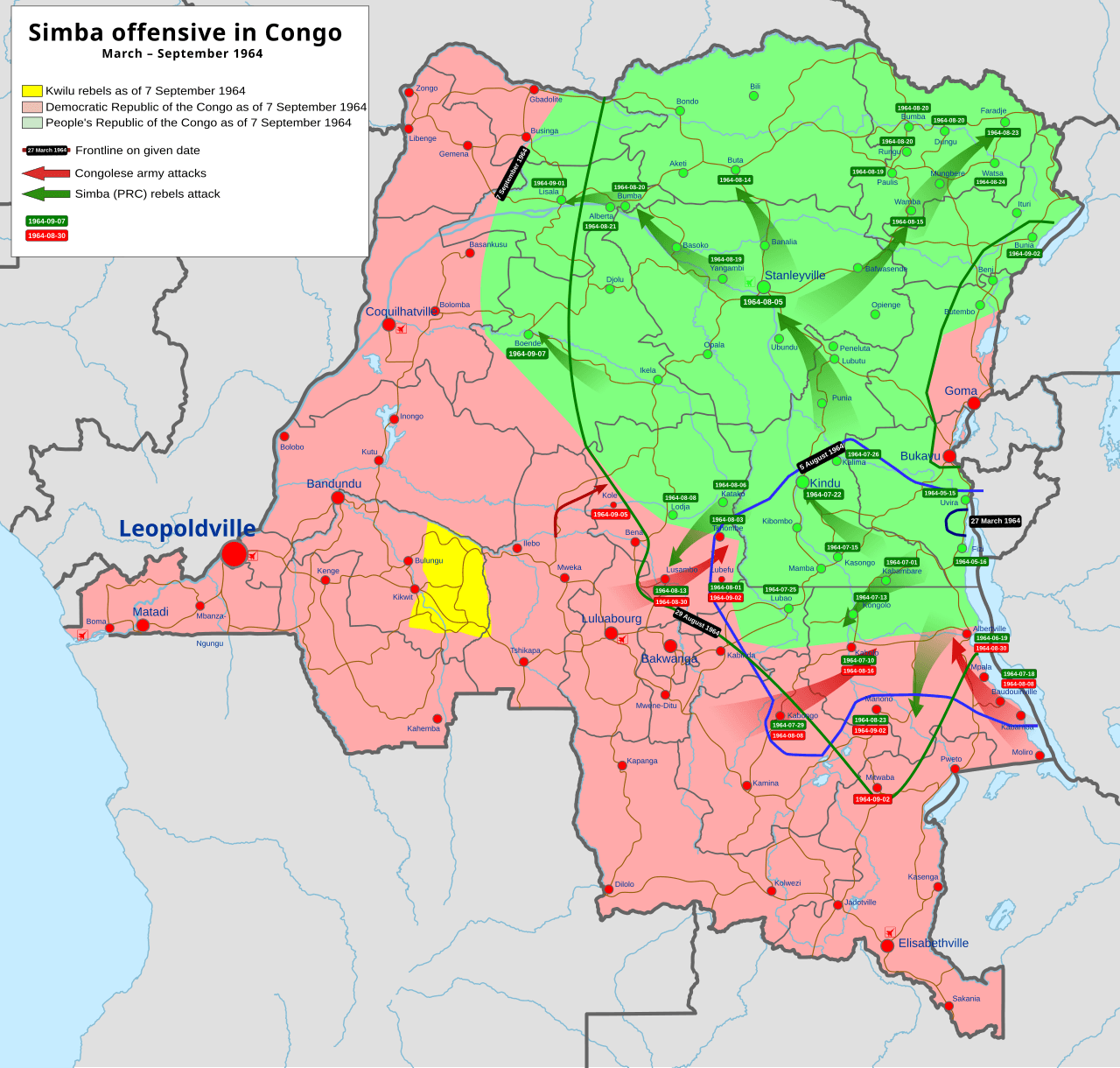
She served at the small Holy Family convent at Bafwabaka in the diocese of Wamba. In late November 1964 — during the post-independence Simba rebellion (a violent Marxist insurgency in eastern Congo that overran the region in late 1964 before being defeated in November–December 1964 by central government forces with Belgian-American support) — the Simbas occupied Bafwabaka. The convent's 46 sisters and their pupils were ordered to march under armed escort to the rebel capital at Stanleyville.
On the night of November 30 – December 1, 1964, at Isiro (the Simba interim military base), the Simba colonel Pierre Olombe demanded that Anuarite become his concubine. She refused. In a long confrontation through the night — in which Olombe beat her, threatened her with execution, and finally — when she continued to refuse and explicitly forgave him for what he was about to do — bayoneted her in the chest. Her dying words to Olombe (recorded by surviving witness sisters): 'I forgive you. You do not know what you are doing.' She was twenty-four. Pope John Paul II beatified her at Kinshasa on August 15, 1985 during his apostolic visit to Zaire — the only beatification ever held in central Africa. Pierre Olombe was in the crowd at the beatification; John Paul II called him forward by name and publicly embraced him, in the parallel of Maria Goretti and Alessandro Serenelli.