
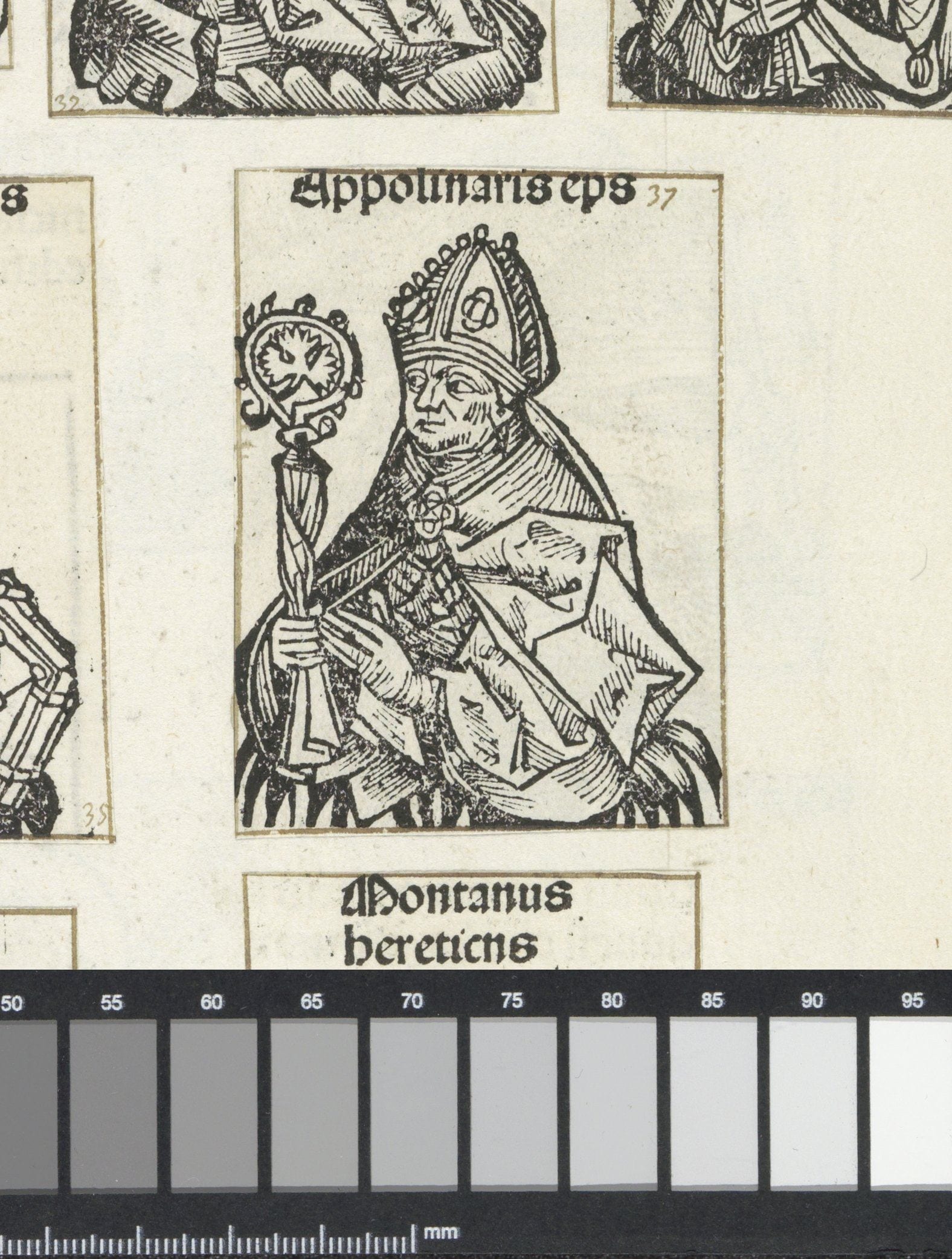
Apollinaris (Greek Apollinarios) was Bishop of Hierapolis (the same Phrygian see that had been held a generation earlier by Papias; see Papias's entry above) in the late 2nd century. He composed multiple works (none of which survive except in brief fragments quoted by Eusebius): an Apology addressed to the Emperor Marcus Aurelius (c. 175), five books Against the Greeks, two books On Truth, two books Against the Jews, and a substantial multi-book treatise Against the Phrygian Heresy (against Montanism — see below).
Apollinaris is the principal early Catholic source for the celebrated incident of the 'Thundering Legion' (Legio XII Fulminata) of Marcus Aurelius's army during the Quadi campaign of AD 174: the Christian soldiers of the Legion, finding themselves trapped without water in an arid plain during a campaign against the Quadi tribe of Bohemia-Moravia, prayed to Christ and were saved by a sudden thunderstorm that simultaneously relieved their thirst and panicked the attacking Quadi cavalry. Apollinaris's testimony to the episode (in his Apology) is one of the earliest Catholic claims of imperial-army intercession.
Apollinaris was the principal early Catholic ecclesiastical opponent of the Montanist movement of his fellow Phrygian Montanus (who was teaching at Pepuza in Phrygia from c. AD 156 onward) — the new prophetic-charismatic movement that claimed continuing apostolic-rank prophecy and that was eventually condemned by the universal early Catholic Church. Apollinaris's anti-Montanist treatises were the foundational early Catholic critique of the movement.