
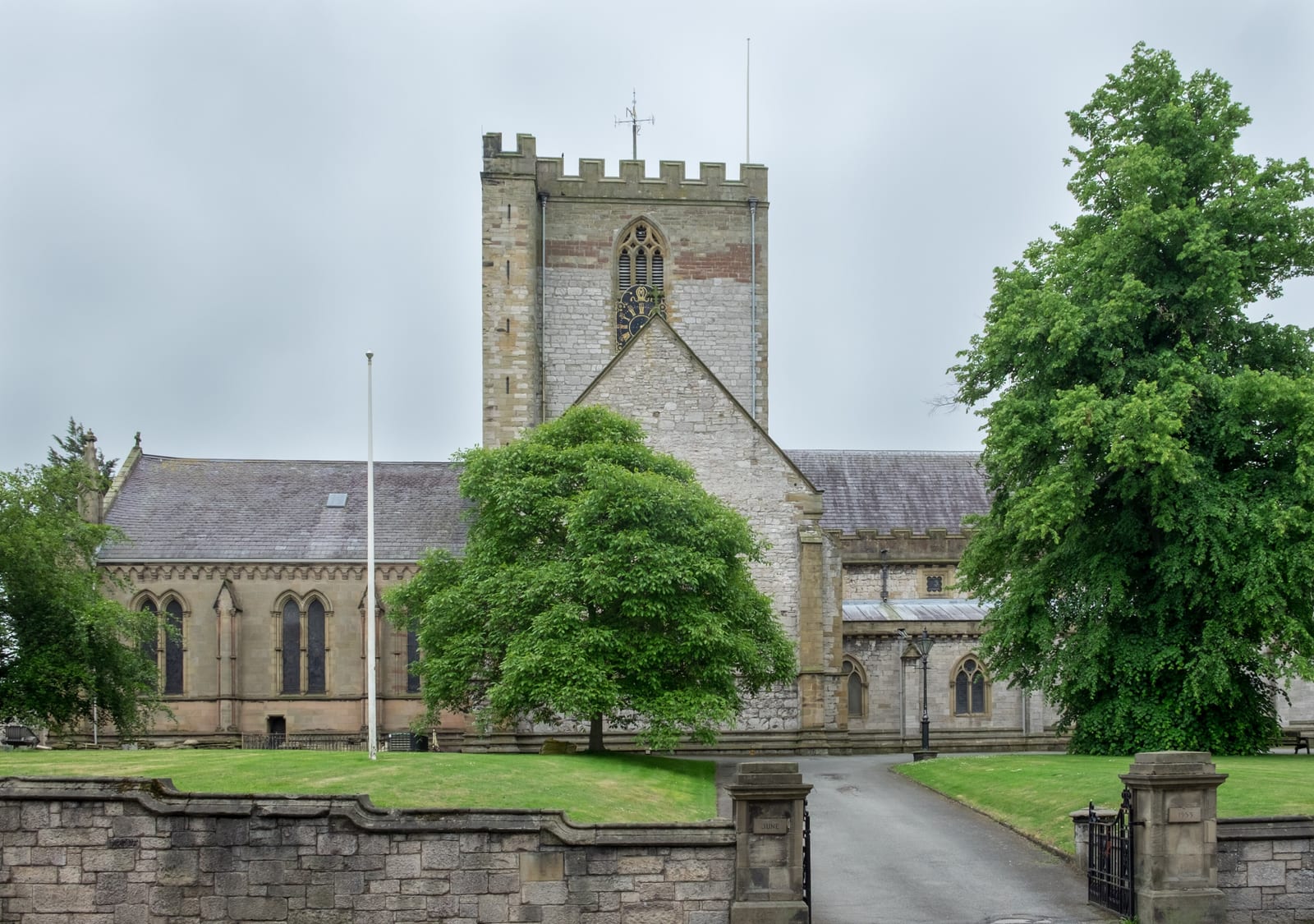
Asaph (Welsh Asaff or Asaph; possibly cognate with the Hebrew Asaph of the Psalms, though the etymology is contested) was — per the medieval Welsh hagiographic tradition — a young Welsh nobleman of North Wales who became a personal disciple of St. Kentigern of Glasgow (Welsh Cyndeyrn, also called Mungo; see Kentigern's entry in the 7th-c. supplemental catalogue when we do the 7th-c. supplement) during Kentigern's period of exile in North Wales in the second half of the 6th century.
Kentigern — the apostle of the Glasgow-Clyde Brittonic Christian community in modern southern Scotland — had been forced into exile from his Glasgow see by political upheavals in the Strathclyde kingdom around 555 AD. He had travelled south to North Wales where he founded the small monastery of Llanelwy ('the church on the Elwy river') in the Denbighshire valley of the River Elwy around 560 AD. The young Welsh Asaph became Kentigern's most senior personal disciple during the Llanelwy years.
When Kentigern was finally recalled to his Glasgow see around 573 — through the substantial political reorganization of the Strathclyde kingdom — he installed Asaph as his successor at Llanelwy. Asaph governed the small North Welsh see for approximately twenty years, transforming the Llanelwy foundation into one of the four continuous Welsh medieval episcopal sees (with Bangor, St David's, and Llandaff — the four sees that would constitute the medieval Welsh ecclesiastical-territorial identity).
Asaph died at Llanelwy around 596 AD. The medieval Llanelwy diocese was renamed in his honour as the Diocese of St Asaph (Welsh Esgobaeth Llanelwy) — preserving his name as one of the Welsh Catholic-civic-territorial identities. The medieval Cathedral of St Asaph at Llanelwy is one of the smallest medieval cathedrals in the British Isles but one of the North Welsh continuous-Christian sites.