
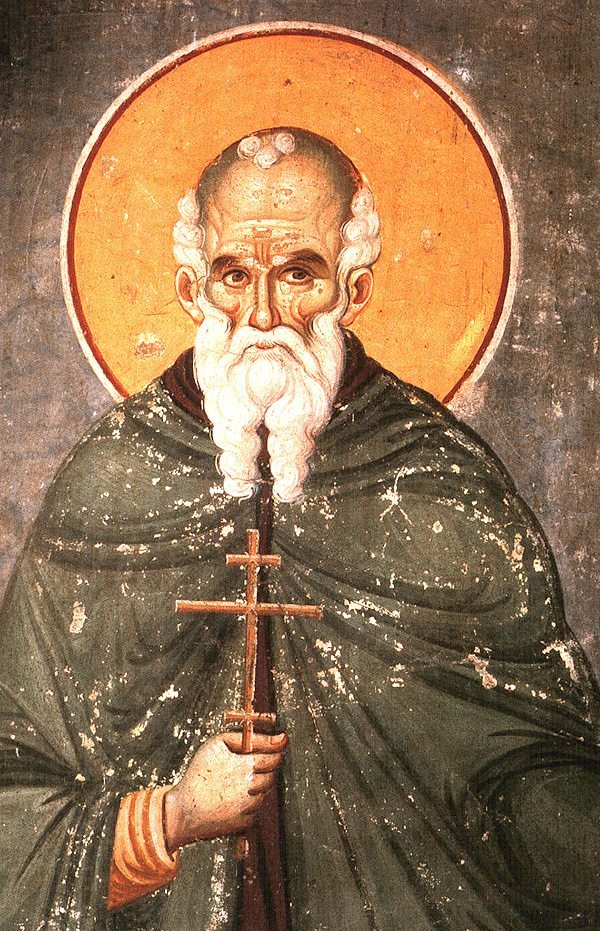
Athanasius (baptismal name Abraham) was born around 920 in Trebizond on the Black Sea coast of Byzantine Anatolia, to a Greek-Pontic Byzantine family. Orphaned in childhood, he was educated at Constantinople where he became a distinguished scholar in the imperial school.
Around 952, drawn to the monastic life, he entered the Monastery of Kyminas on the Bithynian Mount Olympus under the Abbot Michael Maleinos (the uncle of the future Emperor Nikephoros II Phokas).
Around 958 the young Byzantine general Nikephoros Phokas — preparing for the reconquest of Crete from the Saracens — sought Athanasius's spiritual counsel; the deep friendship between the monk and the future emperor produced the royal patronage that would underpin the Mount Athos foundation.
Around 961 Athanasius withdrew to the Mount Athos peninsula in northern Greece — a rocky promontory already inhabited by scattered Greek hermit-anchorites. With the massive imperial endowment from Nikephoros Phokas (who became emperor 963–969), Athanasius founded in 963 the Great Lavra (Megisti Lavra) — the principal monastery of Mount Athos.
The Lavra was established as a fully cenobitic (coenobium, communal-life) monastery — the deliberate alternative to the previously dominant eremitic-hermit tradition of Mount Athos. The tension between the new cenobitic discipline of Athanasius's Lavra and the older hermit-tradition of Athos produced the hermit-revolt that produced the famous Athonite Typikon of 972 (under Emperor John Tzimiskes) — the legal-disciplinary document that established Mount Athos as the unique mixed cenobitic-and-eremitic Byzantine monastic federation that survives to the present day.
Athanasius died around 1001 when the dome of the expanding Lavra church collapsed during construction — killing the abbot and several monks who were inspecting the work.
The Great Lavra survives in continuous Catholic-Orthodox liturgical use to the present day as the principal and largest of the twenty monasteries of the Athonite monastic republic.