
MIRACULOUS MIRACLES™

Saint — Aymard of Cluny

St. Aymard of Cluny
c. 900 AD, Burgundy (noble Burgundian family) — October 5, 965 AD, Cluny Abbey, Burgundy
Third Abbot of Cluny (942–965); continuation of the Cluniac reform
Abbey of Cluny, Saône-et-Loire, Burgundy, France — his lifelong monastic home; the abbey was destroyed in the 1790 French Revolutionary dissolution but fragments survive, France
Feast
October 5
Canonized
Pre-congregation; venerated as one of the 'Five Great Abbots of Cluny' (Berno, Odo, Aymard, Maieul, Odilo)
Life

Aymard was elected the third abbot of Cluny in 942 — succeeding St. Odo. For seventeen years (942–959) he governed the growing Cluniac monastic federation, consolidating the reform that Berno and Odo had established and expanding the number of Cluniac affiliated houses.

In 959 Aymard was afflicted with sudden blindness — and rather than continuing as governing abbot despite the infirmity, he undertook the humble step of appointing his disciple St. Maieul (Maiolus) as his successor while he was still alive — retiring into the simple life of a blind monk at Cluny for the remaining six years of his life.

The example of Aymard's voluntary abdication for the good of the community — one of the earliest documented monastic-religious abdications in Catholic history — established the pattern of graceful religious-leadership transition that would shape the Catholic monastic tradition.

He died at Cluny on October 5, 965, having served (first as governing abbot for 17 years, then as blind retired abbot for 6 years) for 23 years in total at Cluny — the humble link between the Berno-Odo founding-generation and the Maieul-Odilo expansion-generation of the Cluniac monastic reform.

Miracles & Phenomena
  • The humble abdication and the Cluniac succession

    Aymard's 959 voluntary abdication after the onset of blindness — and his decision to appoint St. Maieul as successor while still alive, retiring as a simple blind monk at Cluny for the remaining six years of his life — is one of the earliest documented Catholic monastic abdications and the classic Cluniac succession-pattern. The pattern of graceful religious-leadership transition shaped the Catholic monastic tradition (the nine successive non-dynastic Catholic Cluniac abbatial elections from Berno to Peter the Venerable over 254 years are unparalleled in the monastic history of Western Catholicism).

Relics
  • Body
    Tomb of St. Aymard
    Abbey of Cluny, Burgundy, France — destroyed in the French Revolutionary dissolution (1790) and demolition (1798–1823); only fragments of the once-immense abbey church survive

    His tomb at the Abbey of Cluny was destroyed in the French Revolutionary destruction of the abbey. The fragments of the once-largest church in Christendom (Cluny III, built 1088–1130, the principal Romanesque church before Old St. Peter's Basilica) survive in the current village of Cluny — including the southern transept and the octagonal bell-tower (the 'Clocher de l'Eau Bénite').

Iconography
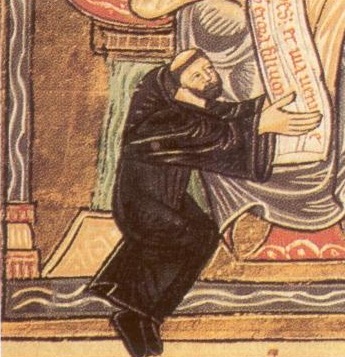
  • Aymard appointing Maieul as his successor

    The mid-10th-century blind Cluniac abbot in Benedictine habit at the Cluny chapter-house in 959 laying his hands on his young successor St. Maieul, surrendering the abbatial staff while retaining only his simple monastic habit — the iconography of Catholic Cluniac humble-succession tradition.

Patronages
Abbey of Cluny and the Cluniac monastic orderCatholic blind abbots and superiorsCatholic humble succession in religious leadership