
Bacchus the Younger (so called to distinguish him from the early-4th-century military martyr St. Bacchus, companion of St. Sergius) was born around 765 in Palestine to a Syro-Palestinian Christian family whose father had been forced to convert to Islam under the early-Abbasid social and tax pressure on Christians in the conquered Levant.
Raised nominally as a Muslim, he was educated in early-Abbasid Arabic Islamic culture. After the death of his Muslim father, his Christian mother (who had maintained her faith secretly) reverted openly to Christianity with several of her seven children — including Bacchus.
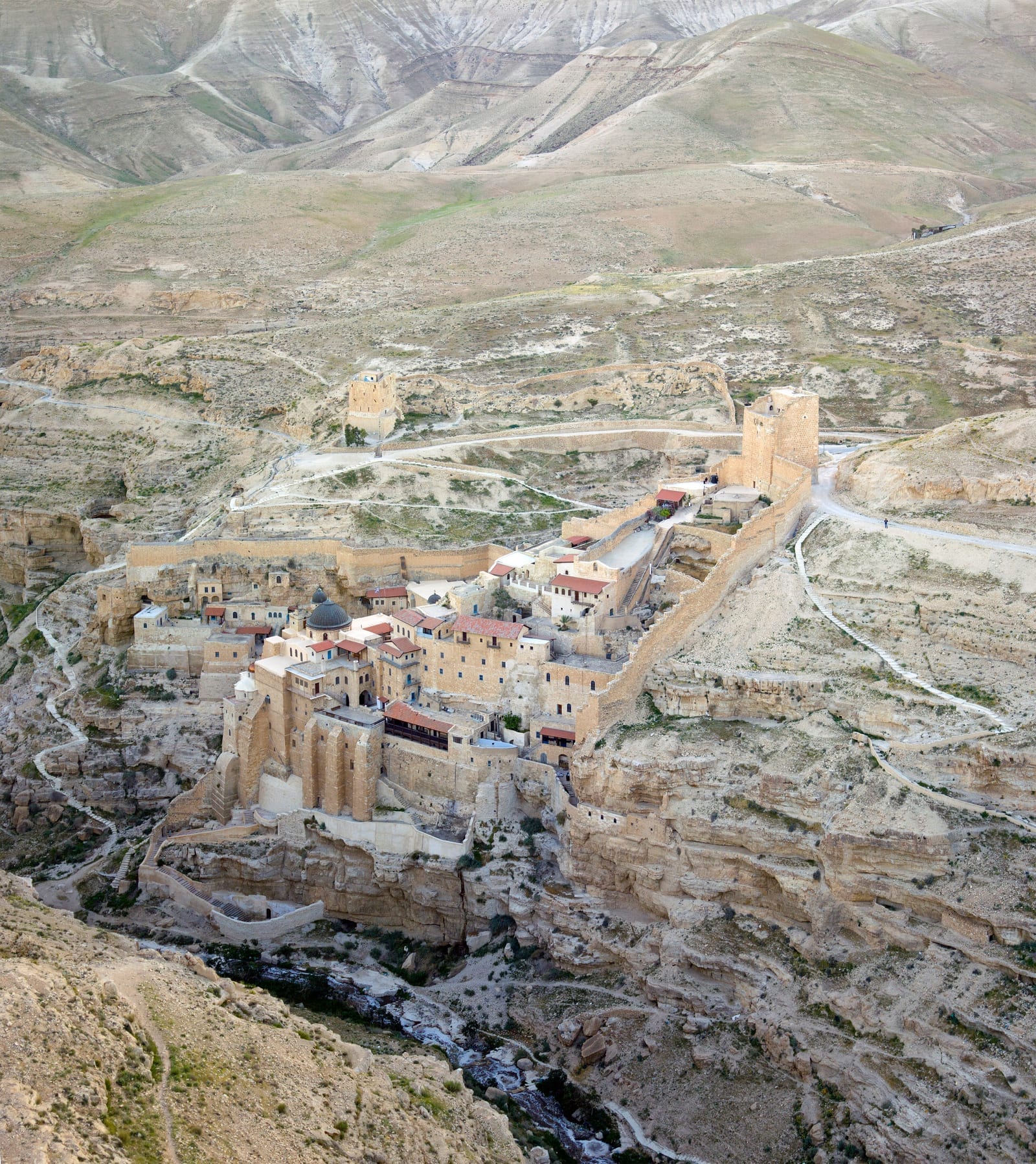
Bacchus was baptized as an adult and entered the great Greek Orthodox / Melkite Catholic monastery of Mar Saba in the Judean Desert — the Palestinian monastic centre that under St. John of Damascus (just a generation earlier) had produced the Catholic theological response to the Islamic conquest.
Returning to Jerusalem as a deacon and openly preaching the Christian faith, he was arrested by Abbasid authorities, charged with apostasy from Islam (a capital offence under Abbasid sharia), and beheaded in Jerusalem around 786 (some sources 788) under the reign of Caliph Harun al-Rashid.
His Greek Vita, composed shortly after his martyrdom by his fellow Mar Saba monk Stephen, is one of the principal sources for the late-8th-century Catholic-Islamic interaction in Palestine and the text in the neo-martyr literature of Christians under early Islamic apostasy persecution.