
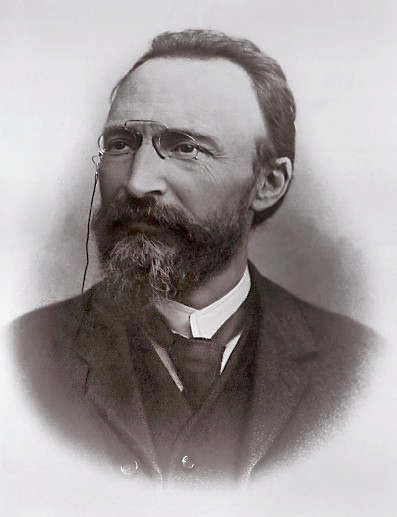
Bartolo Longo was born to an Apulian noble family at Latiano, educated by the Piarists at Lecce, and went to the University of Naples in 1861 to study law. There — in the politically turbulent decade after the Italian unification — he was drawn into the militantly anti-Catholic spiritualist and Satanist subcultures that flourished in 1860s and 1870s Naples. By 1865 he had been formally ordained a 'priest of Satan' in a Neapolitan Satanic ritual and was publicly preaching against the Catholic Church across southern Italy. He suffered through a sustained personal crisis — depression, persistent hallucinations, and (in his later own account) clear demonic oppression — for the next several years.
His re-conversion in 1871 — through a Dominican-formed lawyer-mentor named Vincenzo Pepe who slowly drew him back to Catholicism and presented him in 1872 to the famous Dominican priest Alberto Radente — was sudden and complete. He made a public confession at the Dominican church at Latiano, renounced his Satanist past in writing, and entered the Dominican Third Order in 1871 with the religious name 'Rosario' (Rosary). For the rest of his life he dedicated himself to the promotion of the Marian Rosary as the principal Catholic counter-devotion to the occult.
Sent by the Countess Marianna De Fusco (whom he would later marry in a chaste Josephite-style marriage in 1885) to administer her properties at Pompei, he discovered in 1872 the spiritual desolation of the village (the ancient Roman ruins of Pompei had been excavated since 1748; the modern village built around them had become notorious in the 19th century for poverty and lawlessness). On October 13, 1873 — at a small confraternity gathering in the chapel — he received a clear interior inspiration to found a major Rosary devotion at Pompei. He began organizing public Rosary recitations, importing a damaged Madonna of the Rosary painting from Naples (the famous Pompei icon: a damaged painting bought for 8 lire that became the central pilgrimage object), and over the next two decades building the great Pontifical Shrine of the Blessed Virgin of the Rosary of Pompei (begun 1876, consecrated 1891, expanded continuously through the 20th century).
Pompei became one of the principal Marian shrines of modern Italy, drawing several million pilgrims annually by 1900. Longo also founded a celebrated orphanage at Pompei for the children of imprisoned convicts (the first such institution in Italy — addressing a category of childhood need that no other Italian charitable institution had touched). He composed the famous 'Supplication to the Queen of the Holy Rosary,' which has been recited publicly at Pompei twice a year (on May 8 and the first Sunday of October) without interruption since 1883 — broadcast continuously since 1928 from the shrine. He died at Pompei on October 5, 1926. Beatified by John Paul II in 1980 — the Pope, himself a Dominican Rosary devotee, identified Longo as the principal modern lay Catholic Marian apostle.