
Basil (Russian Vasily) was born in 1468 at Yelokhovo village near Moscow to a peasant family. Apprenticed as a shoemaker in Moscow, at the age of 16 (1484) Basil undertook the Russian vocation of the Fool for Christ (yurodivy) — in institutional continuity with the earlier Russian yurodivy tradition of St. Andrew the Fool for Christ of Constantinople (10th c.) and St. Michael of Klopsko (see his entry).
For the 68 years (1484–1552), Basil lived on the streets of Moscow — naked in all seasons, undertaking the feigned-madness that concealed the hidden charism of spiritual discernment.
Basil became famous during his lifetime for the confrontations with Tsar Ivan IV the Terrible (1533–1584). The most famous episode: on a Friday during Lent, Basil presented raw meat to the Tsar, who refused it — Basil rebuked: 'How can you refuse to eat the flesh of an animal on this day, but you eat the flesh of men who serve you?' — the public prophetic confrontation of the Tsar's political violence.
In 1547 Basil prophesied the Great Fire of Moscow (which destroyed large portions of the city) by weeping publicly at the city gate.
He died at Moscow on August 2, 1552 in the presence of Tsar Ivan IV, who personally attended his funeral (the famously abusive Tsar's one recorded public act of veneration).
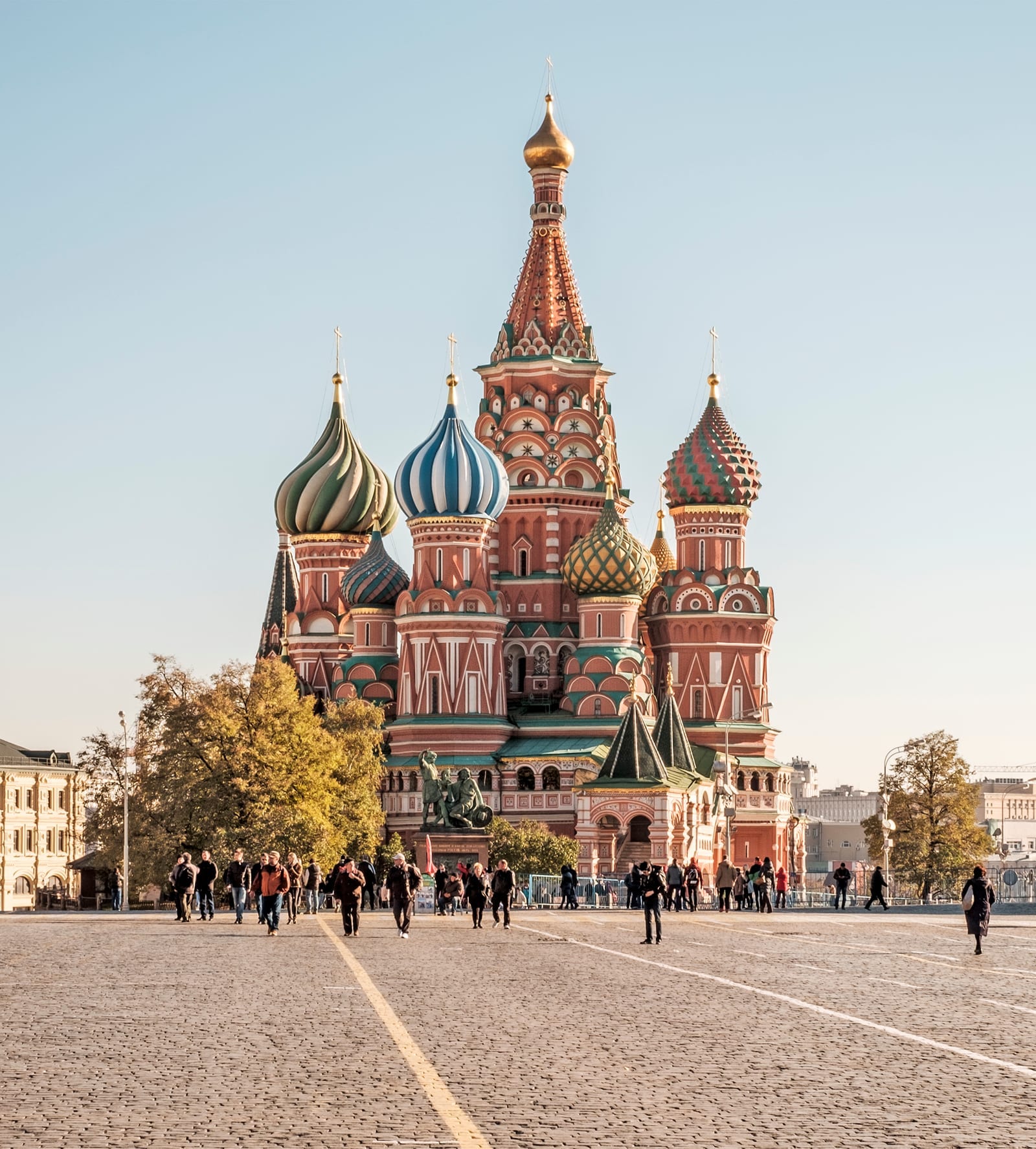
In 1555–1561 Tsar Ivan IV built the Cathedral of the Intercession of the Theotokos on the Moat on Red Square in Moscow to commemorate the 1552 conquest of the Tatar Khanate of Kazan. In 1588 — following Basil's canonization by Patriarch Job of Moscow — the cathedral was popularly renamed 'St. Basil's Cathedral' in his honor, institutionally becoming the iconic symbol of Moscow and Russia. UNESCO World Heritage Site since 1990.