
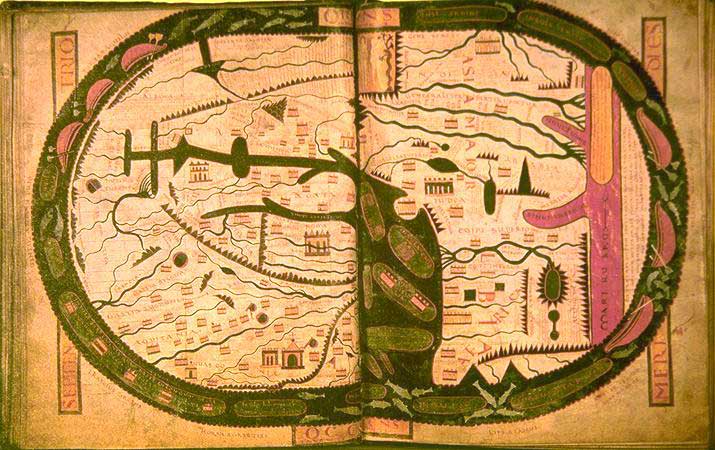
Beatus was a monk of the Asturian-Cantabrian mountains of northern Spain — the last redoubt of Spanish Christianity after the Muslim conquest of 711. From the small monastery of Santo Toribio de Liébana, deep in the Picos de Europa, he became the principal theologian of resistance to the Adoptionist heresy of Elipandus of Toledo and Felix of Urgel, which had attracted the support of the southern Spanish Christians under Muslim rule.
His Apologeticum (785) and his correspondence with Alcuin of York rallied Charlemagne, Pope Adrian I, and the Frankish Church against the heresy, which was condemned at the Council of Frankfurt in 794.
His Commentary on the Apocalypse — completed around 776 in twelve books — is one of the most important biblical commentaries of early medieval Spain. Copies of it produced from the 9th to the 12th centuries — the 'Beatus manuscripts' — are illuminated with the most extraordinary apocalyptic imagery in all of medieval art: thirty-five surviving codices, including the Morgan Beatus, the Saint-Sever Beatus, and the great Codex of Burgo de Osma, are foundational documents of Romanesque art.