
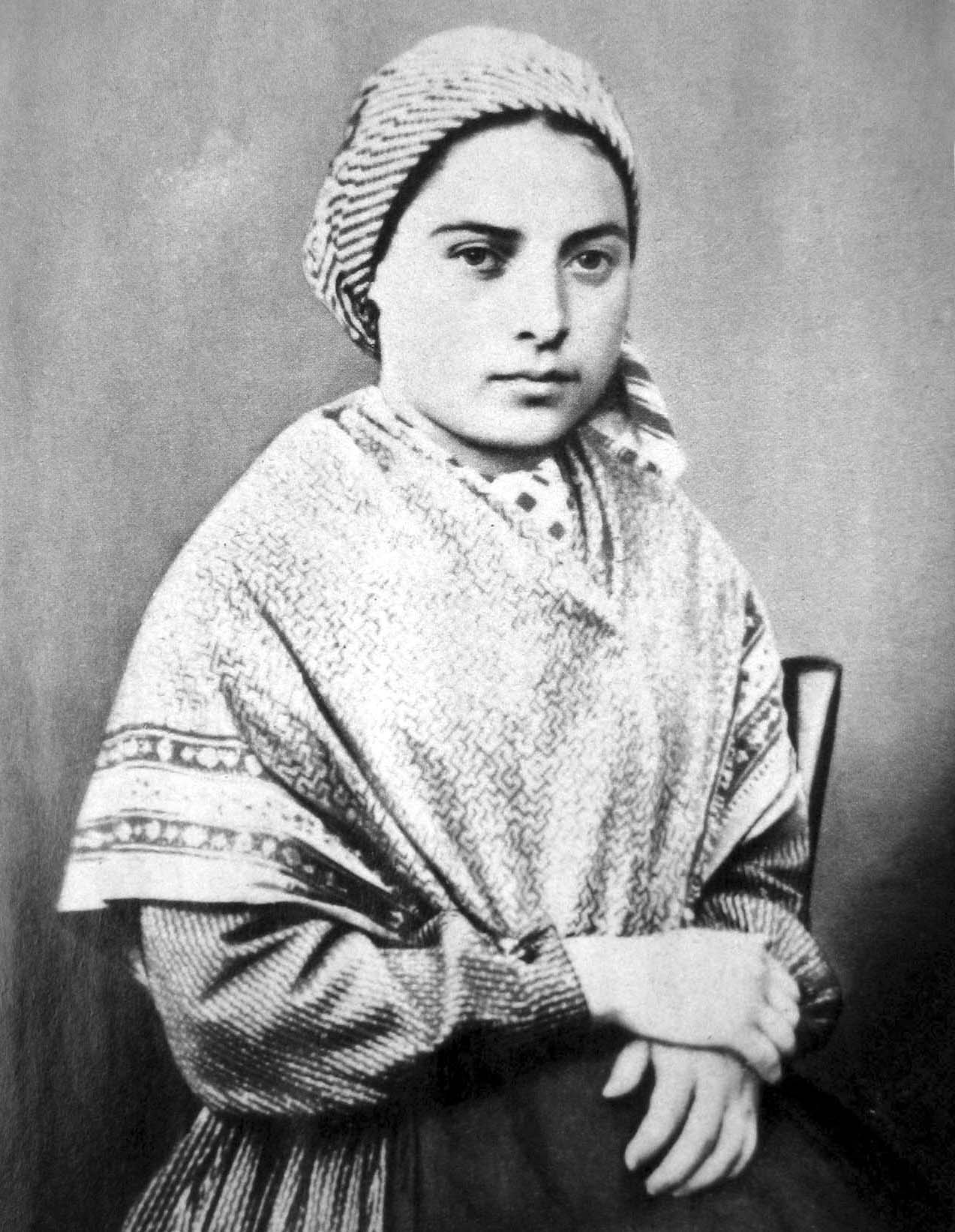
Marie-Bernarde Soubirous was the eldest child of a once-prosperous miller in Lourdes whose business had collapsed. By her teens the family lived in the cachot — a single damp room that had previously served as the town jail. Bernadette suffered from chronic asthma, was nearly illiterate, and spoke only the Pyrenean dialect Bigourdan.
On February 11, 1858, at fourteen, she went with her sister and a friend to gather firewood at the grotto of Massabielle. There she saw a luminous lady whom she would not yet name. Eighteen apparitions followed over five months. On the sixteenth, the Lady identified herself in dialect: 'Que soy era Immaculada Counceptiou' — 'I am the Immaculate Conception' — a doctrine defined only four years before by Pius IX, of which Bernadette had no theological understanding.
Pressed by sceptics, civil authorities, and well-meaning admirers for the rest of her life, she repeated her testimony in unchanging language. To escape the attention she entered the Sisters of Charity of Nevers in 1866, where she lived hidden, scrubbed floors, and nursed the sick.
She died of tuberculosis of the bone at thirty-five, gasping in her last hours: 'Holy Mary, Mother of God, pray for me, a poor sinner.' She was canonised in 1933 — not for the apparitions but for her sanctity. Three exhumations (1909, 1919, 1925) found her body essentially preserved; she is still on display in the chapel at Nevers.