
MIRACULOUS MIRACLES™

Saint — Bernard of Tiron (Bernard of Abbeville)

St. Bernard of Tiron (Bernard of Abbeville)
c. 1046 AD, Abbeville, Ponthieu (noble Norman-Picard family) — April 14, 1117 AD, Abbey of Tiron, Perche
founder of the Tironensian Order; French monastic reformer
Abbey of Tiron (Abbaye de Tiron), Thiron-Gardais, Perche, France — his foundation; the mother-house of the Tironensian Order that spread across the Anglo-Norman world, France
Feast
April 14
Canonized
Canonized 1163 by Pope Alexander III
Life

Bernard was born around 1046 in Abbeville, Ponthieu, to a noble Norman-Picard family. Educated at the cathedral school of Saint-Cyprien at Poitiers, he became a secular cleric and was tonsured a monk at the Abbey of Saint-Cyprien of Poitiers around 1068.

He became prior of the Saint-Sauveur of Saint-Savin-sur-Gartempe, then undertook the hermit life with St. Robert of Arbrissel (the future founder of the double-monastic Order of Fontevraud) and the influential late-11th-century French hermit-reform movement.

After years of hermit-itinerant preaching across western France and a period as abbot of the Abbey of Saint-Cyprien of Poitiers (1100–1109, a tumultuous tenure interrupted by disputes with the Cluniac authorities over the independence of the Saint-Cyprien community), Bernard founded in 1109 the Abbey of the Holy Trinity at Tiron in the Perche region of France.

The Tironensian Order — under Bernard's governance from 1109 to 1117 — established a distinctive Benedictine reform combining the strict Benedictine Rule with the emphasis on manual craftsmanship: Tironensian monks trained as carpenters, stonemasons, blacksmiths, illuminators, and weavers — producing the distinctive Tironensian craftsman-monastic culture that would extend through the High Medieval centuries.

The Tironensian Order spread rapidly through the Anglo-Norman world, producing dozens of daughter houses across northern France, England (Kelso Abbey chief in Scotland), Scotland, Ireland, and Wales. Bernard died at Tiron on April 14, 1117, and was canonized by Pope Alexander III in 1163.

Miracles & Phenomena
  • The Tironensian Order and the craftsman-monastic tradition

    Bernard of Tiron's founding of the Tironensian Order at the Abbey of Tiron in 1109 — combining the strict Benedictine Rule with the emphasis on manual craftsmanship — produced the distinctive craftsman-monastic culture that would extend through the High Medieval Anglo-Norman world. Tironensian foundations across France, England, Scotland (Kelso Abbey 1128, Selkirk Abbey 1113), Ireland, and Wales established the characteristic craftsman-monastic tradition that would produce the distinctive Tironensian carpentry, stonemasonry, illumination, and weaving of the late-Romanesque and early-Gothic Catholic artistic culture.

Relics
  • Body
    Tomb of St. Bernard of Tiron
    Abbey of Tiron (Abbaye de Tiron), Thiron-Gardais, Perche, France — partially destroyed in the Wars of Religion (1568) and the French Revolution; the abbey-church survives in Catholic parish use

    His tomb at the Abbey of Tiron was substantially destroyed in the 1568 Wars of Religion (the Protestant Huguenot iconoclasm) and the French Revolutionary dissolution; fragmentary relics survive at the parish church of Thiron-Gardais (which incorporates the surviving portions of the abbey-church).

Iconography
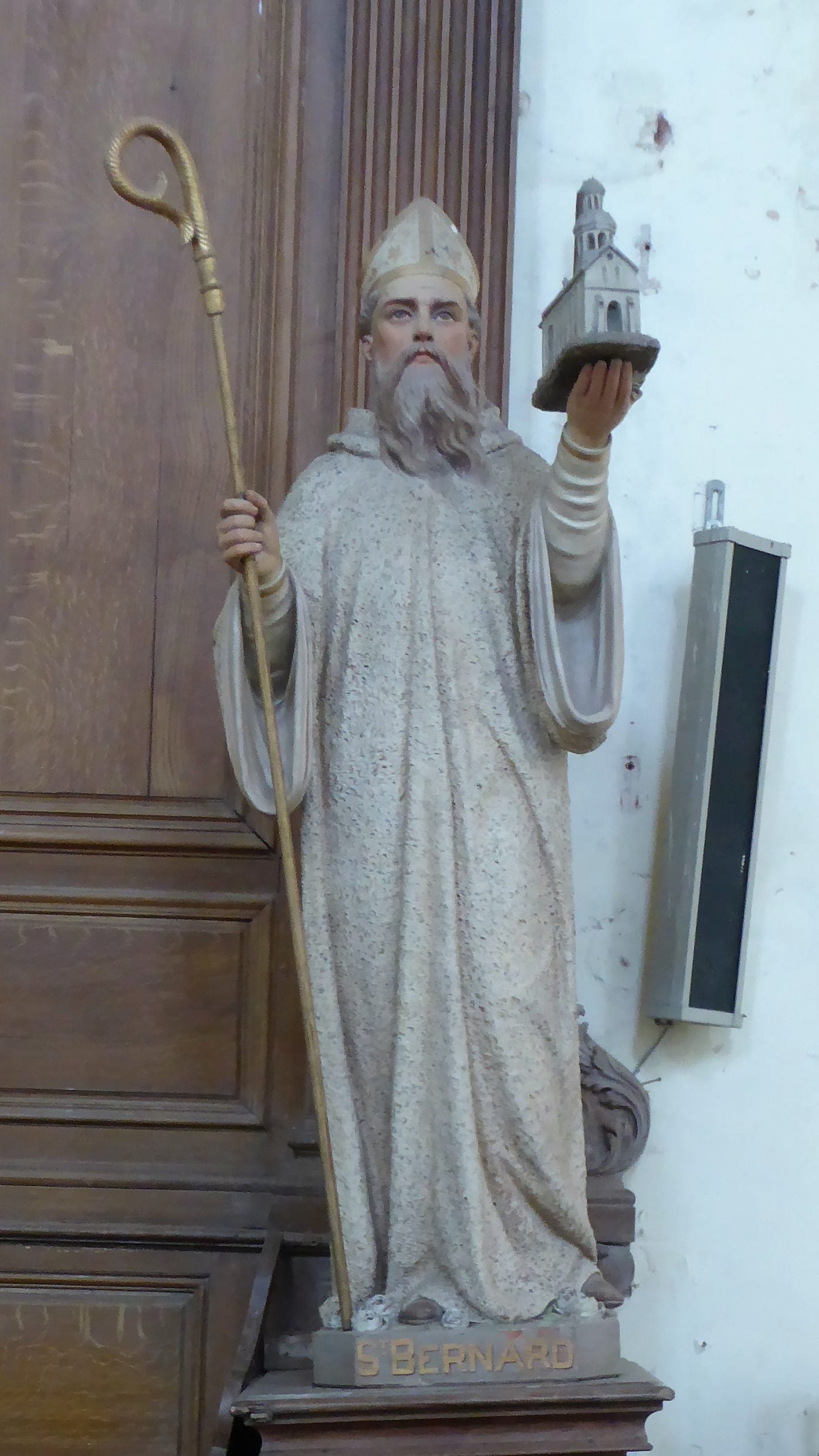
  • Bernard founding Tiron

    The late-11th-century Norman-Picard abbot in Benedictine-Tironensian habit at the foundation of the Abbey of Tiron in 1109, the Tironensian craftsman-monks laying the foundation-stones, hewing the beams, producing the characteristic craftsman-monastic culture — the iconography of Catholic Tironensian craftsman-monastic tradition.

Patronages
Catholic hermit-monastic reformers of the late-11th and early-12th centuriesThe Perche region of France (Thiron-Gardais, Chartres area)Catholic craftsman-monastic tradition (his Tironensian distinctive of training monks in manual crafts)