
Berno was born around 850 to a noble Burgundian family. After a secular career, he entered the Abbey of St. Martin at Autun, then moved (around 890) to the Abbey of Baume-les-Messieurs in the Jura, where he became abbot.
At Baume he implemented the strict Benedictine observance — Latin liturgy, manual labour, corporate poverty, learning — reviving the original Benedictine discipline at a moment when the late-Carolingian dynastic chaos had produced widespread monastic laxity across the Frankish lands.
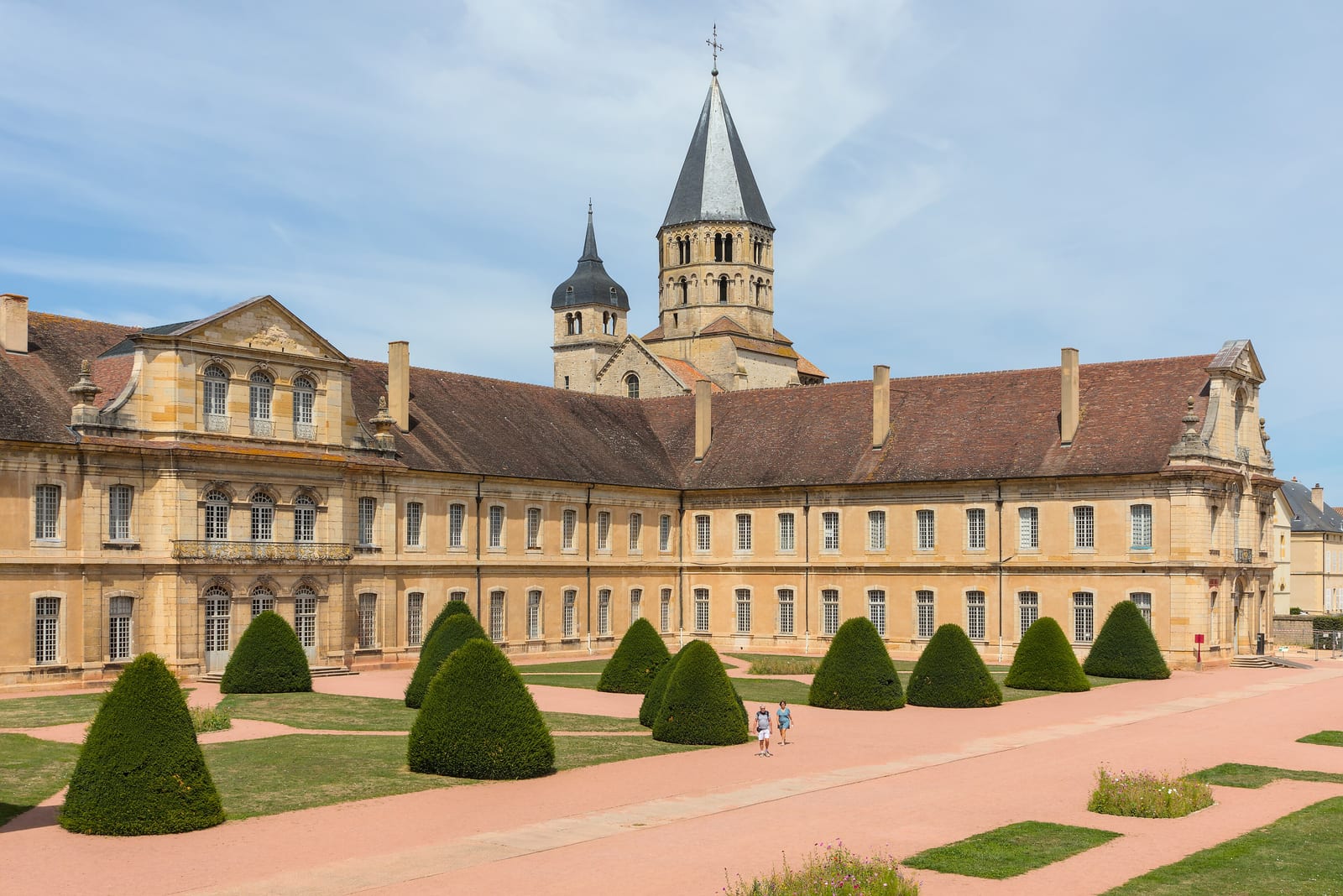
On September 11, 910, Duke William I of Aquitaine ('William the Pious') granted Berno the estate of Cluny in Burgundy for the foundation of a new abbey — with the unprecedented charter that the new abbey would be placed under the direct jurisdiction of the Apostolic See of Rome (Pope Sergius III) and free from lay-investiture, episcopal control, and royal interference.
The 910 charter of Cluny is the single most institutionally consequential document of the medieval Catholic monastic reform — establishing the principle of papal-monastic exemption that would produce the entire Cluniac monastic movement (eventually 1,200 daughter houses across Western Europe), the Gregorian Reform of the 11th century, and the medieval Catholic doctrine of ecclesiastical freedom from secular control (libertas ecclesiae).
Berno governed Cluny as its first abbot for seventeen years (910–927), establishing the discipline that his successor St. Odo would consolidate. He died at Baume-les-Messieurs on January 13, 927, having designated St. Odo as his successor at Cluny — the beginning of the two-and-a-half-century lineage of the great Cluniac abbots (Berno, Odo, Aymard, Maieul, Odilo, Hugh, Peter the Venerable) that would shape the entire High Medieval Catholic world.