
MIRACULOUS MIRACLES™

Saint — Berthold of Carmel

St. Berthold of Carmel
c. 1090 AD, Limoges, Aquitaine (noble French Limousin family) — March 29, 1195 AD, Mount Carmel, Crusader Kingdom of Jerusalem
organizational father of the Carmelite Order on Mount Carmel (c. 1185); link between the eremitic hermit-community and the Carmelite Order
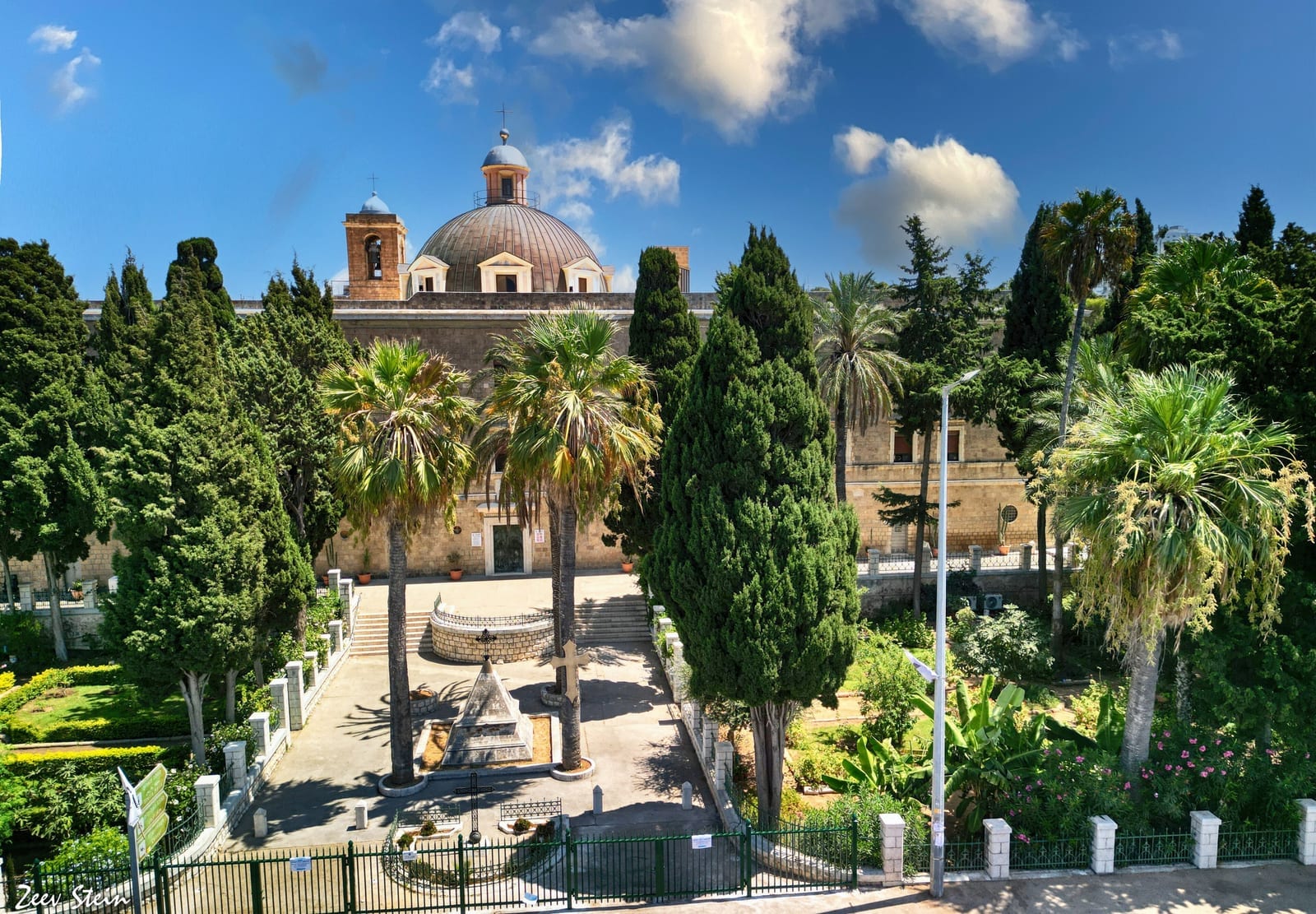
Stella Maris Monastery (Monastero del Carmelo, Stella Maris), Mount Carmel, Haifa, Israel — the mother-house of the Discalced Carmelite Order; the original Mount Carmel cave-hermitage of Berthold's eremitic community; in continuous Catholic Carmelite liturgical use 1209 to present, Israel
Feast
March 29
Canonized
Pre-congregation; venerated in the Carmelite Order as the organizational father of the Mount Carmel hermit-community
Life

Berthold was born around 1090 to a noble French Limousin family at Limoges — a kinsman of Aymeric of Limoges (the Latin Patriarch of Antioch 1140–1196). Educated at the University of Paris, he became a priest and undertook the journey to the Holy Land in support of his kinsman the Patriarch.

Around 1138 he arrived at Mount Carmel — the holy mountain on the Mediterranean coast of northern Palestine (near modern Haifa) — famous in Christian-Catholic tradition as the mountain on which the prophet Elijah had taken refuge in his hermit-cave (per 1 Kings 18–19), and as the mountain on which Elijah had challenged the prophets of Baal in the dramatic confrontation of 1 Kings 18.

From at least the late 12th century, Latin Catholic hermits and Greek-Orthodox hermits had been settling on Mount Carmel in individual hermit-cells, claiming descent from the Elijah-hermit-tradition. Berthold undertook to organize the scattered hermit-individuals on Mount Carmel into the unified eremitic-community that would subsequently become the Carmelite Order.

Around 1185 Berthold was chosen as the first organizer-superior of the unified Mount Carmel hermit-community — institutionally establishing the eremitic discipline that would underpin the Carmelite Order. The specifically Bertholdian organization placed each individual hermit-cell in proximity to the principal chapel (dedicated to the Virgin Mary, the origin of the Carmelite Order's dedication to Mary as Patroness), instituted corporate-liturgical gathering of the hermits, and established the basic ascetic-disciplinary rule.

Berthold died at Mount Carmel on March 29, 1195. His immediate successors — St. Brocard (Bertholdian successor, died c. 1231) and St. Albert of Jerusalem (the Latin Patriarch of Jerusalem who composed the Rule of St. Albert for the Mount Carmel hermits between 1206 and 1214) — completed the institutional transformation of the eremitic community into the Carmelite Order proper.

The Carmelite Order — migrating west from the Holy Land after the fall of Acre in 1291 to the Carmelite foundations across Western Europe — produced the classic Catholic mystical-spiritual tradition of Sts. Teresa of Ávila (1515–1582), John of the Cross (1542–1591), Thérèse of Lisieux (1873–1897), Edith Stein (1891–1942), and the continuing Discalced Carmelite tradition to the present day.

Miracles & Phenomena
  • The organization of the Mount Carmel hermit-community

    Berthold's organization of the scattered Latin and Greek hermit-individuals on Mount Carmel into the unified eremitic-community around 1185 — institutionally inaugurating the pre-Carmelite-Order eremitic discipline that would underpin the Carmelite Order — produced the institutional origin of the Carmelite Order. The Order claims continuous descent from the prophet Elijah's Mount Carmel cave-hermitage (per 1 Kings 18–19), one of the principal claims of Catholic religious-order antiquity (analogous to the Benedictine claim descending from St. Benedict's Monte Cassino foundation c. 529, the Augustinian claim descending from St. Augustine's Hippo community c. 391).

  • The Stella Maris Mother-house on Mount Carmel

    The Bertholdian-Mount Carmel hermit-community was institutionally formalized as the Stella Maris Monastery on Mount Carmel — the mother-house of the Discalced Carmelite Order. The Stella Maris Monastery survives in continuous Catholic Carmelite liturgical use to the present day, one of the principal Catholic pilgrim destinations of the Holy Land (including the cave of the prophet Elijah, one of the principal Christian-Jewish-Druze pilgrim sites of modern Israel).

Relics
  • Body
    Tomb of St. Berthold of Carmel
    Stella Maris Monastery, Mount Carmel, Haifa, Israel — fragmentary relics; principal memorial veneration in the Discalced Carmelite Order houses worldwide

    His principal tomb at the Mount Carmel hermit-cave-site was lost in the Crusader-Muslim warfare and the fall of Acre in 1291; fragmentary relics are venerated at the Stella Maris Monastery on Mount Carmel and at the Discalced Carmelite Order houses worldwide.

Iconography
  • Berthold organizing the Mount Carmel hermits

    The late-12th-century French Carmelite organizer-superior in brown Carmelite habit on the rocky slopes of Mount Carmel around 1185, directing the organization of the scattered hermit-cells around the principal chapel dedicated to the Virgin Mary, the Mediterranean Sea visible behind, the cave of the prophet Elijah visible at the summit — the iconography of Catholic Carmelite-tradition.

Patronages
Carmelite Order (principal patron alongside the St. Brocard and St. Albert of Jerusalem)Catholic Mount Carmel hermit-tradition (claimed as descending from the prophet Elijah's Mount Carmel cave-hermitage)Catholic Limousin-French Catholic Crusader tradition