
Raymond du Puy was born around 1083 to a noble Auvergnat family at Le Puy-en-Velay — one of the principal medieval Catholic pilgrim destinations of central France (the Black Madonna of Le Puy at the Cathedral of Notre-Dame-du-Puy, one of the principal departure-points of the Via Podiensis branch of the Way of St. James to Santiago de Compostela).
After military service, Raymond joined the First Crusade in 1096–1099 and remained in Outremer after the Crusader capture of Jerusalem. Around 1120 he joined the Hospitaller community of Bl. Gerard Thom — at the Hospital of St. John at Jerusalem.
On Bl. Gerard's death on September 3, 1120, Raymond du Puy was elected the second Master of the Hospitaller Order — taking up the governance that would fundamentally institutionally transform the Order over the forty years (1120–1160).
Raymond undertook the militarization of the Hospitaller Order — adding the knight-military dimension to the previously hospitaller-medical core that Bl. Gerard had established. Around 1126, he introduced the military-knight class into the Order (alongside the continuing hospitaller-medical and the chaplain-priestly classes), promulgated the Rule of Raymond du Puy (the basic governance-document of the Order through the medieval centuries), and established the distinctive Hospitaller military-religious synthesis.
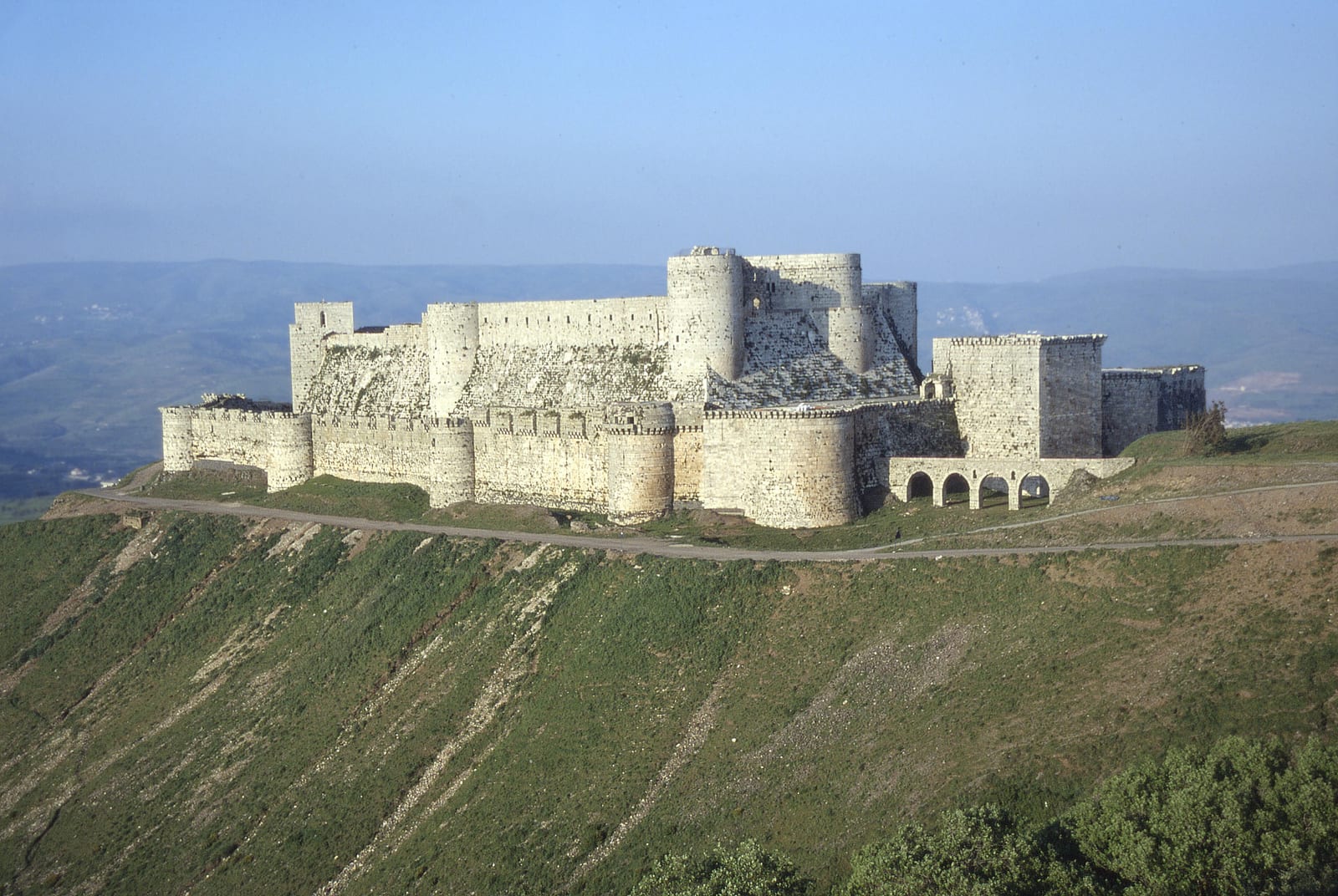
The militarization of the Hospitallers produced the Order's transformation into one of the principal military forces of the Crusader Kingdom: garrisoning the Crac des Chevaliers (Crusader castle in Syria, acquired 1142 by the Hospitallers, one of the principal surviving medieval Crusader castles), the Margat Castle, the Belvoir Fortress, and dozens of additional Hospitaller fortresses across the Crusader territory.
Raymond du Puy died in Outremer in 1160 — having transformed the Hospitaller Order from a primarily hospitaller-medical foundation into the military-religious order that would persist as the Sovereign Military Order of Malta to the present day.