
Brendan was educated under St. Erc of Slane and St. Ita of Killeedy and ordained priest around 512. He founded a series of monasteries across Ireland, most notably Clonfert (c. 558), which became one of the principal monastic centers of medieval Ireland with as many as three thousand monks under his rule.
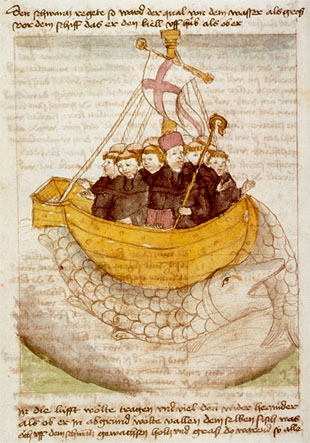
He is universally known, however, for the great voyage chronicled in the Navigatio Sancti Brendani Abbatis ('Voyage of St. Brendan the Abbot'), a 9th-century Latin text that became one of the most popular books of the European Middle Ages, translated into every Western European language by the year 1300. The Navigatio recounts a seven-year voyage Brendan and seventeen monks took in a wood-and-leather curragh to seek the Promised Land of the Saints in the Western Ocean — encountering Judas on his Easter respite from hell, a great fish on whose back they celebrated Mass, the island of birds, the column of crystal in the sea (perhaps an iceberg), and finally a great land beyond the western horizon.
Modern scholarship — particularly Tim Severin's 1976 Atlantic crossing in a replica curragh — has shown that a Brendanesque voyage to the New World was technically possible in the 6th-century Irish boat-building tradition. Many islands in the Atlantic still bear his name from medieval maps that identified Brendan's discoveries with the Faroes, Iceland, and the Canaries.
He died at Annaghdown around 577 visiting his sister St. Briga and is buried at Clonfert.