
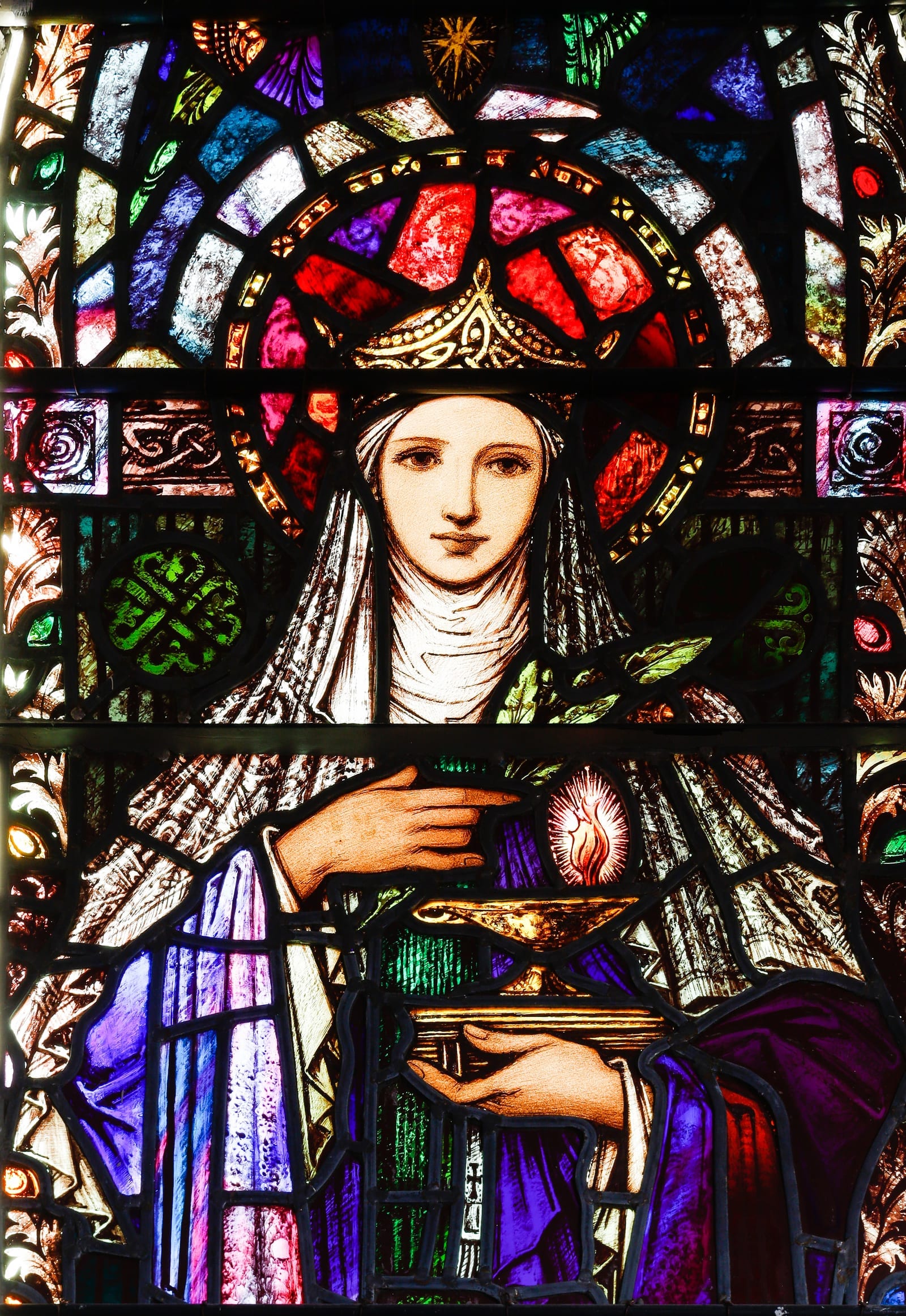
Brigid was born around 451, daughter of a Christian slave mother and a pagan chieftain father. The hagiographic sources (Cogitosus, c. 650; Bethu Brigte, c. 800) make her a girl of extraordinary generosity — giving away her father's possessions to the poor with such freedom that he sold her to the King of Leinster, who refused the purchase on seeing her holiness.
She took the veil from St. Mél of Ardagh and founded the great double monastery of Kildare (Cill Dara, 'church of the oak') around 470, the only one in Ireland with both monks and nuns under a single abbatial authority — the abbess Brigid herself. Kildare became one of the principal religious centers of early Christian Ireland, with its own school and great library; the famous illuminated manuscript known as the Book of Kildare (now lost) was likened by Gerald of Wales to angelic work.
The image of the 'Brigid cross' — woven of rushes in a distinctive form on her feast day — endures in every Irish home; the 'Brigid's well' tradition (sacred springs in her name) is the most widespread cult of any Irish saint. Pope Francis in 2024 expanded her feast day on February 1 to a public holiday across the Republic of Ireland.