
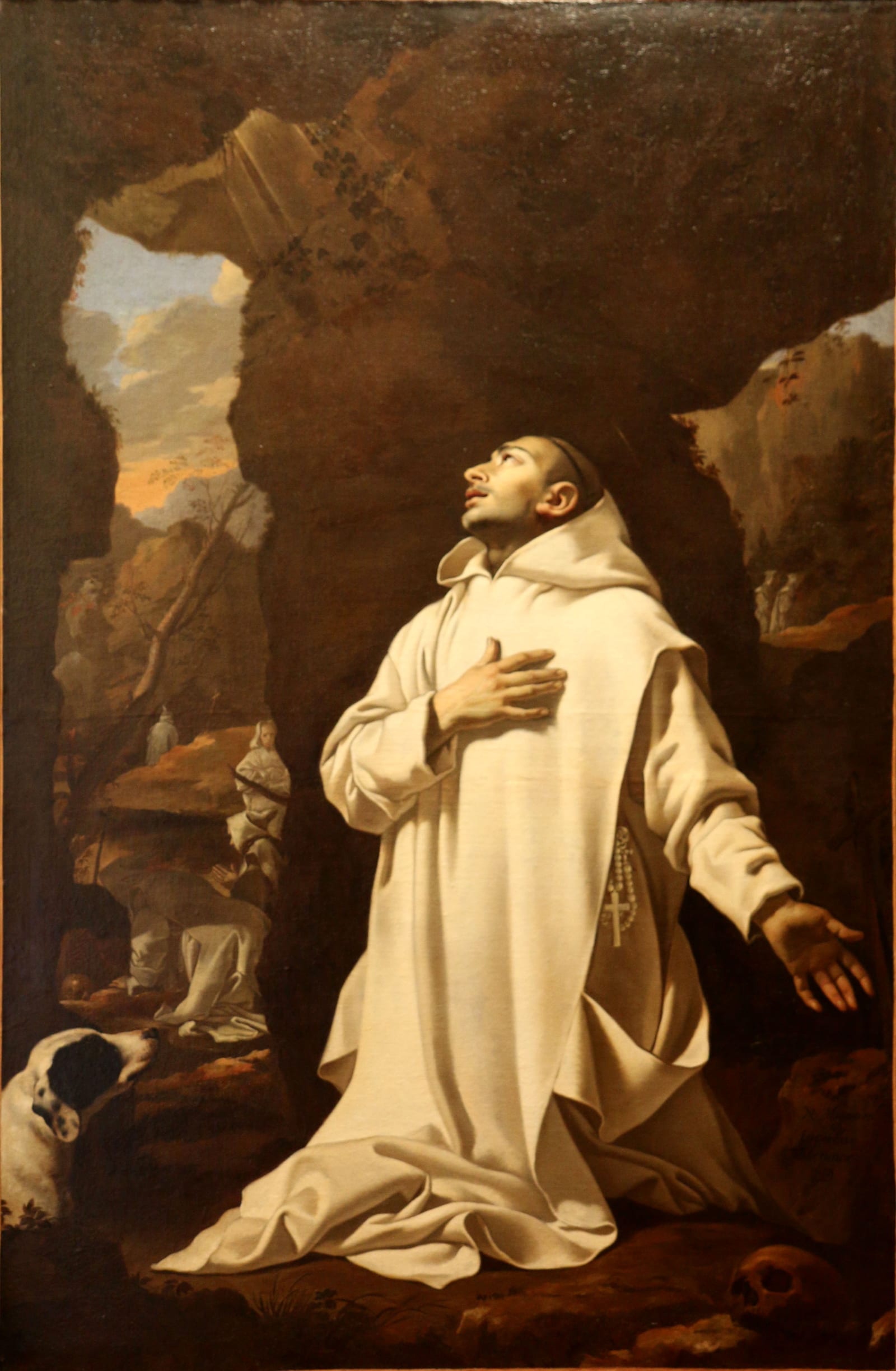
Bruno was born to a noble Cologne family, studied at the cathedral school of Reims under Herimann, and became chancellor of the archdiocese of Reims. After the long simoniac scandal of Archbishop Manasses (whom Bruno helped depose at a Roman synod in 1080), he gave up his archdiocesan office and his prospects for a bishopric to retire with six companions to a wild high valley in the French Alps offered to them by Bishop Hugh of Grenoble.
There, in 1084, they founded the first 'Chartreuse' — a community of hermit-monks living in individual cells around a common cloister, meeting only for the night Office, Vespers, and the conventual Mass and meal on Sundays. This severe combination of eremitic and cenobitic life became the Carthusian Order, whose motto Stat crux dum volvitur orbis ('The Cross stands while the world turns') still names the spirit of its silence.
Bruno was summoned to Rome by his former pupil Pope Urban II in 1090 to advise on the great reform. He refused offered bishoprics and gained permission to found a second Charterhouse in the mountains of Calabria at La Torre, where he died in 1101. The Carthusians, alone among the great religious orders, have never been reformed because, as they say, they have never been deformed.