
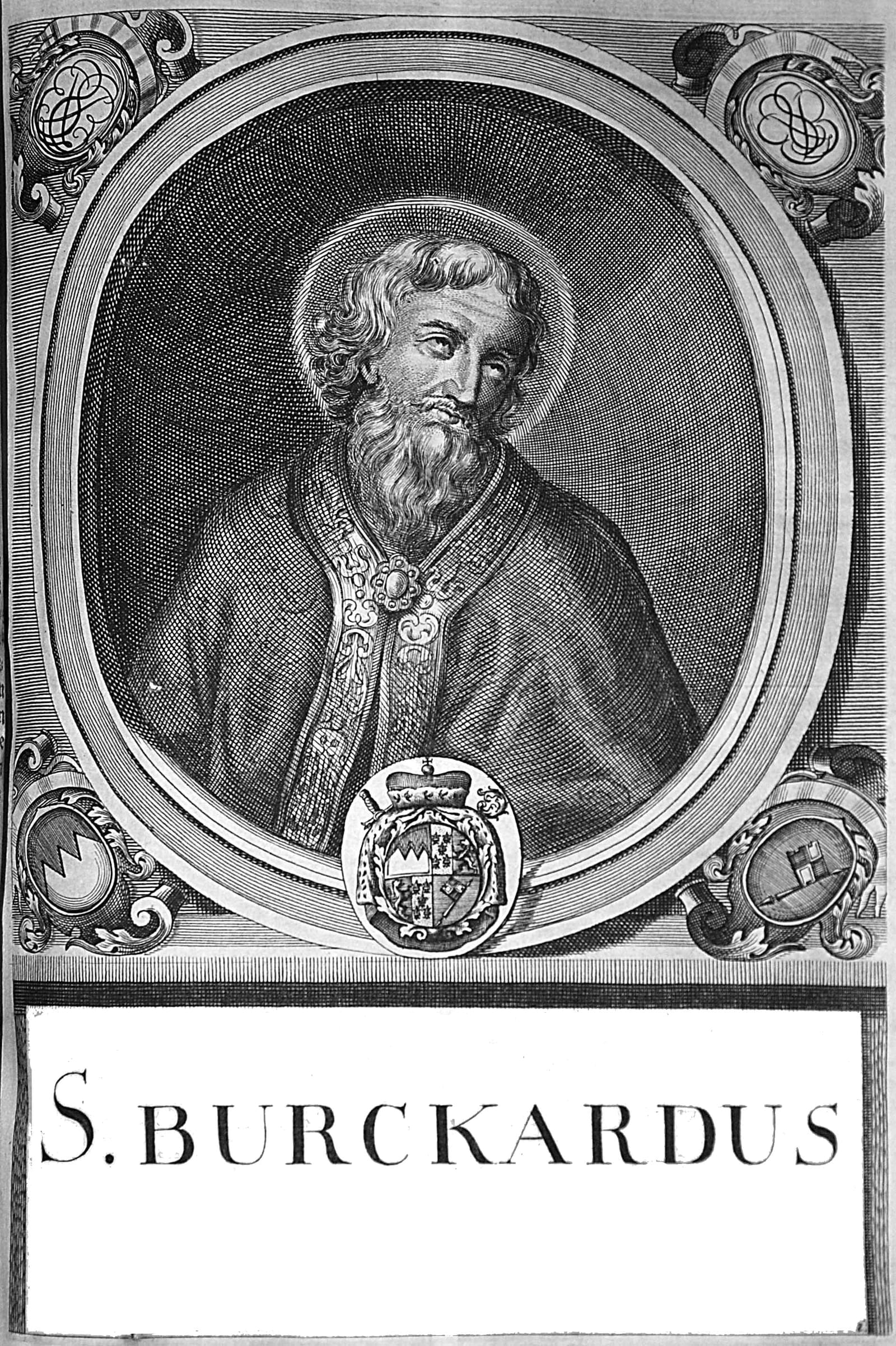
Burchard (Burkardus) was an Anglo-Saxon priest of Wessex who joined St. Boniface's mission to Germany in the 730s — among the elite Wessex cohort (with Boniface, Willibald, Lull, Lioba, and Tetta) whose combined labour established the Catholic ecclesiastical organization of Germany.
On October 21, 741, Boniface formally erected the Diocese of Würzburg (carved from the duchy of the Thuringii on the Main river) and consecrated Burchard as its first bishop — one of the four Bonifatian-era German dioceses (Würzburg, Eichstätt, Erfurt, Buraburg), constituting the institutional birth of organized German Catholicism.
In 748, Burchard translated the relics of the Würzburg martyr St. Kilian (the 7th-century Irish missionary murdered at Würzburg by the duchess Geilana c. 689) into a new shrine at the Würzburg cathedral — establishing the Kilian cult that would become the identity of Catholic Würzburg.
He participated in the embassy of 750 that travelled to Pope Zachary in Rome to obtain papal endorsement of the deposition of the last Merovingian king Childeric III and the elevation of Pippin the Short — the embassy that produced the Carolingian dynasty. He resigned the see in 753 and withdrew to the monastery at Homburg am Main, dying there on February 2, 754. His relics were translated to the St. Burkard's church in Würzburg in 984.