
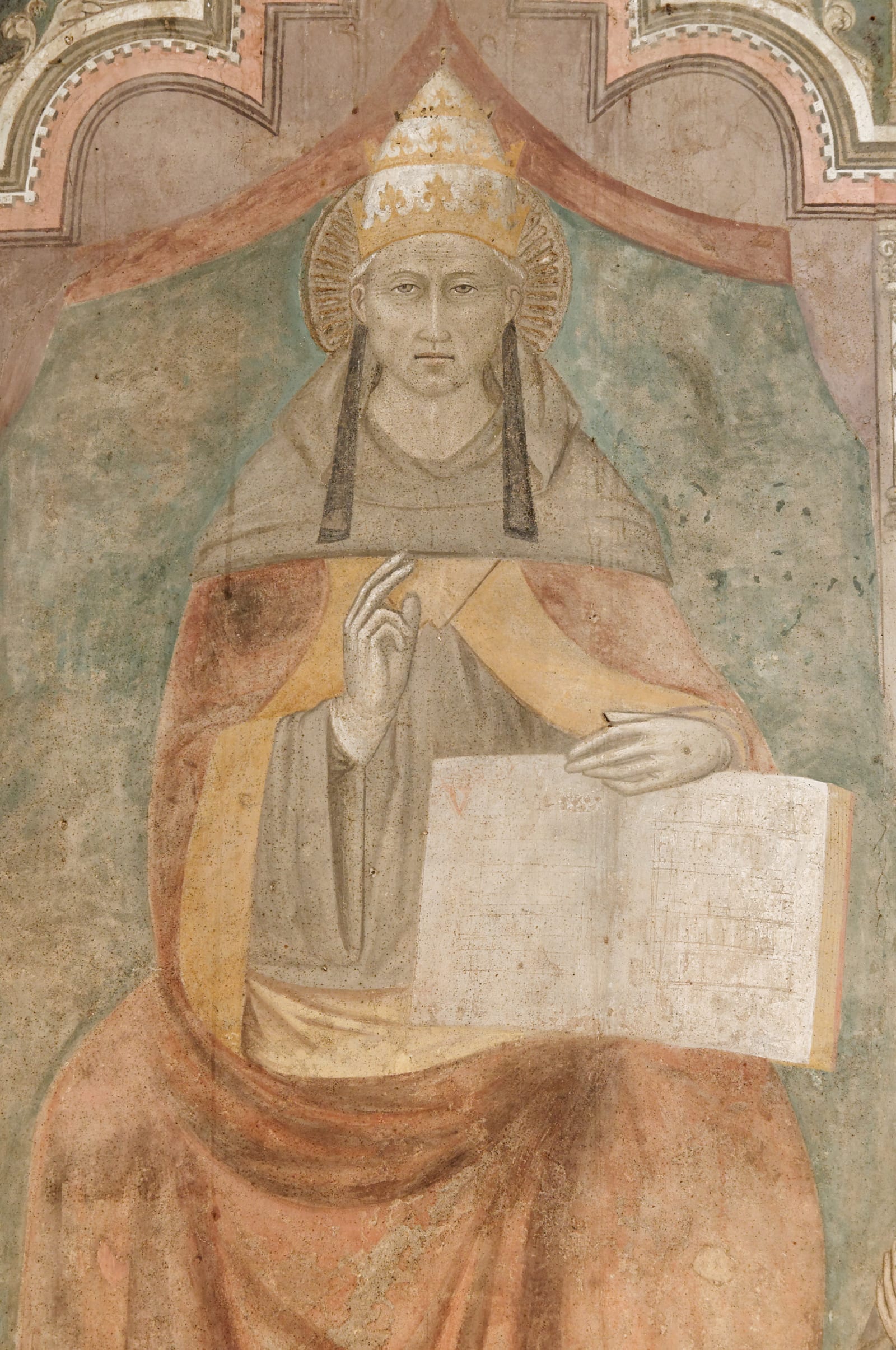
Pietro Angelerio of Isernia entered a Benedictine monastery as a boy and, at twenty, withdrew to live as a hermit in a cave on Monte Morrone in the Abruzzo. Disciples gathered around him; he founded a new branch of the Benedictine order (later called the Celestines), built a small church at Collemaggio outside L'Aquila, and lived in mountain solitude for over fifty years.
By 1294 the cardinals had been deadlocked over the papal election for more than two years. Pietro — by now eighty-four — wrote a letter warning them that divine judgement would fall if they did not act. The cardinals took the warning as inspired and elected him pope. He resisted, fled deeper into the mountains, was carried out, and on August 29, 1294 was crowned at his own Collemaggio.
His five-month reign was a disaster — too unworldly for the Curia, manipulated by King Charles II of Naples, agonised at his own incapacity. On December 13, 1294, in formal consistory, he resigned: 'on account of the desire for humility, for a purer life, for a stainless conscience, the deficiencies of his own physical strength, his ignorance, the perverseness of the people, his longing for the tranquillity of his former life.' His successor, Boniface VIII, imprisoned him in the castle of Fumone to prevent any schism. He died there ten months later. Dante, hostile to Boniface, may have placed him at the gate of Hell as 'he who made the great refusal' (Inferno III) — although the identification is debated.
Pope Benedict XVI made symbolic pilgrimages to his tomb in 2009 and 2010, leaving his own pallium on it. Within three years, Benedict himself resigned the papacy — the first pope to do so since Celestine.