
MIRACULOUS MIRACLES™

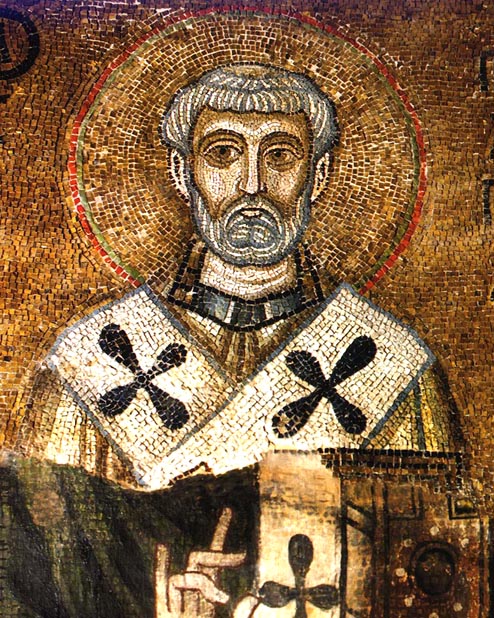
Saint — Clement of Rome

St. Clement of Rome
1st century — c. AD 99 (traditional)
Apostolic Father — fourth Bishop of Rome
Basilica of San Clemente, Rome, Italy
♕ The 4th Bishop of RomeReign: AD 88 — c. 99
Feast
November 23
✠ MartyrDrowned with an anchor tied around his neck at Chersonesus under Trajan, c. 99 → The Martyrs
Life

Clement was the fourth Bishop of Rome — the third successor of Peter, after Linus and Anacletus. Tertullian places him as a direct disciple of Peter himself; Irenaeus writes that 'he had seen the blessed apostles, and had been conversant with them.'

Around the year 96, the church at Corinth was riven by a faction that had deposed its presbyters. Clement wrote to them in the name of the Roman Church — the Letter of Clement to the Corinthians, the earliest non-canonical Christian document we possess. In it he calls for the restoration of the deposed clergy, develops the doctrine of apostolic succession, and points to the natural and biblical order that ought to govern the Church. The letter was so authoritative that some early communities read it as Scripture.

Tradition holds that Clement was martyred under the emperor Trajan: exiled to a stone quarry in Chersonesus on the Black Sea, he so converted his fellow prisoners (and the local population) that the emperor ordered him drowned with an anchor tied around his neck. His relics were rediscovered, according to tradition, by Sts. Cyril and Methodius in the 9th century and brought to Rome.

Miracles & Phenomena
  • The Spring at Chersonesus

    Apocryphal Acts of Clement describe him miraculously revealing a fresh spring to his fellow prisoners in the desolate Crimean quarry — a sign that drew the local people to baptism.

  • Letter to the Corinthians

    c. AD 96

    The Letter itself — the earliest extant Christian writing outside the New Testament — is the great achievement of his ministry. It is the first documentary witness to the principle that the Roman Church speaks with authority to other churches.

Relics
  • Body
    Tomb of St. Clement
    Lower basilica of San Clemente, Rome

    Brought from Crimea by Sts. Cyril and Methodius in 868 and placed beneath the altar of what is now one of the most extraordinary archaeological sites in Rome — three churches in vertical stratigraphy, with a 1st-century Roman house and a Mithraic temple below.

  • Object
    The Anchor
    Traditional iconographic attribute
Iconography
  • St. Clement with the Anchor

    His invariable attribute — the anchor tied around his neck in his martyrdom — is the most recognisable mark of Clement in Western iconography.

Patronages
MarinersMarble workersStonecutters
Sources & Further Reading