
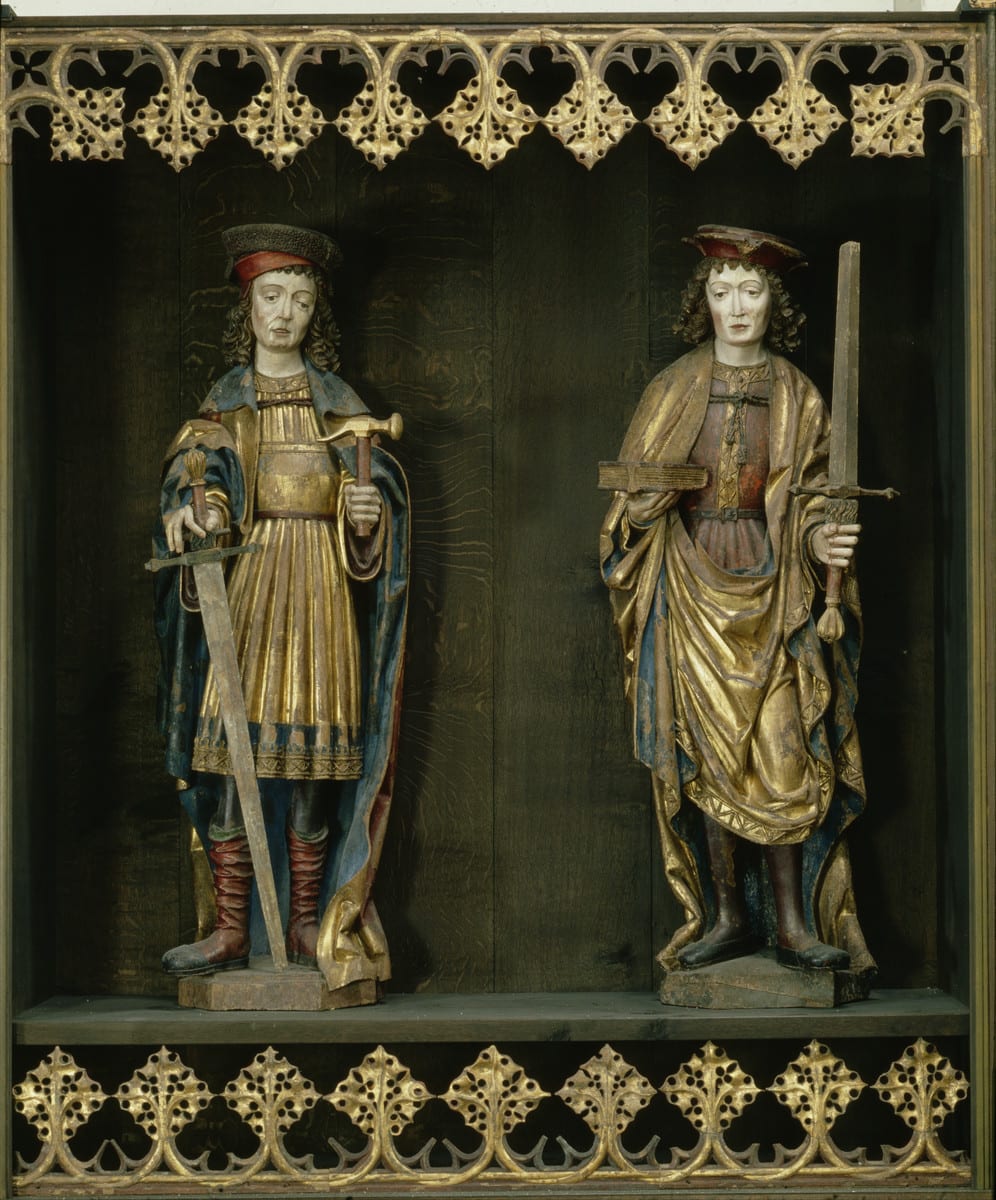
Crispin and Crispinian were brothers of a noble Roman family who fled to Gaul to escape the persecution of Diocletian. They settled at Soissons, where by day they preached the Gospel and by night earned their bread making shoes — refusing payment from the poor. Their charity converted many.
Denounced to the prefect Rictiovarus around 285, they were tortured (boiled in oil, scourged, weights tied to them and thrown into the Aisne — all survived) and finally beheaded. Their tomb at Soissons became the principal pilgrim site of the shoemakers' guild of medieval Europe.
Their fame in the English-speaking world is owed almost entirely to a single passage: in Shakespeare's Henry V, the king's St. Crispin's Day Speech before Agincourt — fought on October 25, 1415 — declares: 'This day is called the feast of Crispian: He that outlives this day, and comes safe home, will stand a-tiptoe when this day is named, and rouse him at the name of Crispian.' The speech ensured the saints' continuing memory long after their craft-patronage had become incidental.