
Daughter of Siegfried I of Luxembourg, Cunigunde married Henry II of Germany around 999 and was crowned with him as Holy Roman Empress by Pope Benedict VIII at St. Peter's in 1014. The marriage produced no children — a fact medieval hagiography came to interpret as a voluntary vow of virginity, the 'Josephite marriage' that became part of the cult of both saints.
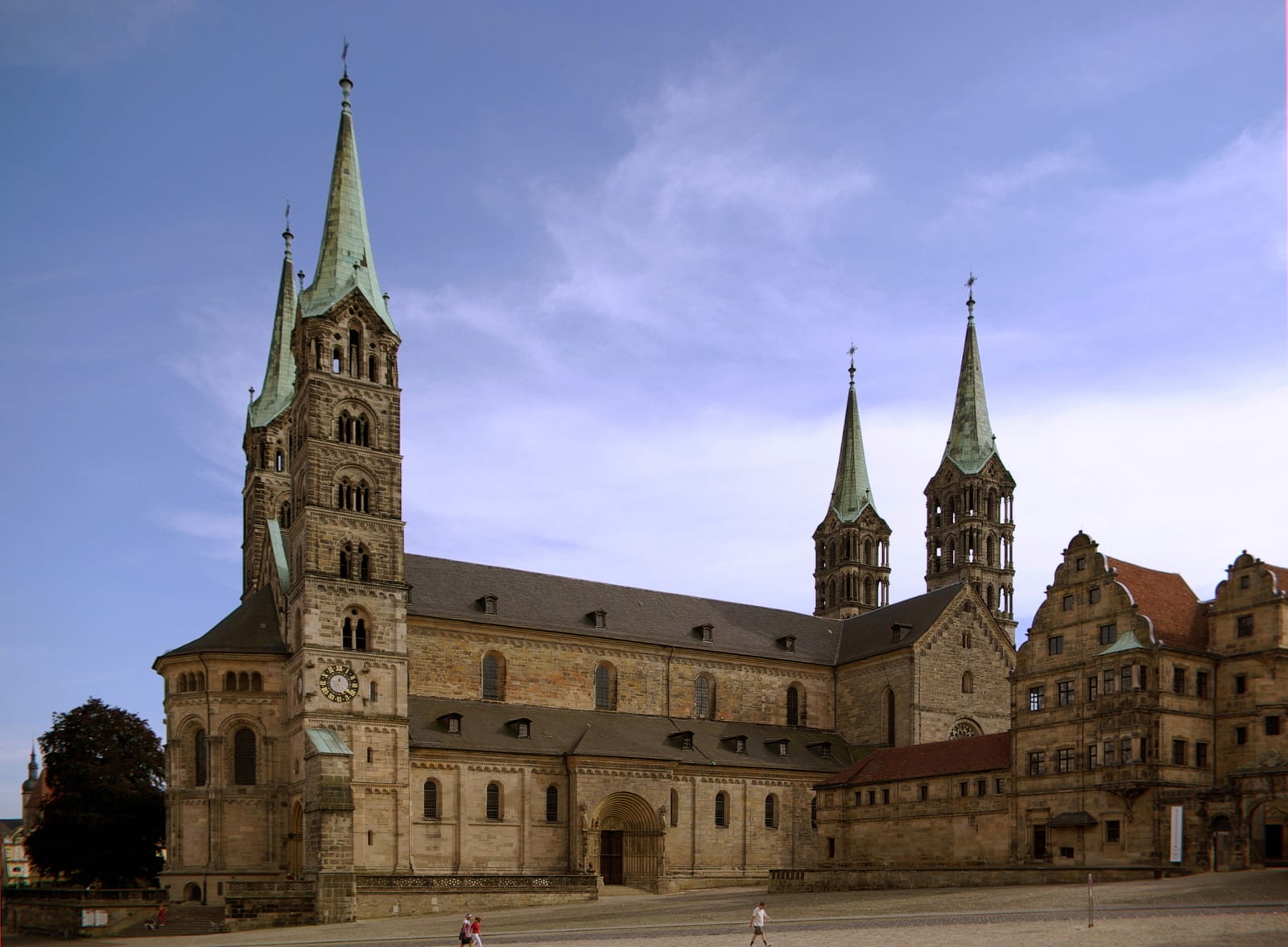
She was a co-founder with Henry of the bishopric and cathedral of Bamberg (1007) and the great Cluniac reform centers across the empire. After Henry's death in 1024 she retired to the Benedictine abbey she had founded at Kaufungen in Hesse, taking the veil there on the first anniversary of her husband's death and living as a simple nun for the remaining fifteen years of her life.
Tradition records that she successfully proved her chastity by walking barefoot over red-hot ploughshares — an ordeal-by-fire episode famous in medieval legend. She was canonized by Innocent III in 1200, fifty-four years after Henry, and is buried beside him at Bamberg.