
MIRACULOUS MIRACLES™

Saint — Cuthburga of Wimborne

St. Cuthburga of Wimborne
c. 660 AD, Wessex (royal house of the West Saxons) — August 31, c. 725 AD, Wimborne Minster, Dorset
Anglo-Saxon queen, abbess; founder of Wimborne Minster
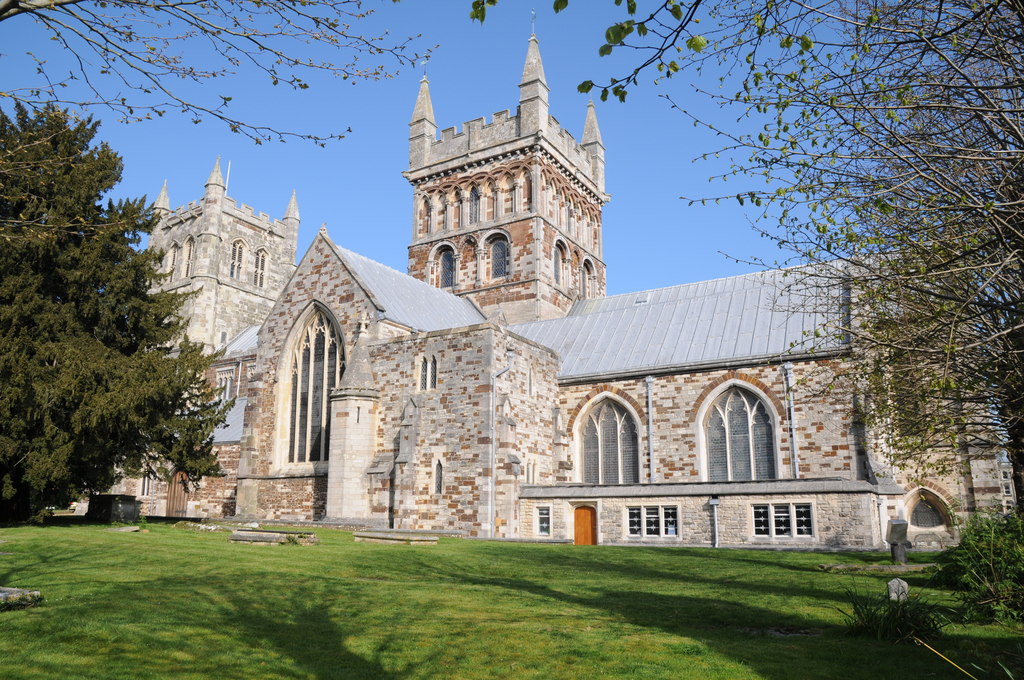
Wimborne Minster (Minster Church of St. Cuthburga), Dorset — her foundation, the medieval double-minster, United Kingdom
Feast
August 31
Canonized
Pre-congregation
Life

Cuthburga (Old English Cuthburh) was the sister of King Ine of Wessex (688–726), the great early-8th-century Wessex king whose law code is the foundational legal text of pre-Alfredian English jurisprudence.

She was married politically to King Aldfrith of Northumbria (685–705), the scholar-king and patron of Bede — but the marriage was dissolved during Aldfrith's lifetime (the only recorded dissolution of an Anglo-Saxon royal marriage by the mutual consent of both spouses to enter religious life). Cuthburga withdrew to Barking Abbey under St. Hildelith, then around 705 returned to Wessex.

Her brother King Ine established for her around 705 the double monastery of Wimborne in Dorset (the women's house under Cuthburga, the men's house separately, but sharing the church) — the foundational Wessex women's monastic centre.

Wimborne under Cuthburga's strict discipline (men and women never met; communication was only by speaking-tube; the abbess governed both communities) produced the elite Anglo-Saxon Catholic women's mission of the 8th century — including St. Lioba and St. Tetta who, under St. Boniface's invitation, took the Wimborne discipline to found the great women's monastic establishment of Germany (Bischofsheim, Tauberbischofsheim). Cuthburga died around 725 and was buried in her minster; the medieval shrine survived to the Reformation.

Miracles & Phenomena
  • The Wimborne discipline transplanted to Germany

    St. Boniface, writing in 735–740 from his German mission, repeatedly requested from Wimborne the most experienced of Cuthburga's foundational community for transplantation to Germany — in his letters describing the Wimborne women as 'the chosen leaven' of the foundational German Catholic women's monastic culture. The foundational Wimborne discipline transplanted via Lioba and Tetta to the Carolingian Reich is one of the most concrete and influential institutional transmissions in Catholic women's monastic history.

Relics
  • Body
    Tomb of St. Cuthburga
    Wimborne Minster, Dorset — the medieval shrine destroyed in the Reformation; the medieval minster church (begun 1120) survives as the Anglican parish church, with the saint's foundational dedication preserved

    Her medieval shrine at Wimborne survived until the 16th-century Reformation, when it was destroyed; the great Norman minster church (begun c. 1120) survives as one of the finest parish churches in Dorset, still dedicated to St. Cuthburga.

Iconography
  • Cuthburga the queen-abbess of Wimborne

    The late-7th-century Anglo-Saxon queen-abbess in Benedictine habit, crowned coronet over her wimple, the model of the double-minster of Wimborne in one hand and the foundational charter from King Ine in the other — the iconography of foundational Anglo-Saxon Catholic royal women's monastic tradition.

Patronages
Wimborne Minster (town and church)Diocese of Salisbury (Catholic and Anglican)Catholic Anglo-Saxon women's royal-monastic traditionThe foundational Anglo-Saxon mission to the Continent (her Wimborne community produced Lioba and Tetta for St. Boniface)