
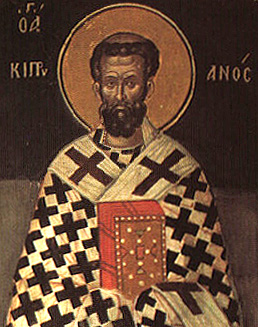
Thascius Caecilius Cyprianus was a Carthaginian rhetorician of senatorial rank who converted to Christianity around 246, was baptized, and within two years was elected bishop of Carthage. He led the African Church through the persecution of Decius (250) and through the great controversy over the lapsi — those who had sacrificed under threat of death and now sought readmission to the Church.
His treatise De Catholicae Ecclesiae Unitate ('On the Unity of the Catholic Church') is one of the foundational texts of ecclesiology: 'He cannot have God as his Father who does not have the Church as his Mother.' His correspondence with Pope Cornelius and with Pope Stephen I shapes the early understanding of episcopal collegiality and Roman primacy.
In the persecution of Valerian he was first exiled, then recalled and beheaded on September 14, 258, at the villa of Sextus near Carthage. He blindfolded himself; a friend placed beside his body the cloth Cyprian had ordered to receive his blood. His was the first formal martyrdom of an African bishop recorded.