
MIRACULOUS MIRACLES™

Saint — Cyril of Alexandria

St. Cyril of Alexandria
c. AD 376, Theodosios, Egypt — June 27, AD 444, Alexandria
Pillar of Faith — Doctor of the Incarnation
Alexandria, Egypt
Feast
June 27
Canonized
Declared Doctor of the Church 1882 (by Leo XIII)
Doctor of the Church
Yes
Life

Cyril was nephew to Theophilus, Patriarch of Alexandria, and succeeded his uncle as patriarch in 412. The first phase of his episcopate was turbulent and at times harsh — he closed the Novatian churches, expelled the Jewish community after intercommunal violence, and was implicated by some sources in the climate that led to the lynching of the philosopher Hypatia in 415 (his direct role is disputed).

His enduring work is theological. When Nestorius — Patriarch of Constantinople from 428 — taught that Mary should be called Christotokos ('Mother of Christ') rather than Theotokos ('Mother of God'), and that Christ existed in two persons united by mutual will, Cyril produced the great series of works — Twelve Anathemas, On the Incarnation, On the Unity of Christ — that articulated the doctrine of the hypostatic union: Christ is one person (hypostasis) in two natures, fully God and fully man.

He presided over the Third Ecumenical Council at Ephesus in 431, which defined Mary as Theotokos and condemned Nestorianism. His Christology, with the later refinements of Chalcedon (451), remains the standard of the Catholic and Orthodox churches. Leo XIII declared him a Doctor in 1882.

Miracles & Phenomena
  • The Council of Ephesus (431)

    AD 431

    Under his presidency, the Third Ecumenical Council declared Mary the Theotokos ('Mother of God') and condemned the Christology of Nestorius. The crowds of Ephesus reportedly carried the bishops home in torchlight processions, crying 'Praise be to the Theotokos.'

  • Doctrine of the Hypostatic Union

    His Twelve Anathemas and his Second and Third Letters to Nestorius became the foundational texts of Catholic and Orthodox Christology, formally received at Chalcedon (451) and re-confirmed at Constantinople II (553) and III (681).

Relics
  • Body
    Relics of St. Cyril of Alexandria
    St. Mark's Coptic Orthodox Cathedral, Cairo

    Translated and re-translated across the centuries. Principal relics are venerated at the Coptic Patriarchal Cathedral of St. Mark in Cairo.

Iconography
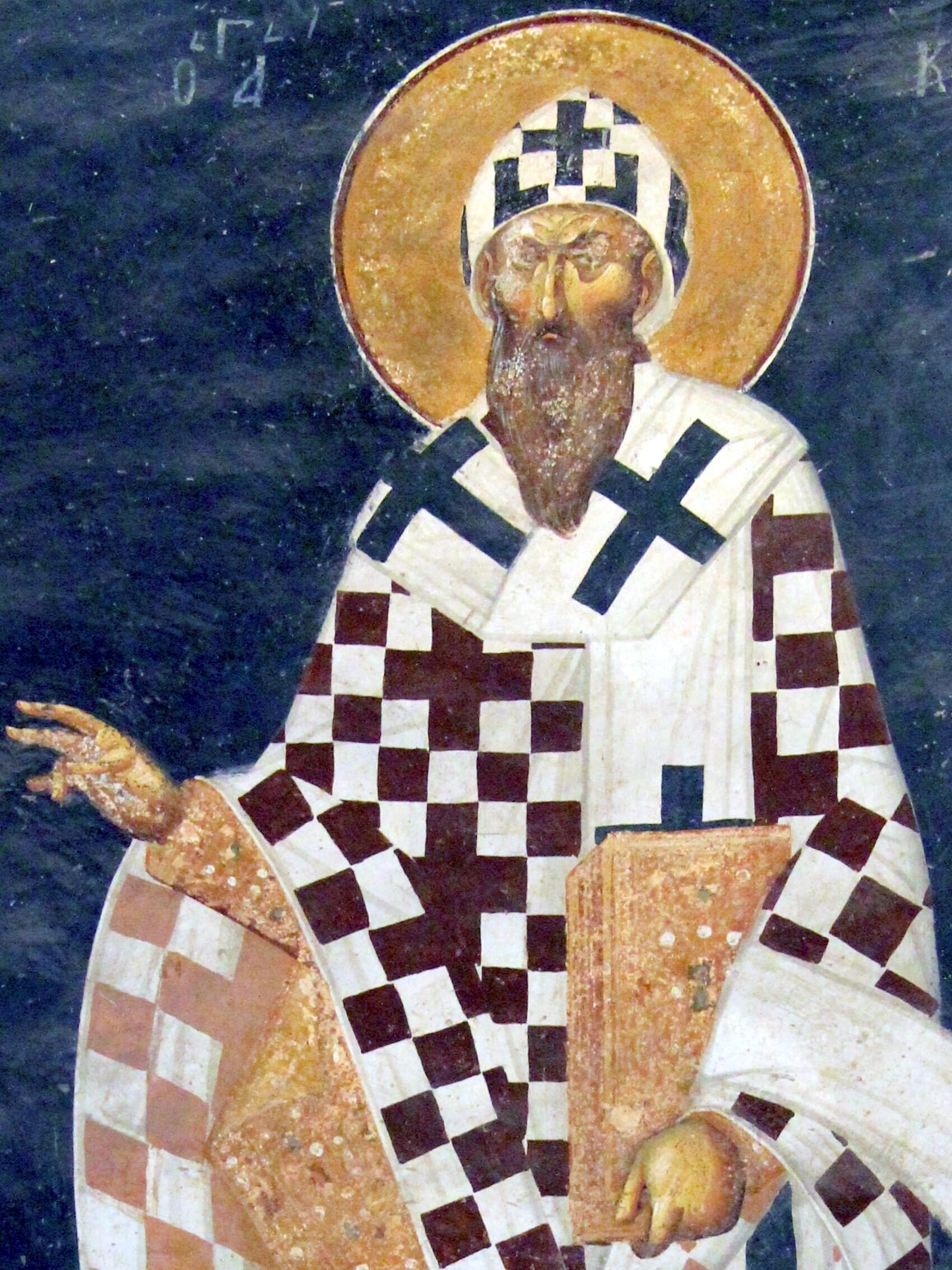
  • Cyril Defending the Theotokos

    Standard Eastern icon — bishop in patriarchal omophorion, holding a scroll inscribed with the Greek word ΘΕΟΤΟΚΟΣ.

Patronages
The Coptic Orthodox ChurchAlexandriaTheologians of the Incarnation
Sources & Further Reading